
AI in Marketing and Creative Systems covers work where machine intelligence helps create an output, shape a recommendation, conduct an interaction, or execute a marketing workflow. Part of the response or production process is generated or inferred from context, rather than entirely specified in advance.
On Ramble, this concept matters because the archive connects AI in product formulation and creative production with conversational interfaces, shopping decisions and work across tools. Reading these cases together shows where intelligence enters the system, what it changes for the brand or consumer, and which decisions still need human judgment.
Curated by Sunil Bahl
Creator and author of SunMatrix Ramble. Independent analysis of marketing concepts, campaign mechanics, and consumer experience patterns.
How AI in Marketing and Creative Systems works
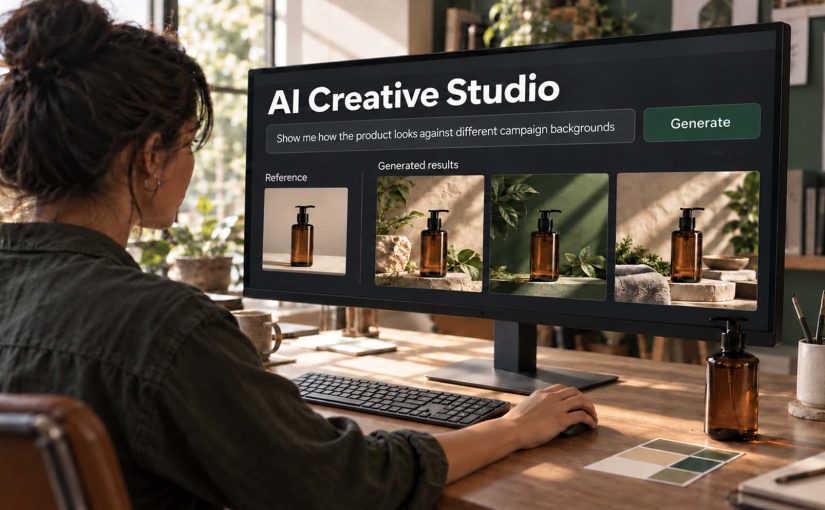
A brief lands with a product image, a target audience and a deadline. AI can turn those inputs into visual directions, scripts or asset variations, giving a team more possibilities to work with. This is generation: the system helps make the material. The creative decision comes when someone chooses what deserves to survive. A polished image can still misrepresent the product; ten variations can still repeat the same weak idea. Brand knowledge and judgment turn generated options into usable work.
Now put that intelligence in front of a shopper. “Which of these will fit in my small kitchen?” calls for recommendation, connecting the person’s needs with reliable product evidence. If the shopper adds a budget or changes a requirement, interaction lets the answer develop through the exchange. The experience works when it can explain a choice, adapt to new information and acknowledge what it cannot establish. Fluent conversation alone does not make the advice useful.
Behind the scenes, orchestration can connect these capabilities. A system might interpret a brief, call a design tool, prepare variants and pass the results for review, carrying the same constraints through each step. The challenge is getting the handoffs right: preserving an approved claim, using the current product details and ensuring the next task receives an output it can use. Connecting more tools helps only when the work holds together.
What changes across these situations is the responsibility given to the system. A creative option can wait for approval. A live conversation needs boundaries while it unfolds. A purchase or publication needs explicit authority to proceed. These are different roles AI can play, and one experience may combine several. Understanding the role makes it easier to see both the contribution and the point where human judgment matters.
What belongs here, and what does not
AI in Marketing and Creative Systems centres on intelligence shaping the creative process, consumer response or execution of marketing work. It includes work behind the scenes as well as visible experiences when generation, inference or adaptive action materially changes the mechanism. A campaign about AI, a fixed automation rule or a passing reference to an AI tool does not establish that relationship. The connection between the intelligence and the marketing outcome has to be clear.
Interactive Advertising explains how an audience operates an ad format; AI explains how an output or response is inferred or generated. Shopper Marketing and Commerce Experience explains the structure of the buying decision; the AI lens explains how intent is interpreted and recommendations or actions are formed. Customer Experience and Service Design explains the service journey, including its human and operational parts. These perspectives can meet in one experience while answering different questions about why it works.
Brand Storytelling and Branded Content centres on narrative and meaning, which can remain the main mechanism even when AI helps produce the assets. Similarly, an AI component can support Experiential Marketing or Social Participation and Platform Mechanics while the encounter or participation system carries the idea. A phone, camera or digital overlay also says little by itself about AI’s role. The distinction comes from what intelligence contributes, rather than the channel, device or technology label surrounding it.
Representative Ramble examples
NotCo: AI-Powered Fragrance With Purpose
NotCo’s Aroma Best Friend concept presents AI formulation through a tangible sensory proposition: a personalised fragrance based on an owner’s scent profile. The campaign makes an otherwise invisible development capability understandable through a human concern. It demonstrates generation beyond media assets, while keeping the distinction between a compelling product concept and evidence of a scaled commercial outcome.
Lovart AI: Photoshop, Now as Simple as Paint
Lovart illustrates a creative workflow organised around the intended result. A brief guides planning, generation and iteration across assets instead of leaving every production step to the person operating the software. The transferable mechanism is coordinated creation from shared intent. Creative direction and brand constraints give the outputs coherence; the ability to generate more options does not choose the strongest one.
InVideo AI: Future of Ads, or Slop at Scale?
InVideo’s campaign depicts a production process divided among roles such as writer, director, producer and sound designer. The example makes task coordination visible within creative work. It shows why generating a video and organising the decisions behind a video are different capabilities. The demonstration also creates a useful tension: faster production can expand experimentation while increasing the risk of interchangeable output.
Runway Characters: Real-time AI avatars
Runway Characters shifts the example from a generated asset to an interface that responds during a conversation. Appearance attracts attention, but knowledge, response behaviour and permitted actions determine the experience. It illustrates adaptive interaction: the useful output forms through the exchange. The lesson concerns how a character guides, answers or hands over, rather than simply how convincingly it moves.
When AI Starts Shopping for Us
This post examines shopping in which an agent carries intent, constraints and product evidence through discovery, comparison and a possible purchase handoff. It demonstrates recommendation connected to action. Product information and policies become part of the decision process, while permission to act remains a separate requirement. The core shift is from asking the shopper to navigate every step to helping them form and complete a choice.
Related archive posts
These posts extend the comparison into creative variation, work across tools, market activity and the operating foundations that make AI useful over time.
Creative variation and production constraints
- Viral Content: Clone Winning Ads in Minutes examines generation around a reference structure, making the tension between faster variation and distinctive creative work especially clear.
- AI in Hollywood: Threat or Storytelling Upgrade? extends the production lens into filmmaking, where direction, rights, provenance and authorship remain consequential as tools change.
- Pomelli Photoshoot: Fast studio-quality assets explores product imagery generated from a reference image and brand context, with product fidelity and approval standards shaping usable variation.
Context, tools and execution
- Google Labs: The emerging content stack maps adjacent research, design and media capabilities, raising the question of how their outputs connect to an existing marketing workflow.
- Manus AI: Action Engine for Marketing examines planned execution across tools, making account access, action permissions and evidence of completion part of the mechanism.
- Genspark: Can It Replace 11 AI Subscriptions? explores carrying context through a deliverable while distinguishing the working environment from the governed systems that retain approved data and content.
From creative work to market activity
- Nas.com: Photo to Full-Funnel Marketing connects a product input to storefront creation, assets and acquisition tasks, showing how guided creation can sit closer to activation.
- Higgsfield: The Agency Model Challenged examines a connected brief-to-campaign demonstration, separating compressed production work from the strategic judgment and accountability an agency or internal team supplies.
Ownership, workflow and trusted context
- Use vs Integrate: AI Tools That Transform examines how ownership, reusable patterns and measurement turn AI experiments into a repeatable capability across marketing workflows.
- From AI Tool List to Working AI Tech Stack maps work from inputs to measurement, showing why each tool needs a defined job, an owner and a usable handoff.
- When a Second Brain Becomes an Operating Model explores how current, authoritative knowledge can guide AI across brand standards, product information and campaign decisions, and why controlled updates matter when that context becomes part of later work.
Why this concept still matters
“AI-powered” is too broad to explain a marketing idea. A model producing a concept image, an assistant recommending a product and an agent preparing a campaign may use related technology, but they change different parts of the system. Recognising the role makes the contribution easier to assess and the relevant evidence easier to find.
The durable lesson is to connect the capability to a specific consequence: a useful creative option, a better-supported choice, a responsive exchange or completed work. That keeps the discussion grounded in what changes for people and brands as tools evolve.
Explore the full Marketing Concepts index
Explore the full Marketing Concepts index to connect AI in Marketing and Creative Systems with Ramble’s wider archive of marketing mechanisms, consumer experiences and creative ideas.
A few fast answers before you act
What is AI in Marketing and Creative Systems?
It is the use of machine intelligence to shape creative outputs, recommendations, interactions or the execution of marketing work. The defining question is what generation, inference or adaptive action contributes to the mechanism.
Does using AI to make an ad determine how the campaign works?
No. AI may change the production process while storytelling, humour, participation or another mechanism carries the finished campaign. The creative workflow and the audience experience answer different questions about the work.
How is this different from interactive advertising?
Interactive advertising lets the audience operate or influence an ad experience. AI can generate or infer the response itself. An interactive ad can follow fixed rules, and an AI creative workflow can operate without any audience interaction.
Does AI in marketing always involve autonomous agents?
No. Generating an image or recommending a product does not require control of a complete workflow. Agentic execution adds planning and actions across steps, making the scope of permission and human approval especially important.
What should marketers take from these examples?
Identify the role AI plays, the evidence it needs and the decision it changes. Then assess the resulting output, choice, interaction or completed task against the existing approach, including the human work that remains.