
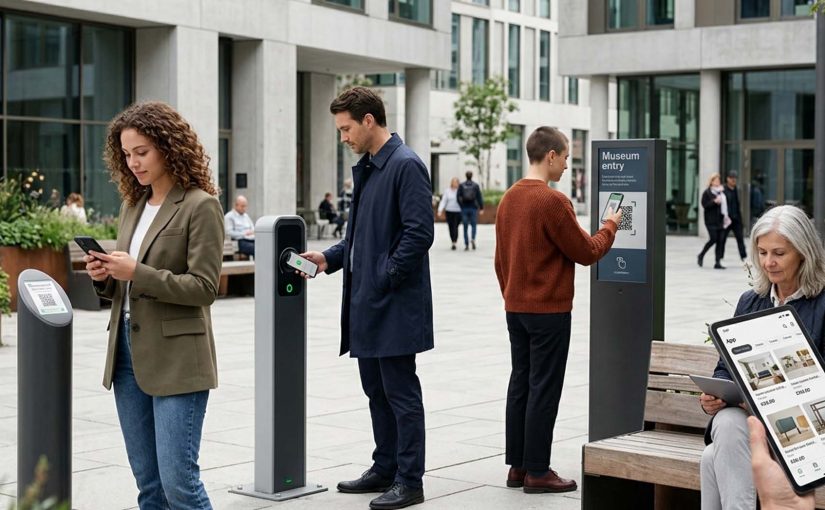
Mobile marketing and app experience sit at the point where the phone stops being a media endpoint and becomes the actual interface. The strongest work in this space does not just reach people on a handset. It gives them something useful to do, control, unlock, explore, or complete through a personal device they already carry everywhere.
On Ramble, this concept matters because the archive repeatedly captures a shift from mobile as a smaller ad screen to mobile as a portable service layer, a branded utility, a live controller, and a commerce or participation surface that makes the experience feel immediate and personal. That recurring pattern is what makes this a real concept family, not just a bucket for campaigns that happen to involve phones.
Curated by Sunil Bahl
Creator and author of SunMatrix Ramble. Independent analysis of marketing concepts, campaign mechanics, and consumer experience patterns.
How Mobile Marketing and App Experience works
The core pattern is simple. A brand uses the phone, tablet, app, or mobile-native interface as the primary touchpoint, then builds value through handheld action.
That value can take different forms. It may solve a practical problem, reduce friction in a service moment, give people a portable planning tool, turn the device into a controller, or let a branded action happen in seconds through a familiar interface. What matters is not that the work appears on mobile. What matters is that the device carries the actual job.
That is what separates this concept from generic mobile presence. The phone is not just where the message appears. It is where the value is delivered. The strongest examples make the handheld layer feel native, immediate, and useful enough that removing it would break the idea rather than simply weaken it.
What belongs here, and what does not
This hub focuses on brand ideas where the phone, tablet, app, SMS layer, or mobile-native interface is the dominant experience mechanism. A post belongs here when the audience completes the core action through a personal device, and the value comes from portable utility, handheld control, app-led exploration, or low-friction mobile completion rather than from media exposure alone.
It does not automatically include every campaign with a QR code, an NFC tap, a camera trigger, or a second screen. If the main innovation sits inside an ad unit, the cleaner home is Interactive Advertising. If the digital overlay itself is the real mechanism, the better fit is Augmented Reality in Marketing. If the value comes mainly from synchronising TV, print, radio, and device behaviour, it belongs more naturally in Second Screen and Multi-Screen Experience.
If the primary job is purchase behaviour, store flow, or retail conversion, the work moves closer to Shopper Marketing and Commerce Experience. If the social graph, check-in, upload, or public participation loop carries the campaign, the stronger home is Social Participation and Platform Mechanics. The cleaner way to read these overlaps is to focus on the dominant marketing mechanism, not just the most visible execution layer.
Representative Ramble examples
AXA: iPhone App for Car Accidents
This is one of the clearest examples in the archive because the app becomes the service layer in a stressful real-world moment. It belongs here because the value is practical, immediate, and entirely dependent on the phone as the main interface. Without the handheld utility, the idea collapses.
CJ Entertainment: The Wi-Fi Poster
This is a strong representative example because it turns a default phone behaviour into the experience itself. The interaction happens inside a familiar mobile interface rather than through extra friction or setup. It belongs here because the handset is not an accessory to the idea. It is the actual interface.
IKEA Klippbok
IKEA shows the app side of the concept especially well. This is not a one-off stunt. It is a portable planning and inspiration tool that extends the brand into repeatable everyday behaviour. It belongs in the core set because it demonstrates how mobile and app experience can create ongoing utility rather than short-lived interaction.
Coca-Cola Hilltop Mobile Ad
This example is important because it turns a familiar brand promise into a mobile-native action. The power is not just the campaign memory. The power is that the gesture can be completed directly on the device in a few taps. It belongs here because the mobile layer makes the brand meaning executable.
Lynx’s online tools for offline dating
This is the strongest portable brand-tool example in the set. The phone becomes the place where the brand equips people for a real-world social situation. It belongs here because it shows that mobile utility does not have to be narrowly functional. It can also be situational, confidence-building, and behaviour-shaping.
Related archive posts
These posts widen the view while keeping the concept clear.
Mobile-enabled commerce and transaction moments
- eBay Give-A-Toy Store. A strong example of app-enabled real-world action, but the storefront installation remains the stronger memory structure, so related status is cleaner than core-set promotion.
- eMart: Sunny Sale Shadow QR Codes. A useful supporting case for mobile-triggered commerce, but the time-bound public activation mechanic is stronger than the handheld layer alone.
Mobile as bridge between media and product exploration
- Lexus GS: NFC-Enabled Print Ad in WIRED. The phone is essential to the handoff, but the dominant mechanism is still interactive print, so it works better here than in the representative set.
Mobile as access layer for connected products and shared experiences
- Nike NBA: NFC Jersey for Fan Access. A strong mobile access example, but conceptually it sits closer to connected products and IoT-style experience design than to the core of this hub.
- Cornetto: Series Commitment Rings. The smartphone app matters, but the bigger mechanism is connected wearable behaviour, so related status keeps the boundary cleaner.
Why this concept still matters
Mobile Marketing and App Experience is no longer interesting just because it is mobile. That novelty is gone. What still matters is whether the device becomes the shortest path to value. The strongest work turns the handset into a service surface, a planning tool, a participation mechanic, or a transactional bridge that helps people do something useful, immediate, or personally relevant.
That matters even more now because convenience is no longer a differentiator on its own. The real advantage comes from making intent easy to complete in the moment it appears. A good mobile experience reduces friction, shortens the path to action, and makes the next step feel obvious rather than effortful.
Explore the full Marketing Concepts index
Mobile Marketing and App Experience is one of Ramble’s six core archive pillars. To see how it connects to adjacent concepts and the wider tiered concept system, explore the full Marketing Concepts.
A few fast answers before you act
What is Mobile Marketing and App Experience in plain terms?
It is marketing and service design where the phone, tablet, app, or mobile-native interface becomes the main place where the audience actually does something meaningful.
What makes a post belong in this concept instead of just being mobile-related?
The mobile layer has to carry the core job. If removing the phone or app would break the experience, it likely belongs here. If mobile is only a support channel or handoff layer, it probably belongs elsewhere.
How is this different from Interactive Advertising?
Interactive Advertising is usually led by the ad unit, placement, microsite, or controlled viewer interface. Mobile Marketing and App Experience is led by the handheld device itself as the place where value is delivered.
How is this different from Augmented Reality in Marketing?
AR-led work is primarily about camera-mediated overlay and digital augmentation of the physical world. This hub is broader and more utility-led. It covers mobile-native service, planning, participation, and app behaviour even when AR is not involved.
What is the most transferable lesson for marketers?
Build for the moment of intent. The best mobile experiences reduce friction and make the next useful action obvious, fast, and personal.