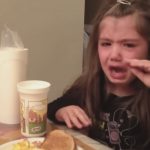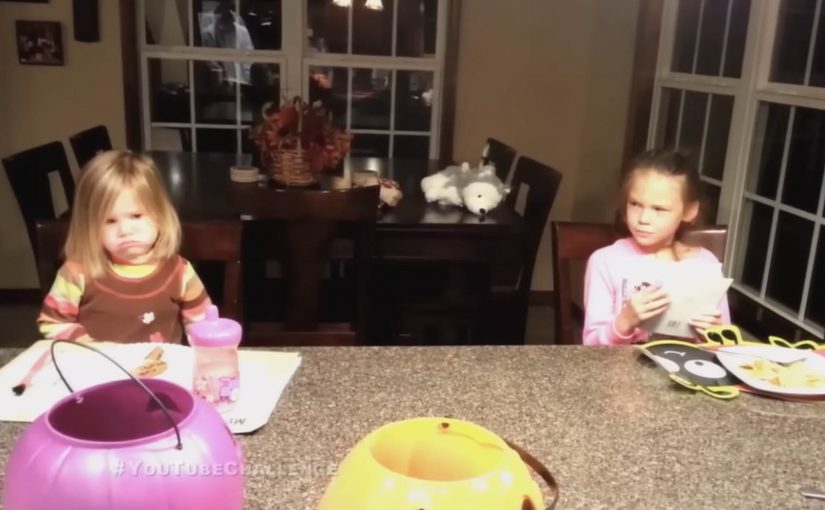
For the third consecutive year, talk show host Jimmy Kimmel challenges the parents of America to prank their kids and pretend that they ate all of their Halloween candy.
As always, parents oblige by the hundreds, and the results of this year’s Halloween Candy YouTube Challenge are compiled into a best-of reel.
A prank designed for mass participation
The mechanism is almost nothing. One line delivered at the worst possible moment, with a camera rolling. The show prompts the setup, parents run it at home, and YouTube becomes the route for collecting clips at scale.
That works because the prompt is so simple that families can recreate it instantly, while the show keeps editorial control by curating the best reactions into one polished reel.
In US pop-culture marketing, repeatable audience-participation formats win because they are easy to copy and still feel personal every time.
The real question is how a one-line prank becomes a yearly entertainment asset people keep recreating for free.
Why this lands
This is a smart participation format, not just a late-night gag. The emotions are instant and unedited. You get a mix of outrage, heartbreak, negotiation, and unexpected maturity, and that variety keeps the compilation watchable. It also feels like a yearly ritual, which helps the segment spread even among people who do not watch the show regularly.
Extractable takeaway: If you want repeatable virality, give people a one-sentence script, a clear capture instruction, and a predictable calendar moment, then let the audience supply infinite variation.
The previous challenge videos can be seen here: 2011 and 2012.
What repeatable participation marketers should steal
- Make the prompt copyable. One sentence beats a complex brief.
- Design for home production. If the content requires no special tools, submissions multiply.
- Compile the chaos. A best-of edit turns scattered clips into a single shareable asset.
- Repeat annually. Familiar format plus new reactions gives people a reason to come back each year.
A few fast answers before you act
What is the “I ate your Halloween candy” challenge?
Parents tell their kids they ate all the Halloween candy, film the reaction, and submit the clip for a compilation segment.
Why does this format keep working year after year?
The setup stays identical, but the reactions are endlessly different, which creates fresh entertainment without changing the mechanic.
What makes the compilation more shareable than single clips?
A best-of edit increases pace and variety, so viewers stay longer and are more likely to pass it on as a single link.
What is the core growth driver?
Low friction participation. One simple script, one simple recording, and a familiar upload behavior.
What should brands learn from this without copying the cruelty?
Use a repeatable prompt that invites audience variation, and build a clear “submit, then compile” distribution loop around it.