
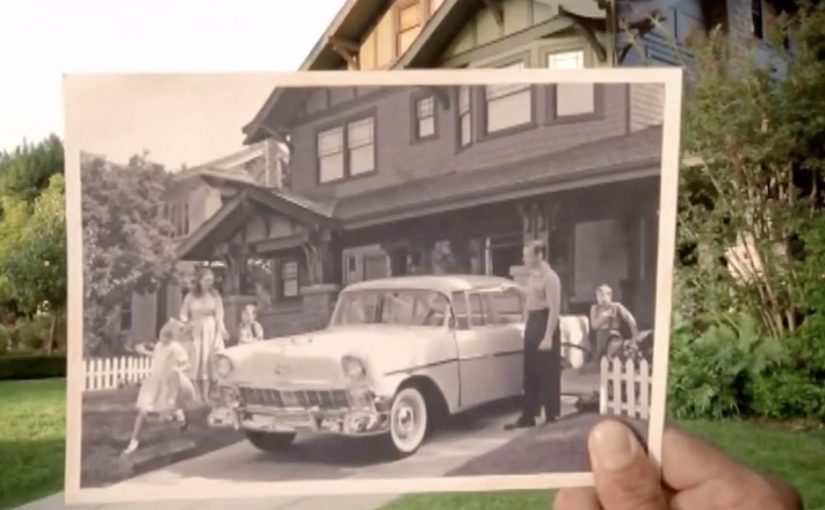
As a way to celebrate turning 100, Chevy creates a spot titled “Then & Now” that shows people staying connected to iconic moments, locations, and Chevrolet vehicles as if those moments are with them right there, right now.
A simple device that does the heavy lifting
The mechanism is beautifully restrained: vintage photographs of Chevrolets and the people around them are held up to the camera in the exact same locations today, aligning past and present into a single frame.
In automotive heritage storytelling, the fastest way to communicate longevity is to make time visible with a device that needs almost no explanation.
In heritage-heavy categories, anniversary storytelling lands best when it helps the audience locate their own memories in the present, not when it asks them to admire the brand.
Why it lands emotionally
The film does not argue that the brand matters. It shows that memory matters, and lets the vehicles sit naturally inside that truth. The hand-held photos are the emotional bridge. They make nostalgia feel personal, not corporate.
Extractable takeaway: If you can make time visible with one repeatable in-scene device, you can earn nostalgia without turning the work into a corporate victory lap.
The business intent behind the sentiment
A centennial can easily become self-congratulation. This avoids that trap by focusing on the audience’s continuity. The brand is the thread that runs through people’s lives, places, and rituals, rather than the subject demanding applause. The real question is whether your anniversary work makes the audience feel time passing in their own life, not whether it proves you have been around. Anniversary work should prioritize the audience’s continuity over brand self-congratulation.
Transferable moves for anniversary work
- Choose one visual metaphor and commit. One repeatable device beats a collage of “greatest hits”.
- Let people be the hero. Heritage feels earned when the customer’s life is the storyline.
- Use restraint as a quality signal. Minimal copy and slow pacing can make the work feel more truthful.
- Anchor the past in the present. Showing the same place now keeps nostalgia from drifting into museum mode.
A few fast answers before you act
What is “Then & Now” in one line?
A centennial film that aligns vintage Chevrolet photos with the same real-world locations today to show continuity across generations.
What is the core creative mechanism?
Hand-held historical photographs matched precisely to present-day scenes, creating a single frame that contains both time periods.
Why does this approach work for anniversary advertising?
It makes time visible instantly, and it ties the brand to lived memory rather than to corporate milestones.
What should you avoid in centennial storytelling?
Avoid making the milestone the hero. If the audience cannot see their own continuity in the work, the film risks reading like self-congratulation.
What is the most transferable takeaway?
If you can show the passage of time with one simple, repeatable device, you can tell a heritage story without overexplaining it.