
Chevrolet: Then & Now

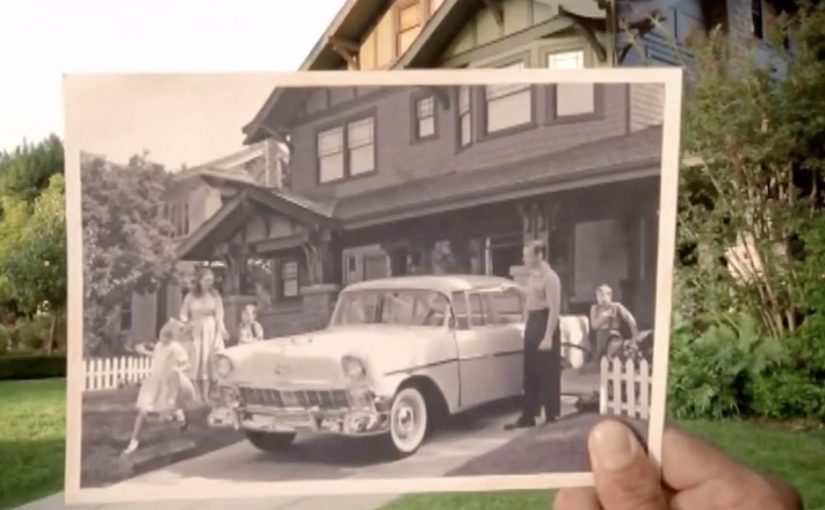
As a way to celebrate turning 100, Chevy creates a spot titled “Then & Now” that shows people staying connected to iconic moments, locations, and Chevrolet vehicles as if those moments are with them right there, right now.

A simple device that does the heavy lifting

The mechanism is beautifully restrained: vintage photographs of Chevrolets and the people around them are held up to the camera in the exact same locations today, aligning past and present into a single frame.

In automotive heritage storytelling, the fastest way to communicate longevity is to make time visible with a device that needs almost no explanation.

In heritage-heavy categories, anniversary storytelling lands best when it helps the audience locate their own memories in the present, not when it asks them to admire the brand.

Why it lands emotionally

The film does not argue that the brand matters. It shows that memory matters, and lets the vehicles sit naturally inside that truth. The hand-held photos are the emotional bridge. They make nostalgia feel personal, not corporate.

Extractable takeaway: If you can make time visible with one repeatable in-scene device, you can earn nostalgia without turning the work into a corporate victory lap.

The business intent behind the sentiment

A centennial can easily become self-congratulation. This avoids that trap by focusing on the audience’s continuity. The brand is the thread that runs through people’s lives, places, and rituals, rather than the subject demanding applause. The real question is whether your anniversary work makes the audience feel time passing in their own life, not whether it proves you have been around. Anniversary work should prioritize the audience’s continuity over brand self-congratulation.

Transferable moves for anniversary work

  • Choose one visual metaphor and commit. One repeatable device beats a collage of “greatest hits”.
  • Let people be the hero. Heritage feels earned when the customer’s life is the storyline.
  • Use restraint as a quality signal. Minimal copy and slow pacing can make the work feel more truthful.
  • Anchor the past in the present. Showing the same place now keeps nostalgia from drifting into museum mode.

A few fast answers before you act

What is “Then & Now” in one line?

A centennial film that aligns vintage Chevrolet photos with the same real-world locations today to show continuity across generations.

What is the core creative mechanism?

Hand-held historical photographs matched precisely to present-day scenes, creating a single frame that contains both time periods.

Why does this approach work for anniversary advertising?

It makes time visible instantly, and it ties the brand to lived memory rather than to corporate milestones.

What should you avoid in centennial storytelling?

Avoid making the milestone the hero. If the audience cannot see their own continuity in the work, the film risks reading like self-congratulation.

What is the most transferable takeaway?

If you can show the passage of time with one simple, repeatable device, you can tell a heritage story without overexplaining it.
QR Codes: Travel Back in Time to Graffiti

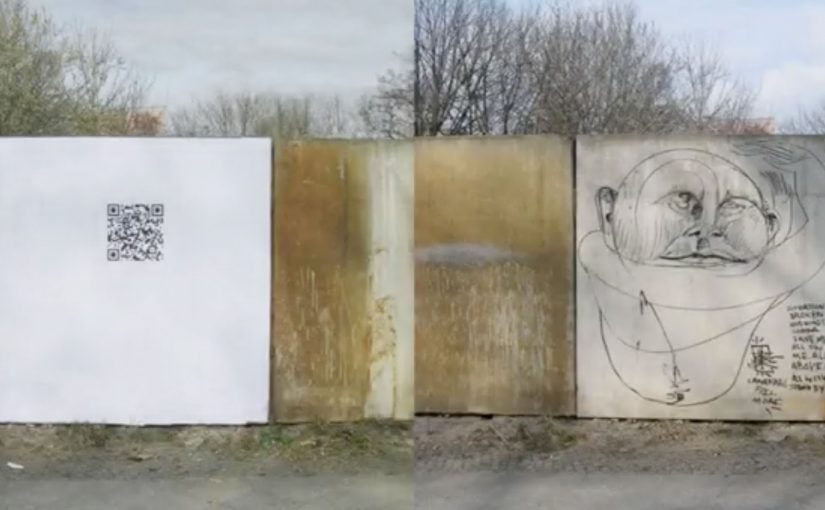
QR Codes are now being used to preserve graffiti for posterity by photographing the graffiti before it is removed. After the graffiti has been cleaned off by local authorities or a building owner, a QR Code is placed in the exact location which leads to the original image of the graffiti. In this way, a mobile phone with a QR-Code Reader can be used to travel back in time. Here, “time travel” means scanning a code on a cleaned wall to see the photo of what used to exist there.

How the “time travel” mechanism works

The system is straightforward: capture the artwork while it exists, then replace the physical mark with a digital pointer after it disappears. The QR code becomes a permanent address for a temporary piece. Because the code stays put while the paint does not, the link between place and memory survives removal.

In cities where street art is constantly overwritten, cleaned, or redeveloped, lightweight digital markers can preserve cultural memory without freezing the city in place.

The real question is whether you want to erase the mark, or keep a findable trace of it in the same place.

This is the right preservation trade-off: let surfaces change, but keep the memory retrievable where it mattered.

Why it lands

It respects ephemerality instead of fighting it. Graffiti stays transient, but its trace stays findable.

Extractable takeaway: Preservation becomes compelling when it is tied to a precise location and low-friction. If people can access “what used to be here” in the exact place they are standing, the archive feels like part of the city rather than a separate museum.

It puts the archive back on the street. The documentation is not hidden in a database. It is anchored to the exact wall where the work lived.

It makes discovery participatory. You have to scan, which turns the passer-by into an active retriever of the past, not just a viewer.

Borrowable moves for place-linked archives

  • Anchor digital content to a precise physical spot. Place is the interface, not just the backdrop.
  • Design for “after removal”. If the thing you love will disappear, make the replacement object carry the memory.
  • Keep the interaction simple. A scan is a smaller ask than an app download or a long URL.

A few fast answers before you act

What problem does this solve?

It preserves the visual record of graffiti that is likely to be removed, while still letting the city clean or repaint surfaces.

Why use QR codes instead of a normal plaque or sign?

A QR code can point to a photo archive and scale cheaply. It also keeps the physical footprint small.

What makes this feel like “traveling back in time”?

You stand in the present at a cleaned wall, scan the code, and instantly see what used to exist in that exact location.

What are the key dependencies for this to work long-term?

The linked image hosting must stay live, and the code must remain readable and not be removed or damaged.

How could a city or brand adapt the idea?

Use location-linked markers to preserve temporary culture. Murals, pop-up installations, event posters, even construction hoardings, while keeping the interaction one-step simple.