
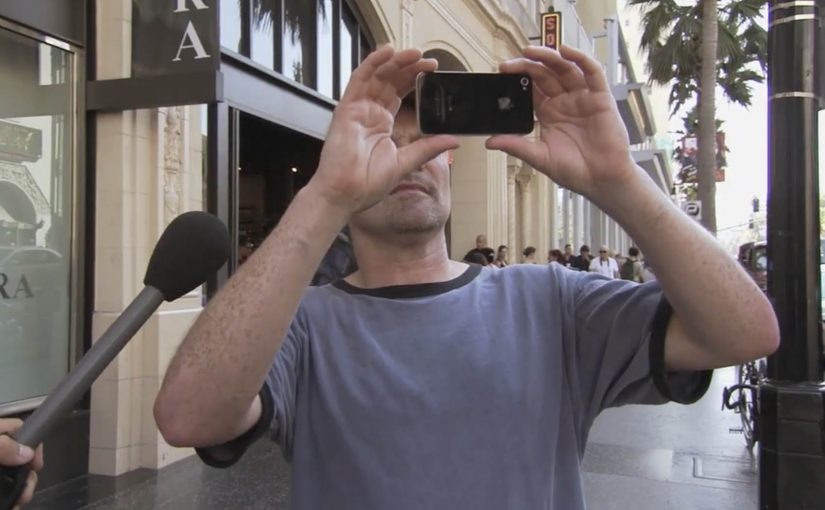
The iPhone 5 still has some weeks to go before it is officially available. That little detail did not stop talk show host Jimmy Kimmel from giving random people on the streets a chance to “test” the iPhone 5, which was actually just an iPhone 4S.
How the prank works
The mechanism is simple: present a familiar object as a new one, then ask for first impressions on the spot. The humor comes from watching people project “newness” onto something they are already holding, then confidently describe improvements that cannot be there because nothing changed.
In consumer tech launches, perceived novelty often shapes first impressions as much as real novelty does.
The real question is whether the launch story is shaping the feedback you think you are collecting.
Why it lands
The segment exposes expectation marketing in real time, meaning the expectation itself becomes part of the perceived product experience. It makes a point without preaching. It lets people’s own words demonstrate how branding, timing, and context can change what we think we are seeing.
Extractable takeaway: When audiences expect a breakthrough, they interpret ambiguous cues as improvements. Marketing and product teams should separate product experience from launch narrative when they need truth, because the narrative can become the experience.
It turns product hype into a social mirror. Viewers do not only laugh at the interviewees. They recognize the pattern, because everyone has “felt” an upgrade before they could name a feature.
It is edit-friendly proof. Quick street soundbites create a fast rhythm and a clear punchline. The format is built for sharing because each reaction is a self-contained beat.
Borrowable moves from the iPhone prank
- Use a clean, repeatable setup. One premise, one question, many reactions. The simplicity is what creates volume and pace.
- Build the contrast into the reveal. The punchline is strongest when viewers understand that the object never changed.
- Let the audience diagnose the insight. Showing beats telling. The segment works because the viewer reaches the conclusion themselves.
A few fast answers before you act
What is the core joke of the segment?
People are asked to review a “new” iPhone, but they are actually holding an older model, and many still describe it as better.
What does this say about consumer perception?
That context and expectation can shape what people think they notice, especially when differences are subtle or undefined.
Is this a critique of Apple or of people?
It plays more like a critique of hype mechanics and social pressure in “first impression” moments than a critique of one brand.
Why is the street-interview format effective here?
It creates instant, unscripted soundbites, and the variety of reactions keeps the piece moving.
What is the practical lesson for marketers and product teams?
If you need truth, test products in neutral conditions. If you want buzz, understand that the story around a product can amplify perceived value, sometimes beyond what the product alone delivers.