
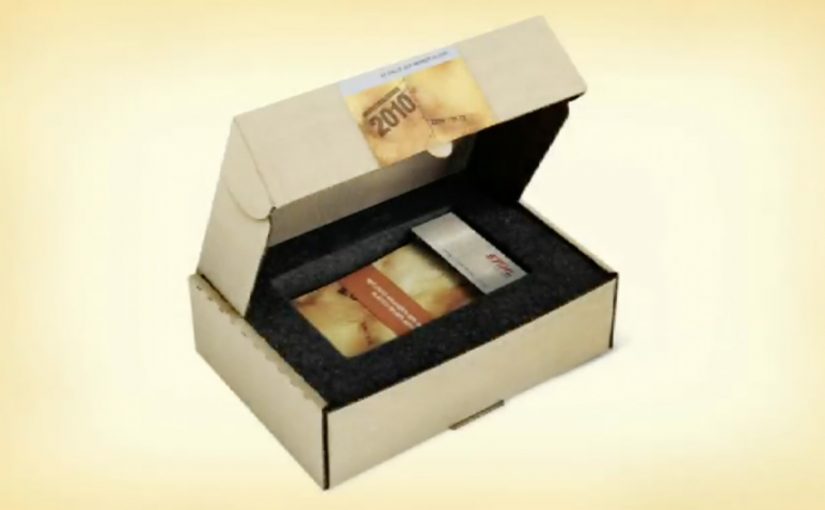
STIHL asked Euro RSCG Germany to develop a business gift promoting its range of leaf blowers. The target audience was international key accounts, and the brief was clear: create something they had never seen before.
Euro RSCG invented an autumn calendar that tears off its “leaves” automatically. The gag is that the calendar behaves like a tree in fall, dropping leaves without you touching it, and making the “clean-up problem” feel immediate and slightly annoying. Exactly the moment where a leaf blower becomes the satisfying solution.
How the product demo is baked into the gift
The mechanism is pure physical storytelling: an object that creates a small mess on schedule. Each day, another leaf falls. Over time, the pile builds. The calendar turns passing time into accumulating clutter, so the product need is not explained, it is experienced.
In B2B product marketing, tactile gifts are most effective when they are not branded trinkets but working demonstrations of the problem the product solves.
The real question is whether your demo makes the problem felt without a salesperson in the room.
Why it lands
It turns a convenience category into felt relief from a recurring irritation, and it does it repeatedly through a daily trigger that keeps resurfacing without loud branding.
Extractable takeaway: B2B gifts perform when they create a recurring micro-problem that mirrors the customer’s real pain, then let the product category be the obvious, satisfying fix.
- It makes necessity visible. Leaf blowers are often sold as convenience. This calendar reframes them as relief from a recurring irritation.
- It creates repeated moments, not a one-time impression. A calendar is a month-long touchpoint. The idea keeps resurfacing every day the “leaf” drops.
- It respects the key-account audience. The gift is novel, engineered, and story-worthy. It earns attention without needing loud branding.
Borrow this mechanic for B2B demos
- Turn time into a narrative device. Calendars, subscriptions, and scheduled triggers are built for repeat exposure.
- Create a controlled irritation. A controlled irritation is a small, reversible annoyance that stays playful. The best demos let people feel the problem in a safe, playful way.
- Make the object retellable. If the recipient can explain it in one sentence, it becomes a story they share inside the company.
A few fast answers before you act
What is the “autumn calendar”?
A calendar designed so its leaf-shaped pages tear off automatically, mimicking falling leaves and creating a small daily mess.
Why does that sell leaf blowers?
Because it dramatizes the nuisance of accumulating leaves and makes the “cleanup solution” feel immediate and obvious.
Who was this made for?
International key accounts, as a business gift intended to be novel and memorable rather than a standard brochure or giveaway.
What makes this a strong example of B2B creativity?
The gift demonstrates the problem through behavior, not messaging. It earns repeated attention through daily interaction.
What is the transferable lesson?
If you can make the pain point show up physically and repeatedly, you reduce the need for persuasion. The demo does it for you.