
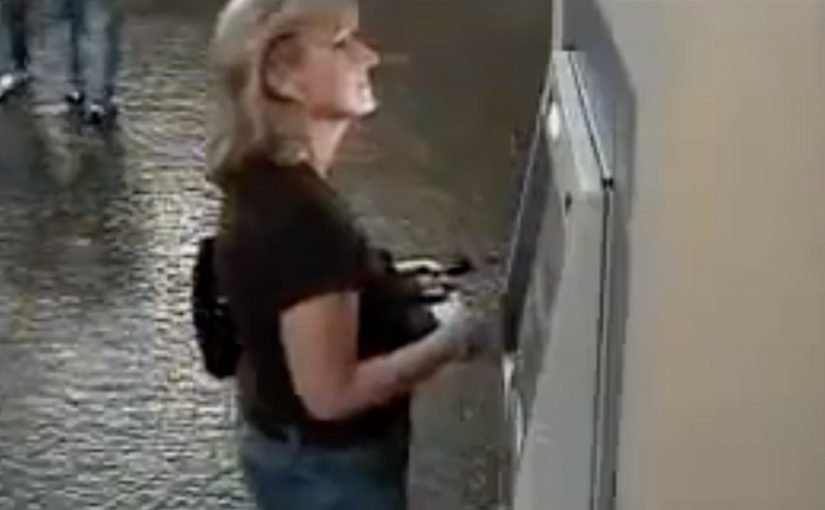
Jimmy Kimmel: Talking ATM

Here is some Monday morning humor with talk show host Jimmy Kimmel pranking innocent people with a “Talking ATM”.

What the bit is, in one clean idea

The premise is as simple as it sounds. You walk up to an ATM expecting silence and routine. Instead, the machine “talks back”, and the normal transaction turns into a public surprise.

Here, the bit is the repeatable comic setup, an ordinary ATM behaving like a person in public.

The mechanism is minimal. Put the prank inside a familiar object, then let the setting do the rest. Because everyone understands what an ATM is for, the moment the ATM behaves differently, the audience immediately gets the joke.

In everyday urban life where people run on autopilot, the cleanest pranks work by interrupting a routine object, not by adding complicated setup.

Why it works on camera

This lands because it is universal and fast. There is no niche reference to decode, and the reactions happen in seconds. The “victim” goes from focused to confused to laughing, and viewers get the same emotional arc without needing context.

Extractable takeaway: For shareable humor, build around a routine people recognize instantly, then flip one expectation. The clearer the routine, the bigger the reaction.

What brands can learn from this style of content

The real question is how you borrow the clarity of a universal routine without copying the prank.

The lesson is not “prank people”. It is “use familiarity as your amplifier”. When the object is universally understood, you can spend your creative budget on the twist, not on explaining the world you built.

Have a great week. For more videos of Jimmy Kimmel click here.

Steal this pattern, not the ATM

  • Start with a known ritual. Withdraw cash. Buy coffee. Scan a ticket. Simple beats clever.
  • Change one rule only. The moment should be legible on mute.
  • Design for reaction clarity. Confusion first, then release. That is the loop people share.
  • Keep it short. The best bits do not overstay the premise.

A few fast answers before you act

What is “Talking ATM”?

A Jimmy Kimmel prank segment where an ATM appears to speak to people during a withdrawal, turning a routine moment into a surprise reaction.

Why is an ATM such a good prank object?

Because it is a universal routine object. People expect it to be silent and transactional, so any break in that expectation is instantly noticeable.

What is the core mechanism that makes it shareable?

A familiar setup plus a single clear twist, delivered quickly enough that viewers can understand the premise and enjoy the reaction without explanation.

What is the safest marketing takeaway?

Use familiar rituals to reduce explanation, then concentrate creativity in one unmistakable moment that people can describe in a sentence.

What should a brand copy from this format?

Copy the structural discipline, not the stunt: start with a routine people already understand, change one clear rule, and make the reaction easy to grasp in seconds.

Jimmy Kimmel: Halloween Candy Prank 2012

Last year for Halloween, talk show host Jimmy Kimmel challenged the parents of America to tell their kids that they ate all their Halloween candy and then video tape their reactions and share them on YouTube. The challenge was a huge success and the best-of compilation reportedly passed 34 million views within a year.

So this year, once again, Jimmy Kimmel issued the same challenge. The results are exactly as brutal and hilarious as you’d expect.

A late-night segment built from other people’s cameras

The mechanic is straightforward: a single, repeatable prank with a clear instruction. Tell the kids you ate the candy, capture the reaction, upload it, and label it so the show can find it. The audience does the filming. The show does the curation.

In mass-audience US entertainment formats, recurring viewer challenges turn a broadcast show into a participatory channel.

The real question is how you turn a simple prank into a recurring submission format people want to recreate.

This is smart format design, not just a funny late-night stunt.

Why it lands

It is a format, not a one-off. The joke is simple enough to repeat annually, which makes participation feel like joining a tradition.

Extractable takeaway: Repeatable audience challenges go viral when the instruction is easy, the emotional payoff is immediate, and the show’s role is tight curation. The audience supplies volume. The editor supplies pace and punch.

It scales because the setup is universal. Every family understands the stakes instantly. No explanation needed. Just the moment.

It is engineered for contrast. You get the full spectrum in minutes: outrage, tears, bargaining, moral lectures, and the occasional surprisingly mature response.

What this recurring prank format teaches

  • Write the participation brief like a recipe. One action, one prompt, one deliverable, one label.
  • Design for low production. If it can be filmed on a phone with no setup, you will get scale.
  • Make the headline self-evident. If people can describe it in one sentence, they will share it.
  • Curate ruthlessly. The “best-of” cut is what turns raw clips into a watchable story.

A few fast answers before you act

What is the core idea behind this Jimmy Kimmel challenge?

A simple prank prompt that viewers can easily recreate, then submit, allowing the show to compile the best reactions into a tight, shareable segment.

Why does it work so well as a recurring format?

Because the setup is instantly understood, participation is easy, and each year produces fresh reactions without changing the concept.

Is this “user-generated content” or just a TV bit?

Both. The audience generates the footage. The show packages it into a broadcast-quality narrative through editing and selection.

What makes the compilation feel addictive to watch?

Fast escalation and variety. Each clip delivers a quick emotional hit, and the edit keeps the pace moving before any one moment drags.

What is the transferable lesson for marketers?

If you want mass participation, create a repeatable prompt with an immediate emotional outcome, then invest in curation so the best entries become the distribution engine.

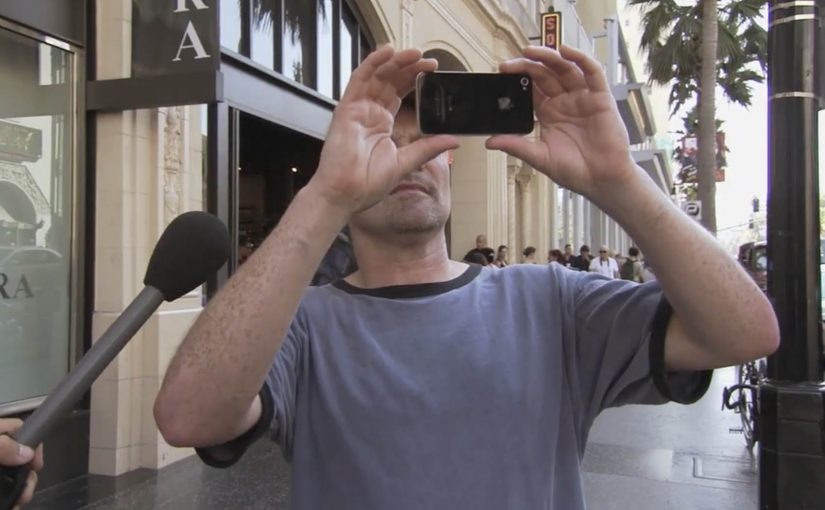
Jimmy Kimmel: First Look at iPhone 5

The iPhone 5 still has some weeks to go before it is officially available. That little detail did not stop talk show host Jimmy Kimmel from giving random people on the streets a chance to “test” the iPhone 5, which was actually just an iPhone 4S.

How the prank works

The mechanism is simple: present a familiar object as a new one, then ask for first impressions on the spot. The humor comes from watching people project “newness” onto something they are already holding, then confidently describe improvements that cannot be there because nothing changed.

In consumer tech launches, perceived novelty often shapes first impressions as much as real novelty does.

The real question is whether the launch story is shaping the feedback you think you are collecting.

Why it lands

The segment exposes expectation marketing in real time, meaning the expectation itself becomes part of the perceived product experience. It makes a point without preaching. It lets people’s own words demonstrate how branding, timing, and context can change what we think we are seeing.

Extractable takeaway: When audiences expect a breakthrough, they interpret ambiguous cues as improvements. Marketing and product teams should separate product experience from launch narrative when they need truth, because the narrative can become the experience.

It turns product hype into a social mirror. Viewers do not only laugh at the interviewees. They recognize the pattern, because everyone has “felt” an upgrade before they could name a feature.

It is edit-friendly proof. Quick street soundbites create a fast rhythm and a clear punchline. The format is built for sharing because each reaction is a self-contained beat.

Borrowable moves from the iPhone prank

  • Use a clean, repeatable setup. One premise, one question, many reactions. The simplicity is what creates volume and pace.
  • Build the contrast into the reveal. The punchline is strongest when viewers understand that the object never changed.
  • Let the audience diagnose the insight. Showing beats telling. The segment works because the viewer reaches the conclusion themselves.

A few fast answers before you act

What is the core joke of the segment?

People are asked to review a “new” iPhone, but they are actually holding an older model, and many still describe it as better.

What does this say about consumer perception?

That context and expectation can shape what people think they notice, especially when differences are subtle or undefined.

Is this a critique of Apple or of people?

It plays more like a critique of hype mechanics and social pressure in “first impression” moments than a critique of one brand.

Why is the street-interview format effective here?

It creates instant, unscripted soundbites, and the variety of reactions keeps the piece moving.

What is the practical lesson for marketers and product teams?

If you need truth, test products in neutral conditions. If you want buzz, understand that the story around a product can amplify perceived value, sometimes beyond what the product alone delivers.