
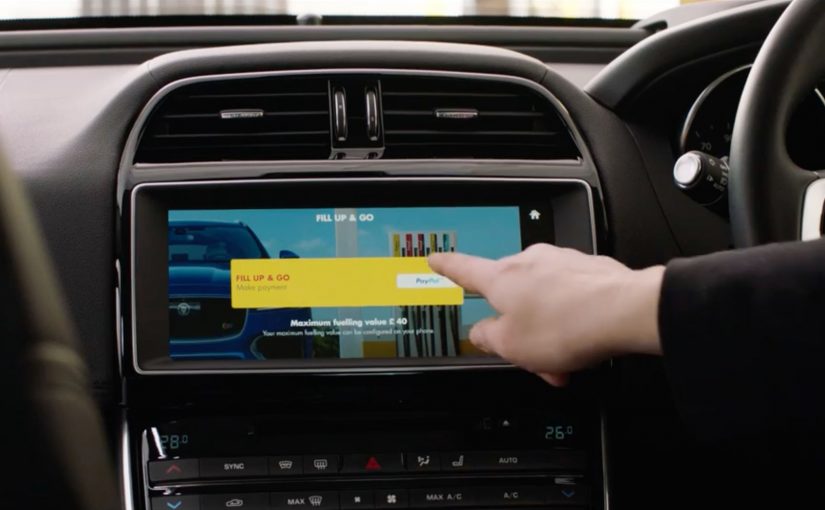
Drive up to a Shell pump. Choose your fuel amount on the car’s touchscreen. Pay without leaving the seat. In a world-first, Jaguar and Land Rover owners can pay for fuel via the touchscreen of their car at Shell service stations. Rather than paying at the pump or queuing to pay in the shop, installing the Shell app via InControl means drivers can drive up to a pump at participating Shell service stations, select how much fuel they require, and pay with PayPal or Apple Pay on the vehicle’s touchscreen.
For more details see Jaguar’s announcement.
Why this matters beyond fuel
This is not really a “payments innovation” story. It is a friction story. The value comes from removing context switching, meaning the driver does not have to break the refuelling task to pull out a phone, walk to the shop, and re-authenticate. No wallet. No phone. No queue. By keeping selection and payment inside the in-car interface, the flow reduces both steps and “did it work” anxiety, which is why it feels meaningfully faster. This is the right direction for in-car commerce, but only if station and pump identification are unambiguous and receipts are immediate. In connected-vehicle ecosystems where multiple brands share the same moment, the primary interface should own the transaction at the point of need.
Extractable takeaway: Collapse checkout into the moment of intent inside the primary interface, and the “innovation” will be felt as time and effort saved.
It moves checkout into the moment of intent
The moment you decide to refuel is the moment you can complete the transaction. That reduces drop-off, reduces effort, and makes the experience feel modern without changing the core product.
It turns the car into a commerce surface
Once the dashboard becomes a trusted place to authenticate and pay, the opportunity expands to other “on-the-go” services where drivers normally step out, wait, or juggle devices. A commerce surface is any interface that can identify the context, confirm the choice, and take payment without switching devices.
It is a clean example of partner-led experience design
Jaguar provides the in-car platform. Shell provides the forecourt context and operational integration. The user experiences it as one flow, not two brands handing off a task.
The real question is whether your primary interface can complete payment at the exact moment intent forms, without sending people into a separate device, screen, or queue.
The reusable pattern
- Embed the action where the context already is. Put the transaction inside the primary interface, not a separate detour.
- Keep the flow short and explicit. Select, confirm, pay, receipt. Anything more breaks the promise.
- Design for trust signals. Clear station identification, clear confirmation, and a clear receipt reduce “did it work” anxiety.
- Make the benefit obvious in one sentence. “Pay from your car” is enough. The value is immediate.
What to measure beyond views
- Adoption. Percentage of eligible drivers who activate the in-car payment feature.
- Repeat usage. Whether people use it again after the first try.
- Time saved. Reduction in “fuel stop duration” compared with paying in-store.
- Experience confidence. Drop-off rates between selecting the pump and confirming payment.
Guardrails to steal for in-car checkout
- False positives. The system must reliably know which station and which pump the driver is using.
- Failure recovery. If payment fails, the user needs a clear next step that does not create embarrassment at the pump.
- Trust. Drivers need clear confirmation, receipts, and predictable behavior every time.
A few fast answers before you act
What is Jaguar’s in-car cashless fuel payment?
A Shell fuel payment flow that lets Jaguar and Land Rover drivers select an amount and pay from the vehicle touchscreen via the Shell app in InControl.
What problem does it solve?
It removes the need to pay at the pump or queue inside the shop. The entire task completes from the car.
What is the core mechanism?
A contextual in-car experience that links the driver, the station, and the payment method into one short flow.
What is the most reusable lesson?
Move checkout into the moment of intent inside the primary interface. Then keep the steps minimal and confidence high.
What is the biggest failure mode?
Any ambiguity about station or pump, or any unclear “did I pay” outcome. Trust collapses fast in payments.