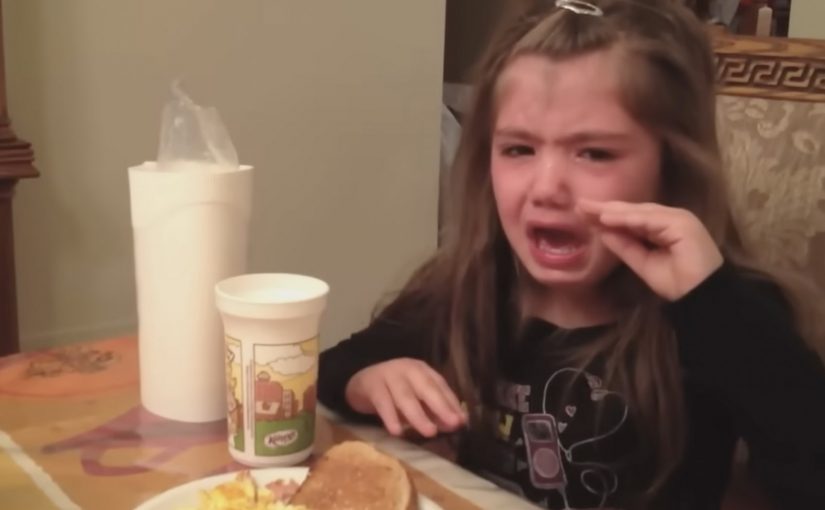
Last year for Halloween, talk show host Jimmy Kimmel challenged the parents of America to tell their kids that they ate all their Halloween candy and then video tape their reactions and share them on YouTube. The challenge was a huge success and the best-of compilation reportedly passed 34 million views within a year.
So this year, once again, Jimmy Kimmel issued the same challenge. The results are exactly as brutal and hilarious as you’d expect.
A late-night segment built from other people’s cameras
The mechanic is straightforward: a single, repeatable prank with a clear instruction. Tell the kids you ate the candy, capture the reaction, upload it, and label it so the show can find it. The audience does the filming. The show does the curation.
In mass-audience US entertainment formats, recurring viewer challenges turn a broadcast show into a participatory channel.
The real question is how you turn a simple prank into a recurring submission format people want to recreate.
This is smart format design, not just a funny late-night stunt.
Why it lands
It is a format, not a one-off. The joke is simple enough to repeat annually, which makes participation feel like joining a tradition.
Extractable takeaway: Repeatable audience challenges go viral when the instruction is easy, the emotional payoff is immediate, and the show’s role is tight curation. The audience supplies volume. The editor supplies pace and punch.
It scales because the setup is universal. Every family understands the stakes instantly. No explanation needed. Just the moment.
It is engineered for contrast. You get the full spectrum in minutes: outrage, tears, bargaining, moral lectures, and the occasional surprisingly mature response.
What this recurring prank format teaches
- Write the participation brief like a recipe. One action, one prompt, one deliverable, one label.
- Design for low production. If it can be filmed on a phone with no setup, you will get scale.
- Make the headline self-evident. If people can describe it in one sentence, they will share it.
- Curate ruthlessly. The “best-of” cut is what turns raw clips into a watchable story.
A few fast answers before you act
What is the core idea behind this Jimmy Kimmel challenge?
A simple prank prompt that viewers can easily recreate, then submit, allowing the show to compile the best reactions into a tight, shareable segment.
Why does it work so well as a recurring format?
Because the setup is instantly understood, participation is easy, and each year produces fresh reactions without changing the concept.
Is this “user-generated content” or just a TV bit?
Both. The audience generates the footage. The show packages it into a broadcast-quality narrative through editing and selection.
What makes the compilation feel addictive to watch?
Fast escalation and variety. Each clip delivers a quick emotional hit, and the edit keeps the pace moving before any one moment drags.
What is the transferable lesson for marketers?
If you want mass participation, create a repeatable prompt with an immediate emotional outcome, then invest in curation so the best entries become the distribution engine.