
Quilmes: Mitigol

Quilmes: Mitigol

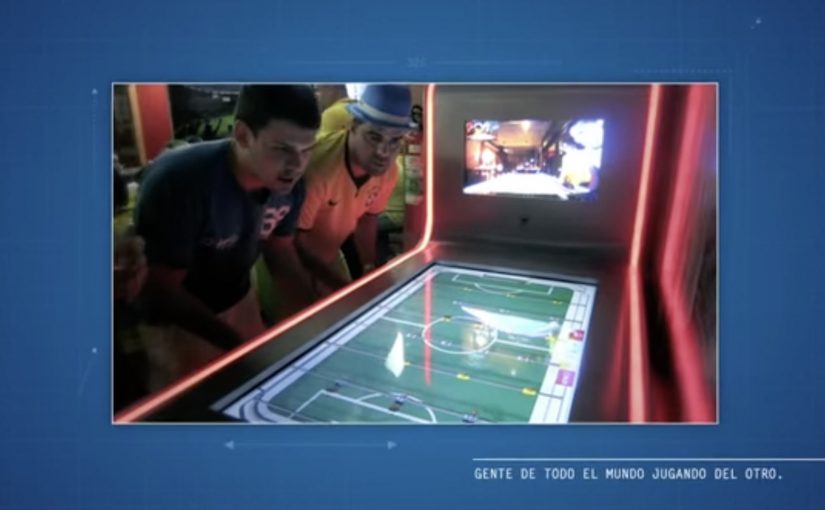
Quilmes and their agency +Castro reinvented the classic game of foosball. In its new version they enabled Argentinians and Brazilians to play each other in real time through a custom made digital foosball table.

Dubbed “Mitigol”, the activation turns foosball into a cross-border live match. One half of the table was placed in Argentina and the other half in Brazil. During the game, players could see their opponent via special in-built video cameras that further enhanced the real time experience of the game. As a prize, Quilmes gave away free beer.

How Mitigol works

The mechanism is a physical game with a digital bridge. A custom table syncs the ball and player movement across distance, while embedded cameras add face-to-face presence so it feels like a real match rather than a remote demo.

In sports and event-led marketing, shared-play installations can turn rivalry into participation because they give fans something to do together, not just something to watch.

Why it lands

This works because it makes a national rivalry tangible without needing a screen-first experience. Foosball already has competitive tension built in, so the cross-border connection raises the stakes instantly. The cameras then do the emotional work by proving the opponent is real, right now, reacting in real time.

Extractable takeaway: When you want “real time” to feel meaningful, do not rely on the word. Add one physical interaction that people already understand, then layer in live presence so the distance becomes the headline.

What Quilmes is really buying

The real question is how to turn passive rivalry into a shared act people want to join.

Beyond novelty, Mitigol is a closeness story. It borrows the energy of an event moment and converts it into a branded experience where the fan is the performer, not the spectator. The prize is just the nudge that keeps the line moving and the competition sharp.

What to steal from Mitigol

  • Start with a familiar game. If the rules are known, participation spikes.
  • Make distance visible. The split-table concept is the idea. Do not hide it.
  • Add live presence. Cameras or live feedback make “remote” feel human.
  • Reward the behavior you want. Small, immediate prizes keep throughput high.

A few fast answers before you act

What is Mitigol?

It is a custom foosball table experience that connects two locations so players in different countries can play the same match in real time.

Why split the table across Argentina and Brazil?

Because the physical split makes the cross-border rivalry concrete. It is instantly legible as “we are playing each other right now”.

What role do the built-in cameras play?

They add live presence and reaction, which makes the experience feel like a real opponent rather than a remote simulation.

What is the simplest way to copy the principle?

Take a familiar physical activity, connect it across distance with tight synchronization, then add a live human layer so the interaction feels personal.

What should you measure for an activation like this?

Participation volume, repeat play, dwell time, and how often spectators convert into players once they see it in action.
Molson Canadian: The Beer Fridge

Molson Canadian: The Beer Fridge

First various brands created campaigns with red buttons, then came one with a pink phone, and now Molson, a Canadian beer brand, revolves a whole campaign around bright red refrigerators.

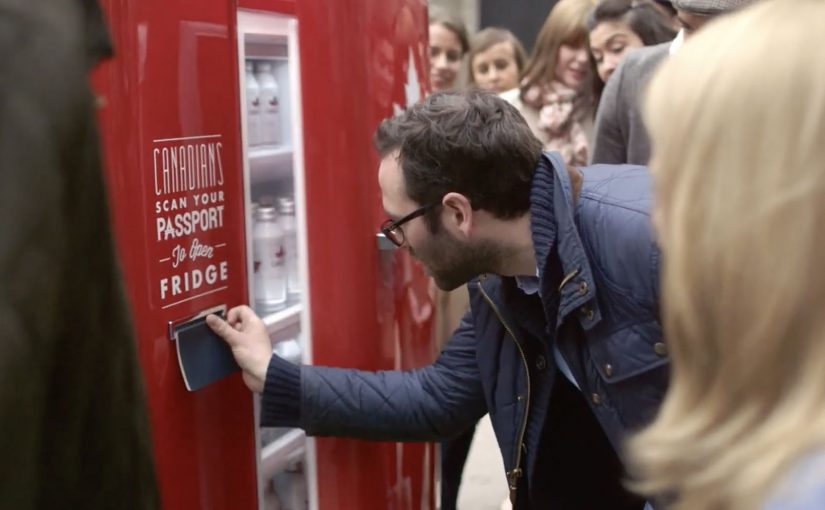
These eye-catching fridges were filled with Molson Canadian beer and strategically placed across a variety of European locations to attract crowds. The catch is simple. The fridge can be opened only by scanning a Canadian passport.

The campaign was created by Rethink Canada to bring back the classic tagline, “I Am Canadian.” The footage collected from the different locations was then cut into a longer online film and a shorter TV ad, described as running during the Stanley Cup Finals.

A gate that turns identity into a moment

The mechanism is a physical “access rule” everyone understands. Here, the access rule is simple: only a scanned Canadian passport opens the fridge. A fridge full of free beer is a magnet. The passport scan turns that magnet into a social filter, because the only way anyone drinks is if a Canadian is present and willing to open it. In one move, the crowd goes from spectators to collaborators.

In multinational brand building, national identity can easily become abstract. This makes it concrete in public, in seconds, with a prop people instinctively gather around.

Why it lands

It works because the restriction creates a mini-drama with a friendly payoff. People try. People fail. Then the “right” person arrives, the door opens, and the whole crowd benefits. The brand gets an emotional signature without needing to over-explain heritage, or wave flags on screen.

Extractable takeaway: If you want a brand idea to travel, design a simple rule that forces strangers to interact. Make the rule easy to understand, visibly enforced, and rewarding for everyone, not only the “qualified” participant.

What Molson is really reviving

The fridge is the stunt, but the strategic job is memory refresh. “I Am Canadian” is not a new line. The activation re-earns the right to say it by staging a situation where being Canadian is the key that unlocks a shared experience.

The real question is whether a legacy national tagline can earn fresh relevance without sounding like a rerun. Molson gets this right because the stunt turns identity from a slogan into a shared public reward.

What brand teams can take from it

  • Use a physical object as a social trigger. Fridges, doors, vending machines, and switches pull people in because they promise an outcome.
  • Let the rule do the storytelling. One constraint can communicate positioning faster than a paragraph of copy.
  • Make the payoff collective. If only one person wins, the crowd turns cynical. If everyone wins, the crowd turns into distribution.
  • Film what the rule creates. The best “campaign video” is documentation of real behavior the mechanic generates.

A few fast answers before you act

What is Molson Canadian’s “Beer Fridge” campaign?

It is an activation built around bright red fridges placed in public locations. The fridge opens only when a Canadian passport is scanned, turning identity into the key that unlocks free beer.

Why require a Canadian passport?

The passport requirement creates instant tension and a clear story. It forces a social moment where Canadians become the enablers, and everyone around them shares the reward.

What does this have to do with “I Am Canadian”?

The mechanic makes “Canadian-ness” functional rather than symbolic. The tagline lands as a conclusion the crowd just witnessed, not a claim the ad simply states.

Why place the fridges in Europe?

Because it creates contrast and visibility. A Canadian-only key in a non-Canadian setting produces curiosity, crowds, and a stronger “identity unlocks access” narrative.

How can another brand apply this pattern?

Choose one brand truth, translate it into an access rule, and attach a collective payoff. Then design the experience so the resulting human interactions are worth filming.

Maes: A Barrel for Every Maes

Maes: A Barrel for Every Maes

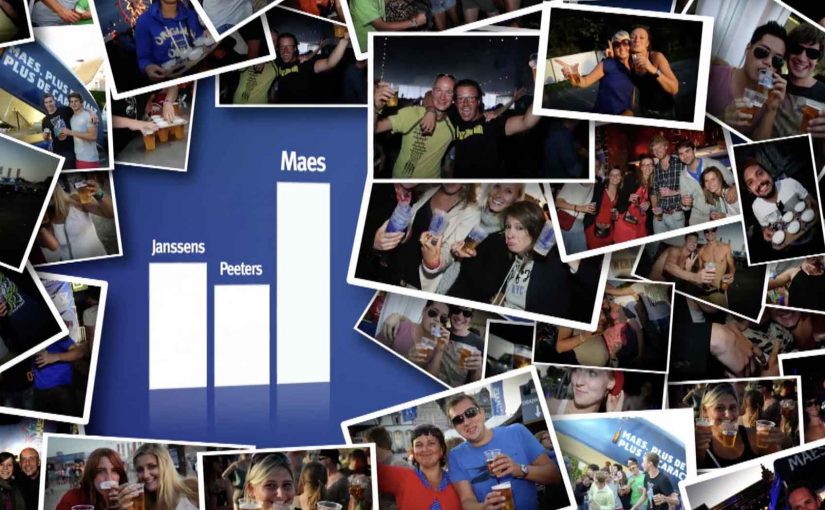
Maes is described as Belgium’s second most popular beer, and “Maes” is also described as the country’s third most common surname. With the market leader said to be outselling Maes by roughly 4 to 1, the brand looks for leverage where it can actually own something. The name.

So Maes decides to rally the Maes families of Belgium by giving them a free barrel of beer, and turning that offer into a reason to gather, invite, and celebrate publicly.

The mechanism: a surname offer with a social booking loop

Eligible families sign up through a custom Facebook app to claim the barrel. The same flow lets them book a pub for a chosen date and invite friends, so the reward is designed to be shared rather than quietly consumed.

In Belgian FMCG marketing, turning a broad brand problem into a narrow community identity can create disproportionate participation and talk value.

Why this lands

This works because it converts a discount into status. You are not “getting a deal.” You are being singled out because of who you are, and the campaign immediately pushes you into a social moment where other people experience the brand alongside you. The pub booking is the smart part, because it transforms redemption into an event.

Extractable takeaway: If you need advocacy, attach the reward to an identity trigger and force the payoff into a shared setting, so the benefit becomes a gathering people naturally document and retell.

What the brand is really doing

The real question is how a challenger beer brand turns a shared surname into a social growth loop that scales beyond the free barrel itself.

Maes is using a surname as a distribution engine. The name creates a defined audience, the free barrel creates urgency, and the “book a pub and invite friends” flow turns each participant into a micro-host who does recruitment for you.

What to steal from the Maes mechanic

  • Exploit a unique ownership angle. If you can credibly “own” a name, place, ritual, or identifier, build the campaign around that.
  • Design the share into the redemption. Booking a pub and inviting friends is a built-in amplification mechanic.
  • Reward the group, not just the individual. Group rewards create social proof and higher perceived value.
  • Keep eligibility simple. One clear rule beats a complicated promo code maze.

A few fast answers before you act

What is “A barrel for every Maes”?

It’s a promotion that offers a free barrel of Maes beer to people with the surname “Maes,” turning surname identity into a social recruitment mechanic.

How do people redeem the offer?

By signing up through a custom Facebook app that also lets them book a pub date and invite friends.

Why is the pub booking part important?

It converts redemption into an event, which increases sharing, attendance, and the number of people who experience the brand in a social setting.

What problem is this trying to solve?

It’s designed to build advocacy and attention for a challenger brand by mobilising a defined community rather than competing only on mass advertising.

What is the key risk with identity-based offers?

If eligibility or verification feels unfair or confusing, it can backfire. The rule has to be clear, and the experience needs to feel welcoming rather than exclusionary.