A simple client lesson, told by school kids
Café Creative, a Hungarian ad agency, sets out to prove a point to deadline-setting clients. If you want good and original ideas to be born, you have to give them enough time.
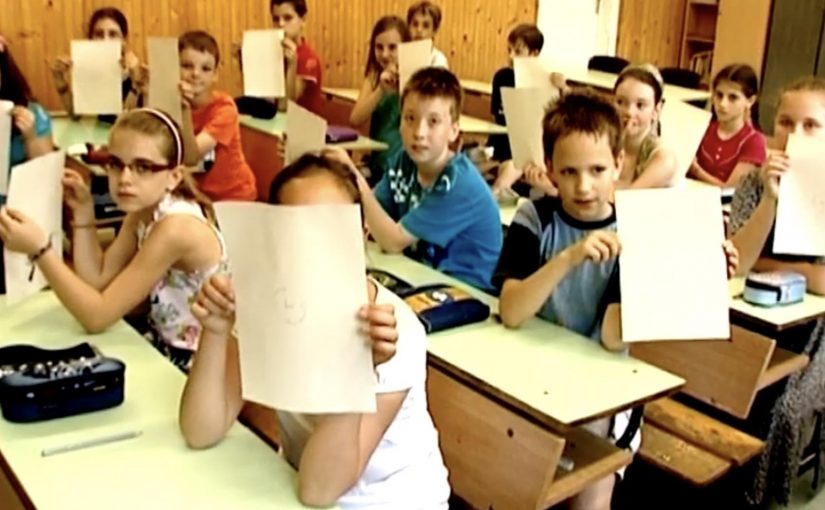
So they ask school children to perform two tasks:
- Complete a drawing in ten seconds and
- Complete the same drawing in ten minutes.
The results are captured in the video below, described as having been shortlisted at the 2011 Golden Drum Advertising Festival.
The mechanic: one brief. Two clocks. One unavoidable comparison
The setup is intentionally unfair. Ten seconds forces instinct and shortcuts. Ten minutes gives space for choices, revisions, and detail. Because the brief stays constant, the difference you see is time, not talent.
In creative work, the quality gap usually comes from iteration time, meaning time to review, refine, and improve the same idea, rather than a “better idea” arriving fully formed.
In agency-client work, deadline debates are usually really debates about how many improvement cycles an idea gets before it is judged.
The real question is how much originality you destroy when you compress all iteration into almost no time.
Why it lands
It translates an abstract argument. “We need more time”. Into a visual contrast that clients can’t debate. The children’s drawings make the point without cynicism, and the experiment format keeps it watchable because the viewer wants to see how big the difference becomes. That works because a controlled comparison turns a subjective complaint about timing into proof a client can inspect.
Extractable takeaway: When you’re negotiating timelines, show a side-by-side outcome under two time constraints. A visible comparison wins faster than a rational explanation.
What to steal for your next client conversation
- Use one brief and change one variable. It isolates the real driver of quality.
- Make the output visual. Visual proof travels further than process arguments.
- Keep it humane. A light format can carry a serious point without sounding defensive.
- Frame time as iteration fuel. You’re not asking for delay. You’re buying cycles of improvement.
A few fast answers before you act
What is the “Deadlines vs Creativity” experiment?
It’s a short film where children draw the same subject twice. First in ten seconds, then in ten minutes, to show how time changes outcomes.
What does the ten-second version demonstrate?
It shows what happens under pressure. People default to the most obvious interpretation with minimal refinement.
What does the ten-minute version demonstrate?
It shows the value of iteration time. Details emerge, composition improves, and the work becomes more original and complete.
Why is this a useful argument for clients?
Because it replaces opinion with comparison. The viewer can see what time buys.
How do you apply this lesson without running your own experiment?
Use before-and-after examples from your own work. Show what changed between first draft and final, and tie each improvement to the time used to iterate.