
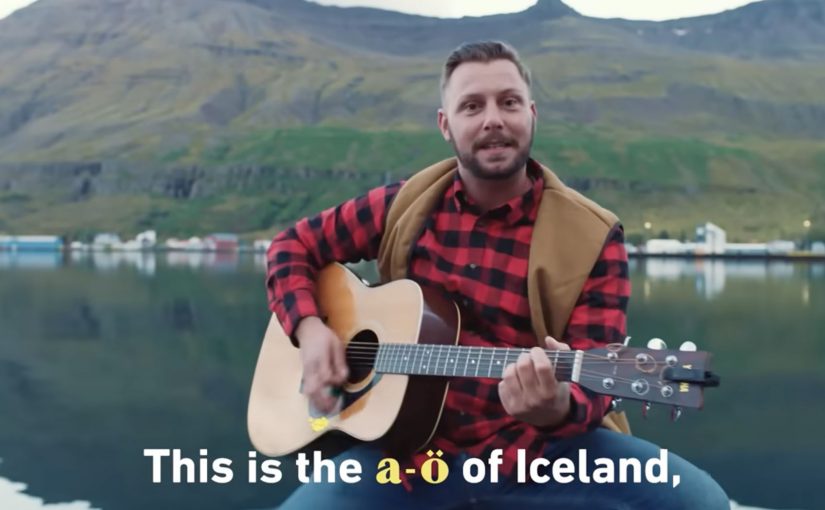
The hardest karaoke song in the world

Iceland launches a tourism campaign that turns its “notoriously difficult-to-learn” language into a challenge you can sing. The hook is a catchy karaoke track called “The A-Ö of Iceland”, designed to help tourists get to grips with Icelandic by working through the 32 letters of the Icelandic alphabet and pairing them with common words and phrases.

Performed by Icelandic comedian Steindi Jr, the song leans into the joy of trying. It plays with the difference between a torfbær (turf house) and a bílaleigubíll (hire car). It also makes you remember to pack your sundskýla (trunks) for the sundlaugar (swimming pool).

The Iceland tourist board then releases a companion video showing tourists attempting to sing along. The result is exactly what the campaign promises. A playful struggle that makes the language feel less intimidating and the destination feel more human.

The real question is how you turn a language barrier into something people want to try, loudly, in public.

Why this works as tourism marketing

Language is often positioned as a barrier. This flips it into a shared experience. You do not need perfect pronunciation to participate. You just need curiosity and a willingness to try.

Extractable takeaway: When you turn “difficulty” into a shared game, you lower the psychological stakes and make participation feel safe, which makes the destination more memorable.

Karaoke is the format. Participation is the strategy

Karaoke is not just entertainment here. It is a behaviour pattern people already understand. Follow the lyrics. Try to keep up. Laugh at yourself. Share the attempt. This is stronger than a standard “learn a few phrases” explainer because it replaces instruction with participation.

That makes the campaign naturally distributable. Here, “distributable” means the audience can repeat the format themselves, not just watch it once. Because karaoke bakes in imperfect attempts, it normalizes mispronunciation and lowers the intimidation factor, which is why the content travels.

In destination marketing, especially where visitors expect language friction, turning that friction into a low-stakes performance is a reliable way to increase participation.

The pattern to steal

If you want to make a cultural “friction point” feel inviting, the structure is replicable:

  • Choose a real friction point. Pick one authentic challenge the audience expects.
  • Package it as a game. Turn it into a lightweight challenge with a clear beginning and end.
  • Let attempts be the proof. Let the audience generate the proof of participation through their attempts, not through brand claims.

A few fast answers before you act

What is “The A-Ö of Iceland”?

A tourism karaoke song that walks through the 32 letters of the Icelandic alphabet and teaches common words and phrases.

Who performs the song?

Icelandic comedian Steindi Jr.

What is the campaign asking tourists to do?

Try to sing along and, in the process, get more comfortable with Icelandic.

Why include a companion video of tourists trying?

It shows that participation is the point and invites viewers to imagine themselves attempting the song.

What is the core marketing idea?

Turn language difficulty into an enjoyable participation challenge so the destination feels accessible, memorable, and shareable.

Eterna Cadencia: The Book That Cannot Wait

Last month I wrote about Austria Solar’s annual report, whose pages became visible only when exposed to sunlight.

Now Buenos Aires based bookshop and publisher Eterna Cadencia has released “El libro que no puede esperar”, “The book that cannot wait”. It is an anthology of new fiction printed in ink that disappears after two months of opening the book.

The mechanic: ink that fades once you open the seal

How is that possible. Here, the mechanic is a built-in physical rule: the books are described as being silk-screened using a special ink, then sealed in air-tight packaging. Once opened, the printed material reacts with the atmosphere and starts to fade. The result is that, after roughly two months, the text vanishes.

In global publishing markets where e-books change reading habits, physical formats regain attention when they add a constraint that digital cannot replicate.

Why it lands: urgency turns reading into an action, not an intention

The idea does not compete with e-readers on convenience. It competes on psychology. A normal book is patient. This one is not. It creates a deadline, and deadlines change behavior. Because the fading is irreversible, the deadline feels real rather than promotional.

Extractable takeaway: If you want people to stop postponing a behavior, make the cost of waiting tangible and irreversible. Scarcity works best when it is built into the product, not added as a marketing slogan.

What it is really doing for new authors

The real question is whether a physical constraint can turn passive interest into immediate reading.

This is smart publishing design, not a gimmick for its own sake.

At face value, this is a publishing gimmick. Underneath, it is an argument for momentum. New fiction struggles when it sits unread on a shelf, because “I’ll get to it” often becomes “never”. A time-limited book reframes the purchase as a commitment to read now, which is exactly what emerging authors need.

The project is also widely described as being developed with DraftFCB, which helps explain why the execution feels like an idea engineered for cultural pickup, not just for bookstore shelves.

What to steal if you are marketing anything physical

  • Build the message into the object: the product itself should carry the story, even without a campaign.
  • Make the constraint legible: people should understand the rule in one sentence.
  • Turn delay into loss: urgency works when waiting has a real consequence.
  • Use packaging as a trigger: opening the seal is a clear “start” moment, and that matters for behavior.
  • Design for retellability: “a book that disappears if you do not read it” spreads on its own.

A few fast answers before you act

What is “The Book That Cannot Wait”?

It is a print book sealed in packaging where the text is printed with ink that starts fading once the seal is opened, so the content disappears after around two months.

Why would a publisher want ink that disappears?

To create urgency. The mechanic nudges readers to start and finish the book quickly, which can help emerging authors get read instead of getting postponed.

Is this a product innovation or a marketing campaign?

It is both. The object is the media. The disappearing ink turns the product into the message, which then earns coverage and conversation.

What is the biggest risk of copying this idea?

Trust. If people feel tricked or if the fade behavior is inconsistent, the stunt becomes resentment. The rules need to be clearly communicated and reliably delivered.

Where else does “built-in urgency” work?

It can work in limited editions, time-bound access, perishability, or experiences that change after first use. It is strongest when the constraint feels meaningful, not arbitrary.

Sukiennice: Secrets Behind Paintings

The Sukiennice Museum in Krakow is one of the oldest museums in Poland, and it is reopening after a complete renovation. The problem is not the building. The problem is attention. Young people do not automatically find 19th-century Polish art interesting.

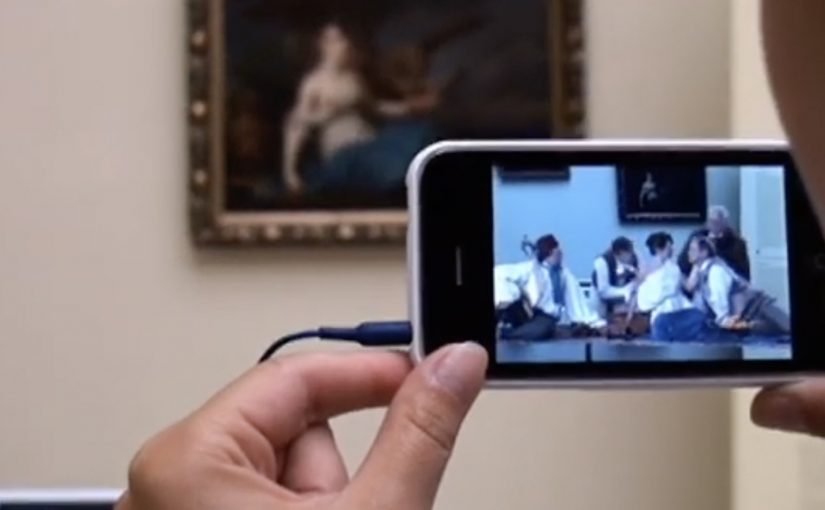
Leo Burnett Warsaw gets the challenge to pull this audience back in, and answers it with an integrated campaign anchored by the New Sukiennice augmented reality app.

The mechanic: bring paintings to life with viewer control

The app turns the visit into an interactive layer. Point your phone at selected works and the paintings come alive, revealing their stories through short films and animated moments. Instead of reading a label first, you get pulled into a scene first, then you choose to go deeper. Here, viewer control means visitors choose when to trigger the story and whether to go deeper.

In European museums trying to win younger audiences, lightweight AR can translate static collections into short, shareable stories without rewriting the institution’s identity.

Why it lands: it swaps “art history” for narrative tension

This is not about making the museum more “digital”. It is about making the first minute feel rewarding. Young visitors do not need more information at the start. They need a reason to care. That works because short films give the paintings a hook, and the phone becomes a bridge between a familiar screen habit and an unfamiliar art period.

Extractable takeaway: If the barrier is “this feels irrelevant”, do not lead with education. Lead with story. Give people one fast, emotional moment they can experience, then let curiosity pull them into context and detail.

An integrated campaign that keeps the app from being a lonely download

The real question is how you make a heritage visit feel immediately worth a young person’s time without turning the art into a gimmick.

The app plays the central role, but it does not stand alone. The campaign also uses billboards, social media and e-cards to create buzz and point people toward the experience. The intent is clear. Get young people to show up, then let the AR layer turn “I visited” into “I discovered”.

The buzz generated by the campaign is described as attracting a significant share of Krakow’s population to the museum.

What to steal for your own cultural or heritage activation

  • Start with one irresistible moment: pick a small set of works and make them unforgettable, rather than trying to animate everything.
  • Put the story before the lesson: emotion first, interpretation second.
  • Make it usable on-site: the experience should work in the gallery without long setup or instructions.
  • Design for “showing a friend”: the best museum tech spreads when people can demonstrate it in seconds.
  • Support it with media that explains the payoff: billboards and social should communicate the “why” of the visit, not just the existence of an app.

A few fast answers before you act

What is the New Sukiennice app?

It is an augmented reality museum app designed to bring selected paintings to life and reveal their stories through short film content during a gallery visit.

Why is AR a good fit for 19th-century painting?

Because the barrier is often distance. AR can add narrative entry points and context quickly, helping visitors connect emotionally before they engage intellectually.

What makes this more than a tech demo?

The app is positioned as the core of an integrated campaign. The surrounding billboards, social media and e-cards create the motivation to visit, and the on-site experience delivers the payoff.

What’s the biggest risk with museum AR?

Friction and distraction. If setup is slow, or the experience pulls attention away from the original work instead of back into it, the technology becomes the point and the art loses.

How should a museum measure success here?

Look at youth attendance lift, repeat visits, time spent in targeted rooms, and whether visitors progress from the AR moment into deeper engagement like reading labels, joining tours, or exploring more works.