
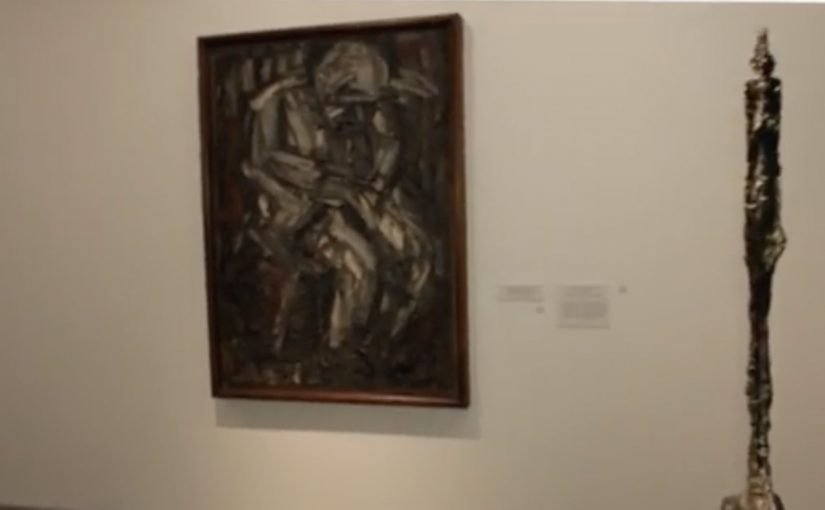
Here is a campaign from ERAN, the National Crisis Intervention Hotline in Israel.
To make people aware of the 1201 hotline, McCann Erickson worked with the Israel Museum in Jerusalem. They identified paintings that express distress, then changed each artwork’s audio guide number to 1201. Dialing that number on the guide gives visitors a customized message that mirrors the emotion of what they are looking at, while quietly pointing to the same number outside the museum.
A hotline reminder that hides in plain sight
The trick is that nothing feels like advertising at first. You are already in “audio guide mode”. You are already entering numbers. The campaign simply reroutes a familiar behavior into a moment of recognition, then uses the artwork’s emotional weight to make the number stick.
How the mechanism earns attention without shouting
This is ambient marketing built from context rather than volume. The museum provides the emotional frame. The audio guide provides the interface. The number provides the bridge between cultural experience and real-world help. It is a one-step interaction, and the message arrives when the viewer is already primed to feel.
Because the visitor is already using the guide as intended, the intervention feels credible rather than intrusive, which makes the number easier to absorb and remember.
In public service communication, the most effective prompts often appear inside routines people already trust, so the call-to-action feels like guidance rather than persuasion.
Why it lands
It lands because it changes the meaning of a number. “1201” stops being a hotline you may never need, and becomes a small, memorable experience tied to a specific feeling and a specific place. The museum setting also lowers defensiveness. People expect reflection, not selling, so they are more open to receiving a supportive message.
Extractable takeaway: If you can place a helpline inside an existing, legitimate interface, and align it with an emotionally resonant context, you turn awareness into recall without relying on fear or shock.
What ERAN is really doing here
This is recall engineering. That means designing a vivid cue so a critical number is easier to remember when it matters.
The real question is how to make a crisis number memorable before someone actually needs it.
ERAN is right to optimize for respectful recall over louder awareness. The value is not the interaction itself. The value is that a visitor leaves with a number that now has emotional meaning.
What to borrow from this hotline recall design
- Borrow an interface people already use. Audio guides, ticketing kiosks, vending machines, any trusted routine.
- Let context do the targeting. The environment pre-qualifies the emotional state and attention level.
- Keep the action to one step. The smaller the action, the higher the completion.
- Design for respectful tone. Supportive beats sensational when the topic is distress.
- Make the recall object simple. A short number, a clear phrase, one job.
A few fast answers before you act
What is the core idea of “When Facing Distress, Dial 1201”?
Turn museum audio guide numbers into a hotline reminder by assigning “1201” to distress-themed artworks and delivering supportive messages through the guide.
Why use a museum as the medium?
Because visitors expect emotion and reflection. That context makes the message feel natural, and it helps the number attach to a real feeling rather than a generic PSA.
What makes this more memorable than a poster?
The viewer performs an action. They dial the number. That small act creates muscle memory and meaning, which improves recall later.
What is the biggest execution risk?
If the experience feels like it interrupts the museum visit or trivializes the artworks, it can trigger backlash. The tone has to stay respectful and restrained.
How can other causes apply this approach?
Find a trusted public interface, align the message with the environment’s emotional purpose, and make the action so simple it can happen without instruction.