
In-store shopping changes when the phone becomes the checkout
With smartphone penetration crossing the halfway point, two new start-ups push to change how we shop in-store.
The shift is simple. The phone is no longer just a companion to shopping. It becomes the point-of-sale, the service layer, and the trigger for fulfillment inside the store. By “checkout-free” here, I mean shoppers scan and pay on their own phone, with staff stepping in only for exceptions.
Because scanning and payment happen during the journey, peak demand spreads across aisles instead of stacking at one cashier line.
The real question is whether you can make the exception path feel as simple as the happy path.
Checkout-free is worth scaling only when your exception paths are as smooth as the happy path.
Why this lands in practice
In omnichannel retail operations, the biggest shopper experience gains often come from removing time sinks like queues and size-hunting, not from adding more screens.
Extractable takeaway: If you want measurable lift, redesign the store journey to delete time sinks first, then let the phone execute the flow.
QThru
QThru is a mobile point-of-sale platform that helps consumers at grocery and retail stores to shop, scan and check out using their Android and iOS smartphones…
The ambition is clear. Remove queues. Remove friction.
Shoppers move through the store with the same control they have online. Browse, scan, pay, and leave without the classic checkout bottleneck.
Hointer
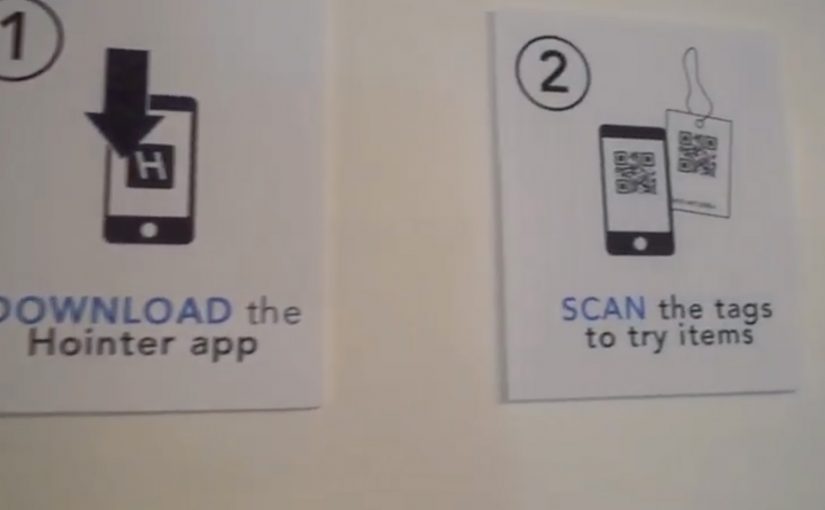
Hointer automates jean shopping through QR codes.
When scanned using the store’s app, the jean is delivered in the chosen size to a fitting room in the store and the customer is alerted to which room to visit.
Once the jeans have been tried, customers can either send the jeans back into the system or swipe their card using a machine in each fitting room to make a purchase.
This approach removes two of the most frustrating in-store steps. Finding the right size and waiting to pay.
The store behaves like a responsive system rather than a manual process.
Steal these moves for checkout-free pilots
- Delete one time sink first. Pick queues or size-hunting and design the flow to remove it end-to-end.
- Make exceptions feel normal. Mis-scans, out-of-stocks, returns, and overrides need a fast, humane path.
- Keep the shopper flow simple. The phone should execute scan-and-pay cleanly, without adding extra steps.
- Operational reliability beats novelty. Inventory accuracy and in-store routing have to hold up when the store is busy.
A few fast answers before you act
What is the common idea behind both examples?
They move checkout and fulfillment logic into the shopper’s hands. Scanning, sizing, and payment become distributed across the store journey instead of centralized at a cashier line.
How do QThru and Hointer differ in the problem they solve?
QThru focuses on scan-and-pay to reduce queues. Hointer focuses on discovery and fitting-room fulfillment to remove size-hunting, then completes payment in the fitting room.
What has to be true operationally for checkout-free to work?
The system has to be reliable under load: accurate inventory, fast in-store routing, dependable scanning, and a payment flow that stays simple even when the store is busy.
What is the simplest way to pilot this without overbuilding?
Start with one store format and one tight journey. Measure queue time saved and staff exception workload, then expand only if operations stay stable.
What is the biggest failure mode teams underestimate?
Edge cases. Mis-scans, out-of-stocks, returns, fraud handling, and staff override paths. If exceptions are painful, the “friction-free” promise collapses at the worst moment.