
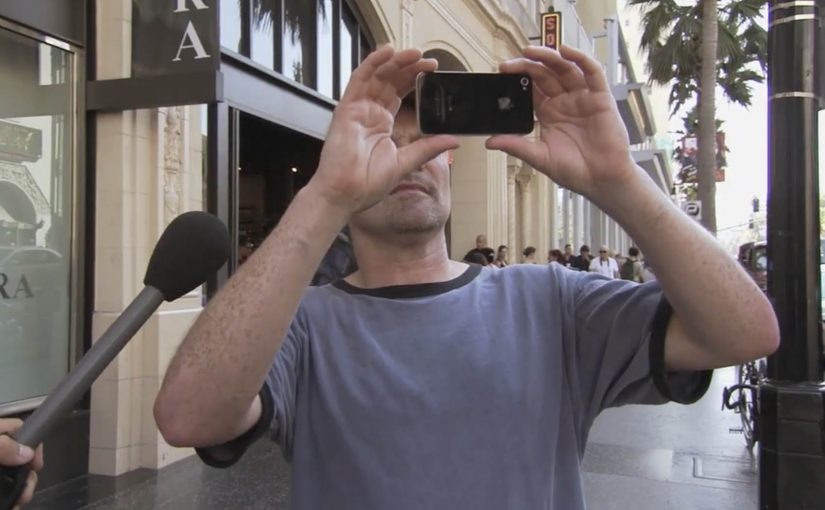
Jimmy Kimmel: First Look at iPhone 5

Jimmy Kimmel: First Look at iPhone 5

The iPhone 5 still has some weeks to go before it is officially available. That little detail did not stop talk show host Jimmy Kimmel from giving random people on the streets a chance to “test” the iPhone 5, which was actually just an iPhone 4S.

How the prank works

The mechanism is simple: present a familiar object as a new one, then ask for first impressions on the spot. The humor comes from watching people project “newness” onto something they are already holding, then confidently describe improvements that cannot be there because nothing changed.

In consumer tech launches, perceived novelty often shapes first impressions as much as real novelty does.

The real question is whether the launch story is shaping the feedback you think you are collecting.

Why it lands

The segment exposes expectation marketing in real time, meaning the expectation itself becomes part of the perceived product experience. It makes a point without preaching. It lets people’s own words demonstrate how branding, timing, and context can change what we think we are seeing.

Extractable takeaway: When audiences expect a breakthrough, they interpret ambiguous cues as improvements. Marketing and product teams should separate product experience from launch narrative when they need truth, because the narrative can become the experience.

It turns product hype into a social mirror. Viewers do not only laugh at the interviewees. They recognize the pattern, because everyone has “felt” an upgrade before they could name a feature.

It is edit-friendly proof. Quick street soundbites create a fast rhythm and a clear punchline. The format is built for sharing because each reaction is a self-contained beat.

Borrowable moves from the iPhone prank

  • Use a clean, repeatable setup. One premise, one question, many reactions. The simplicity is what creates volume and pace.
  • Build the contrast into the reveal. The punchline is strongest when viewers understand that the object never changed.
  • Let the audience diagnose the insight. Showing beats telling. The segment works because the viewer reaches the conclusion themselves.

A few fast answers before you act

What is the core joke of the segment?

People are asked to review a “new” iPhone, but they are actually holding an older model, and many still describe it as better.

What does this say about consumer perception?

That context and expectation can shape what people think they notice, especially when differences are subtle or undefined.

Is this a critique of Apple or of people?

It plays more like a critique of hype mechanics and social pressure in “first impression” moments than a critique of one brand.

Why is the street-interview format effective here?

It creates instant, unscripted soundbites, and the variety of reactions keeps the piece moving.

What is the practical lesson for marketers and product teams?

If you need truth, test products in neutral conditions. If you want buzz, understand that the story around a product can amplify perceived value, sometimes beyond what the product alone delivers.

Jimmy Kimmel: Halloween Candy Prank 2011

Jimmy Kimmel: Halloween Candy Prank 2011

Here’s to starting a new week with a smile.

Talk show host Jimmy Kimmel challenged parents across America to tell their kids they ate all their Halloween candy, then videotape the reactions. Parents were asked to upload the clips to YouTube under the heading “Hey Jimmy Kimmel I told my kid I ate all their Halloween candy.”

Daring moms and dads followed through. The frenzied responses are then pieced together into a fast, best-of montage that does the work of a full segment in a few minutes.

A prank with a built-in distribution engine

The mechanism is almost frictionless: one simple prompt, one easy filming setup, one obvious upload destination, and one consistent label so submissions can be found and compiled. The audience creates the raw material. The show supplies the edit and the punchline timing.

In US broadcast entertainment, repeatable viewer challenges turn a one-way show into a repeatable participation cycle that grows through sharing.

Why it lands

It compresses a big emotional range into a tight format. Tears, outrage, bargaining, moral lectures, and sudden forgiveness all land fast. Because the viewer understands the setup in seconds and gets a fresh emotional spike every few beats, the montage keeps attention high without needing extra explanation.

Extractable takeaway. User-generated segments travel when the prompt is easy to replicate, the emotional payoff is immediate, and the brand’s role is ruthless curation, not overproduction.

It is instantly understandable. You do not need context, a premise explainer, or a character intro. Candy, kids, and betrayal are enough.

It makes the audience feel like the cast. Parents are not just watching a bit, they are contributing to it. The real question is not whether one prank is funny, but whether the format reliably turns viewers into contributors and contributors into distribution.

This is stronger as a participation system than as a one-off TV gag.

What to steal from participatory prank formats

  • Make participation a recipe. One action, one prompt, one deliverable, one naming convention.
  • Design for phone-grade production. The lower the setup cost, the higher the submission volume.
  • Optimize the edit for momentum. A “best-of” is not a dump of clips. It is pacing, contrast, and escalation.
  • Build a title that people can copy exactly. Consistent labeling is the quiet infrastructure behind scalable user-generated content.

A few fast answers before you act

What is the core mechanic of this Jimmy Kimmel segment?

A single prank prompt is sent to viewers. Viewers film reactions and upload clips. The show compiles the best moments into a montage.

Why does it work so well on YouTube?

The setup is universal and the payoff is fast. Each clip delivers a clear emotional beat that is easy to share without explanation.

Is this a “campaign” or just a TV gag?

It behaves like a campaign because it has a repeatable participation brief and a distribution loop. It is also a comedy bit because the final product is the edit.

What makes the montage feel addictive?

Pacing and variety. The edit jumps between different reactions before any single moment stalls, which keeps attention locked.

What is the transferable lesson for marketers?

If you want scale, simplify the instruction, standardize the submission label, and invest your effort in curation so the best entries become the marketing.