
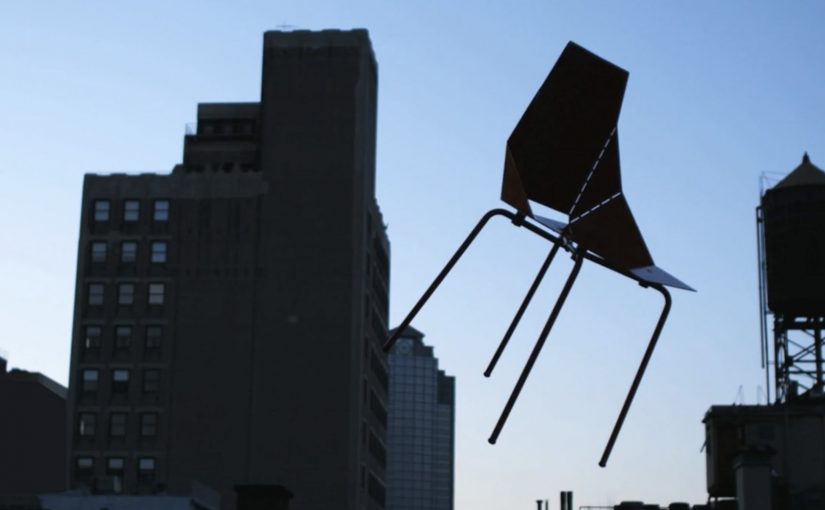
Twenty-five great chairs appear on New York City curbs, free for the taking. Some are quietly GPS-enabled. Then a camera crew follows the trail to see where “free design” actually goes.
“Curb-mining” is the act of finding furniture and art on the streets. Blu Dot decided to conduct its own curb-mining experiment. On November 4, 25 Real Good chairs were dropped around NYC, free for the take. Many were GPS-enabled. Watch the film to see what happened.
How the experiment is staged
The mechanism is deliberately simple. Give away something that normally has clear value, place it in the exact context where curb-miners hunt, then track movement to learn how quickly people claim it, how far it travels, and what stories people attach to it once it is “rescued”.
In urban retail and design-led consumer brands, street-level seeding works best when the giveaway is designed as a story people can retell, not just a free item people can take.
Why GPS changes the meaning of “free”
Without tracking, this is just generosity. With tracking, it becomes a narrative engine. The chair is no longer only an object. It is a moving plot point that creates suspense, location hops, and a human follow-up that turns a giveaway into a documentary. GPS tracking works because it turns an invisible handoff into a visible journey people can follow.
Extractable takeaway: If you can instrument the handoff, you can turn a giveaway into content with a plot, not just a drop.
Definition-tightening: curb-mining is not “dumpster diving”. It is the practice of taking items left out on the curb before they enter the waste stream, which is why the find can feel legitimate and even communal.
What Blu Dot is really buying
This is brand meaning built through behavior. The chairs prove that modern design can live outside showrooms, and the film turns that proof into a piece of shareable content that travels further than a poster ever could. This is a smarter brand move than a one-off giveaway because the documented trail turns product into proof.
The real question is whether you are giving away inventory, or buying a traceable story that people will retell for you.
A street-seeding blueprint you can reuse
- Seed with intent. Give away something that is unmistakably “worth taking”.
- Make the context do the targeting. Place the product where the right behavior already exists.
- Capture the human aftermath. The owner stories are where meaning and memorability come from.
- Design for repeatable proof. Track, document, and package the journey so it becomes content.
A few fast answers before you act
What is curb-mining?
Curb-mining is the practice of finding and taking usable furniture or objects left out on the street, typically before they enter the waste stream.
What did Blu Dot do in this experiment?
They placed 25 Real Good chairs around NYC for free, with many chairs GPS-enabled, then documented what happened as people took them.
Why add GPS tracking to a giveaway?
Tracking turns a giveaway into a story. It lets the brand show the journey, not just the drop, and it creates a documentary-style narrative that people will watch and share.
What makes this different from a normal stunt giveaway?
The follow-through. The value is not only in the moment of discovery, but in the documented trail and the human stories that emerge afterward.
What is the main execution risk with street seeding?
If it feels staged in a manipulative way, people reject it. The giveaway has to feel authentic to the street context and respectful of public space.