
Norwegian Airlines: Red Cab Remote Taxi

A shopper in an Oslo mall steps up to a big screen and “hails” a cab in New York City. Seconds later, they are effectively riding along in real time, steering what they see and getting a guided tour from someone inside the taxi.

Remote sightseeing as a route launch

Norwegian Airlines creates an interactive experience that lets visitors in an Oslo shopping mall control a New York City taxi in real time. A tour guide inside the cab helps participants discover New York while building awareness of Norwegian’s direct long-haul destinations from Oslo to New York, Miami, LA, San Francisco, and Bangkok.

The mechanism: viewer control, live feed, human guide

The activation is built like a two-way window. A live camera setup in the taxi transmits the streets of New York back to the mall installation, and mall visitors can influence what they are seeing while talking with the person in the cab who keeps the “tour” moving. Here, viewer control means the participant can steer the camera’s attention and request what the cab shows next. That matters because even light control makes the experience feel personal, which turns passive watching into active participation.

It is also described as an M&C Saatchi Stockholm idea with production support from Stopp, using a 360-degree style camera approach to make the feed feel explorable rather than like a fixed livestream.

In European airline marketing, real-time remote experiences can make new long-haul routes feel tangible before anyone commits to a flight.

Why this lands

This works because it turns a schedule update into a lived moment. People do not just hear “we fly direct.” They experience the destination, live, in a way that creates an instant story to tell. The red cab visual also keeps the brand present throughout the interaction without needing heavy-handed messaging.

Extractable takeaway: When you are launching access (routes, coverage, delivery zones, service areas), design a live, controllable preview that lets people feel the place or outcome, then attach the brand benefit as the enabler of that experience.

What Norwegian is really buying

The stunt earns attention like an event, but it is strategically a conversion tool. It reduces psychological distance to long-haul travel by giving people a low-friction “trial,” and it reframes the airline as a bridge between cities rather than as a price-and-seat product.

The real question is whether a route launch can make distance feel emotionally short before the first booking happens.

What to steal from Red Cab

  • Turn claims into access. If your promise is reach, let people sample the reach.
  • Use a human guide. A live host makes the experience coherent, warm, and watchable.
  • Design for the crowd. Make the installation entertaining for bystanders, not just the participant.
  • Make the brand a prop. The red cab functions as an always-on brand cue without interrupting the experience.

A few fast answers before you act

What is Norwegian Red Cab?

It is a mall-based interactive installation where people in Oslo can explore New York City through a live taxi connection, with a guide inside the cab.

What does “control the taxi” mean here?

It refers to viewer control over the live viewing experience, such as directing the camera perspective and interacting with the person in the cab, rather than physically driving the vehicle.

Why is real-time important to the idea?

Because “live” removes doubt. It makes the destination feel present, which strengthens the message that direct long-haul routes bring far-away places closer.

What makes this more than a livestream?

The combination of viewer control and a human tour guide turns passive watching into an experience people can participate in and retell.

What’s the main operational risk with this pattern?

Reliability. If latency, audio, or camera control fails, the magic breaks quickly, so technical robustness matters as much as the creative concept.
Castello: Eat the Art

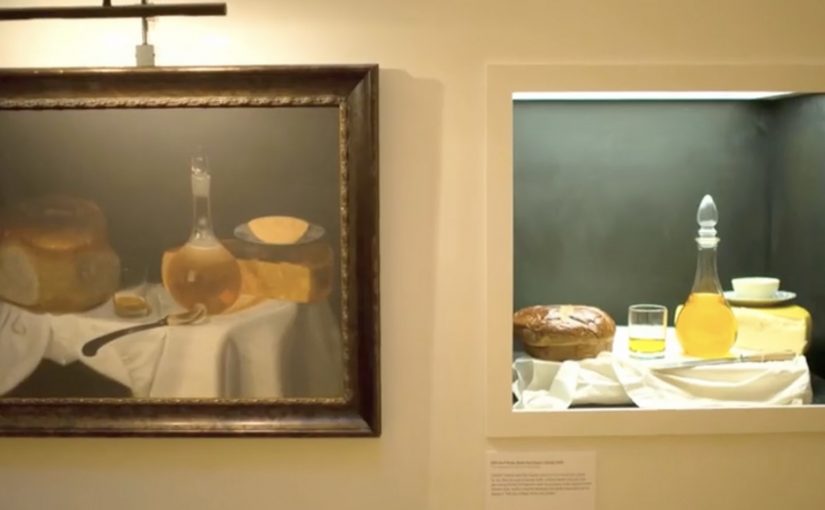
Cheese brand Castello teams up with ad agency Duval Guillaume to give New Yorkers the opportunity to taste their cheese in a very original way. A pop-up museum is set up at Grand Central Terminal, where famous still-life paintings that contain cheese are reproduced with great precision using real Castello cheeses. The difference is simple. You can smell and eat the copied works of art.

Over the course of two days, more than 500,000 visitors reportedly pass through the exhibition, and around 40,000 people actually taste the cheese.

Turning “look” into “taste”

The mechanism is sensory sampling disguised as culture. Borrow the credibility of recognizable art, rebuild it with the product itself, then let the audience complete the experience by tasting the thing they are looking at.

In urban retail environments where people are overloaded with visual messages, multisensory experiences create disproportionate stopping power because they feel like a break from advertising, not another ad unit.

Why it lands

This works because it turns product trial into a story people want to repeat. A free sample is forgettable. “I ate a painting made of cheese at Grand Central” is social currency, which means it is a simple story people want to pass on. It gives the brand an earned reason to be talked about without needing heavy branding on every surface.

Extractable takeaway: If your category wins on taste, do not hide behind claims. Build a public moment where trying the product feels like participating in something bigger than a sample.

What the business intent looks like

The real question is how to turn food sampling into a public moment people actively choose and then talk about. Castello gets scale and relevance in one move. Grand Central delivers footfall. The art framing delivers permission to pause. And the tasting converts attention into the only proof that matters for food. “It is good”. This is a stronger food-marketing move than standard sampling because it makes trial memorable.

What food brands can steal from this

  • Wrap sampling in a reason to stop. People do not queue for “try this”. They queue for a moment.
  • Use a familiar cultural code. Still-life paintings are instantly legible, even at walking speed.
  • Let the product be the medium. When the product is literally the artwork, the message cannot be missed.
  • Design for retellability. If the experience can be summarized in one sentence, it travels further.

A few fast answers before you act

What is Castello “Eat the Art”?

It is a pop-up museum experience where still-life paintings featuring cheese are recreated using real Castello cheeses, and visitors can smell and taste the “art”.

Why stage it in Grand Central Terminal?

Because high footfall increases reach, and a transit setting makes the surprise feel bigger. You find a museum moment in the middle of a commute.

Is this advertising or sampling?

It is sampling, delivered through an ambient, cultural format that makes the trial feel special rather than transactional.

What makes the concept effective for food brands?

It converts attention into taste. Food marketing becomes more persuasive when it gets people to try the product quickly, in a memorable context.

What is the simplest way to adapt the pattern?

Pick a familiar cultural frame your audience already respects, then embed product trial directly into that frame so trying the product feels like participation.

Heineken Carol Karaoke

What if you were singing holiday carols to a few friends at a karaoke bar, when suddenly your performance became a concert broadcast before thousands on the Jumbotron at a professional basketball game, in Times Square and on the screens of nearly every New York City taxicab. Would you keep singing?

That is the setup behind Heineken’s Carol Karaoke. It starts as a small, friendly singalong, then flips into a “will you or won’t you” decision in seconds. Keep going and you are suddenly performing for strangers at scale. Stop and you walk away from the moment.

How the stunt works

The mechanism is deliberately clean. Invite people to sing. Reveal the twist. Put a choice in front of them with no time to overthink. The broadcast layer is what raises the stakes, but the real content is the decision itself. Because the choice arrives before people can script themselves, the reaction reads as real, which is why the clip holds attention. The real question is whether you keep singing once the room suddenly becomes the city.

It is also built for the social era without relying on a hashtag to do the work. The reaction is the story. The story becomes the share unit. Here, the “share unit” is the few seconds where the singer realizes the stakes and chooses.

In big-city holiday campaigns, the fastest route to earned attention is a simple public challenge that people can imagine themselves facing.

Why it lands

Karaoke is already a controlled embarrassment. The campaign simply stretches that discomfort from “friends in a booth” to “a city watching”. That tension creates instant empathy and instant curiosity, because nearly everyone knows what it feels like to sing badly, and nearly everyone has imagined what it would feel like to be exposed. Heineken positions itself as the catalyst for crossing that line, not the judge of the performance.

Extractable takeaway: If you want a stunt to travel, engineer one visible, time-pressured choice that viewers can feel, then make the brand the enabler of that choice, not the evaluator.

Business intent

This is branded entertainment built around social courage. It connects Heineken with celebration behavior, and it manufactures a holiday moment that people will retell, because the premise is easy to repeat and the outcome is emotionally satisfying.

Steal these levers from Carol Karaoke

  • Use a decision, not a slogan. Put real choice in the frame and you get real reaction.
  • Make the twist explainable in one sentence. If the idea cannot be retold instantly, it will not travel.
  • Raise stakes with environment, not complexity. Big screens and public broadcast do more than extra rules.
  • Cast ordinary people. Relatability is what turns “a stunt” into “I can picture myself there”.

A few fast answers before you act

What is Heineken Carol Karaoke?

It is a surprise karaoke activation where people singing holiday carols are suddenly offered a choice. Keep singing and be broadcast publicly to a much larger audience, or stop and walk away.

Why does the “will you or won’t you” structure work?

Because the content is the decision under pressure. That creates tension, authenticity, and a clear emotional arc that viewers follow in seconds.

What role do out-of-home screens play in the idea?

They turn a private performance into a public moment instantly. The scale shift becomes the stakes, and those stakes are immediately legible to anyone who has ever felt stage fright.

What makes this kind of stunt shareable?

The setup is retellable in one line, and the payoff is emotional and human. People share it to relive the moment of courage, not to explain a complicated mechanic.

How can a brand adapt this idea without a Jumbotron?

You can swap the “big screen” for any sudden jump in visibility that feels real. For example, a live in-venue feed, a public projection, a partner-owned network of screens, or an unexpected “broadcast” to a larger nearby audience.