
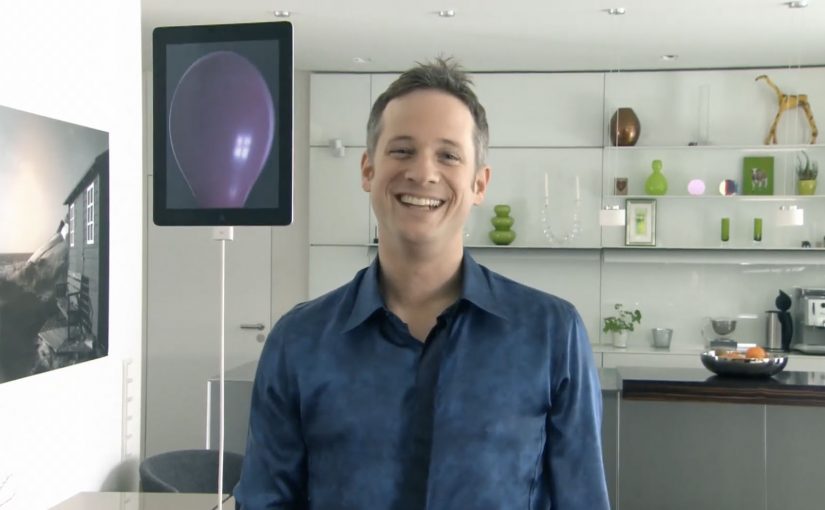
A magician holds up an unreleased device and “reviews” it by making features appear, disappear, and break the laws of a normal demo. It is a product tease delivered as a short performance.
Simon Pierro in his latest performance reviews the yet to be released iPad 3 in a magical way. Along the way he even jokes about “exclusive facts” like it being slightly thicker and heavier, then turns that into the next gag.
How the trick works as marketing
The mechanism is simple. Take the standard product review format and replace evidence with illusion. You still get a “feature tour”, but it is delivered as surprise and entertainment, which makes it far more shareable than a straight spec rundown. This is a strong move when your goal is shareable awareness, not full spec education.
In consumer technology launches, the fastest attention often comes from demos that feel like stories, not demos that feel like documentation.
Why it lands
It compresses curiosity into a tight loop. People watch because they want to see what the “new iPad” can do, then they keep watching because the performance keeps escalating. The device becomes a prop, and the prop becomes the headline. The real question is whether your launch moment gives people a story worth passing along.
Extractable takeaway: Wrap the message in a familiar format, then add one surprising twist so the format becomes the distribution engine.
A launch-demo pattern worth stealing
- Turn the demo into a format. A review, an unboxing, a “first look”. Then bend it in a way people do not expect.
- Give the audience one clean hook. “Exclusive preview” is enough. The rest is payoff.
- Design for replay. Visual gags and quick reveals travel better than long explanations.
- Let entertainment carry the message. The goal is not complete information. The goal is desire and talk value. Talk value here means a simple line people can repeat in their own words.
A few fast answers before you act
What is the core idea of this video?
A “review” of an unreleased iPad 3 delivered as iPad magic, where the performance replaces proof while still feeling like a product preview.
Why does a magical demo spread better than a normal demo?
Because it converts curiosity into surprise. Surprise is a stronger sharing trigger than information in most social feeds.
What is the transferable lesson for marketers?
If you can wrap a product message inside an entertaining format, the format becomes the distribution engine.
How do you apply this without a magician?
Use any “performance” constraint that creates visual surprise. A timed challenge, a one-take reveal, or an intentional format break can do the same job without literal magic.
When does this approach fail?
When the gimmick overwhelms the product, or when the audience feels misled rather than entertained.