A teenage girl applies to a glamorous new modelling agency called “U-Models”. She fills in her age, height, and other details, uploads a photo, and waits for the call-back.
Then the twist lands. “U-Models” is revealed as “Ugly Models”, and the campaign’s message is blunt: smoking doesn’t just damage you in the long run. It shows up on your face, sooner than you think.
A fake model search that weaponises the application form
The execution is built like a real talent hunt. Recruitment happens online, and the “application” is the product. Applicants are asked for basics like age and an uploaded photo. Smoking status is part of the form, too.
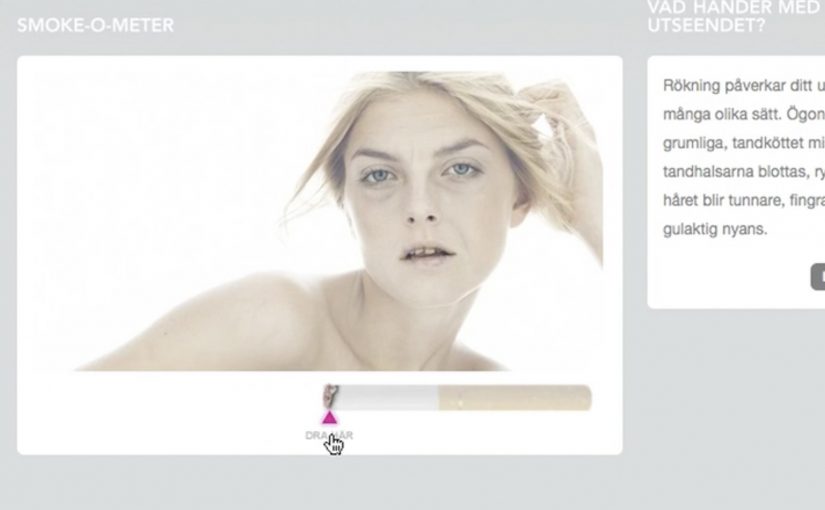
After the sign-ups, the campaign responds at scale. Applicants are told they are “too cute” for this agency because it is looking for “ugly models”. They are then shown a retouched version of their own photo that visualises how they might look after years of smoking.
How it turns a health warning into personal evidence
Most anti-smoking messages rely on abstract futures: disease, risk, statistics. This one drags the consequence into a mirror. It converts “smoking is harmful” into “this is what it can do to you”, using the viewer’s own face as proof, and using the modelling world as the attention hook.
In Scandinavian youth health communication, campaigns often have to compete with fashion and celebrity culture for attention.
The real question is how you make a long-term health risk feel socially immediate to a teenager.
Why it lands with the target group
The psychological move is simple: it swaps distant health outcomes for immediate social stakes. For teenagers, “identity now” usually beats “health later”. The campaign borrows the exact mechanics young audiences already understand. Casting calls, celebrity endorsement, online applications. Then it flips those mechanics into an uncomfortable reveal that is hard to unsee. That works because a personalised image collapses an abstract warning into an immediate identity threat.
Extractable takeaway: If your audience discounts long-term risk, translate the consequence into a near-term identity signal, and make the “proof” feel personally addressed rather than generally broadcast.
The intent, and the ethical edge you can’t ignore
This is a deliberately provocative form of social marketing. It uses deception, and it leans on appearance anxiety to get attention. That friction is part of the spread. People talk about it because it feels shocking, and because it breaks the usual public-service tone.
The pattern is effective, but it should only be used where the public-good case is strong and the safeguards are explicit. If you borrow the pattern, borrow it with care. The line between “wake-up call” and “harmful shaming” is thin, especially when the audience is young. The execution works because it is sharp, but it also raises real questions about consent, data handling, and emotional impact.
What to steal for your next behavior-change idea
- Use a familiar cultural container. Here it is modelling and celebrity culture. Pick a container your audience already pays attention to.
- Make the interaction do the persuasion. The form, the upload, and the response are the message. Not the headline.
- Deliver a personalised “receipt”. The retouched photo turns a general warning into concrete evidence.
- Design the reveal as the share trigger. The moment of “wait, this isn’t what I thought” is the social fuel.
A few fast answers before you act
What is “Ugly Models” in this context?
It is an anti-smoking campaign framed as a modelling recruitment drive called “U-Models”, later revealed as “Ugly Models”, designed to warn teenagers about the visible impact smoking can have on appearance.
How does the campaign mechanism work?
Teenagers apply online to a supposed model agency and upload a photo. The campaign then responds with a reveal message and a retouched version of the applicant’s own photo that visualises the effects of smoking over time.
Why is the personalised photo so powerful?
Because it turns a general warning into something that feels directly attached to the viewer’s own identity. The consequence stops being abstract and starts feeling immediate, visible, and personal.
Why focus on appearance instead of health consequences?
The idea is that long-term health warnings are often ignored by teenagers, while near-term identity and appearance cues are harder to dismiss. The campaign makes the risk feel immediate and personal.
What’s the main risk in copying this approach?
The tactic uses deception and can slide into shaming. If the audience is young, you need extra care around consent, safeguarding, and avoiding harm while still delivering a clear public-good message.