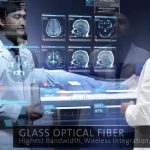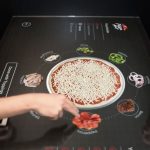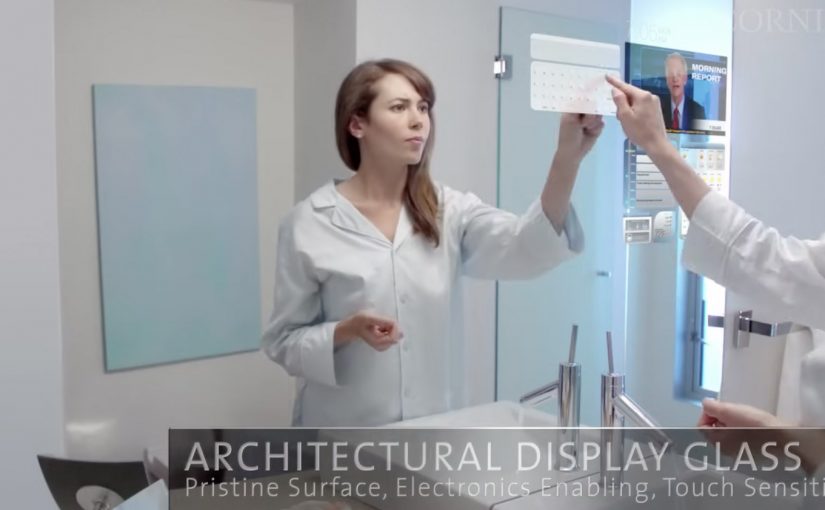
Here is a future vision video by Corning, on where they see multi-touch digital displays over the next few years. Multi-touch means the surface can track several fingers or hands at once, so gestures like pinch, rotate, and shared interaction become natural.
What the film is really demonstrating
The core mechanic is simple. Turn glass from “protective cover” into “primary interface”. Every surface becomes a screen. Every screen becomes responsive to direct manipulation. Information follows you across contexts, from home to school to office, with the same touch-first language, meaning a shared set of gestures and feedback that stays consistent across devices.
In consumer electronics and workplace IT, concept films like this are used to align designers, suppliers, and product teams around a shared interface direction.
The real question is whether your interaction language can stay consistent as screens spread across surfaces and contexts.
Treat the glass as incidental. The interaction model is the product.
Why it lands
It removes the usual friction between people and devices. No boot-up rituals, no “find the remote,” no hunting through menus. You touch the thing you want to change, and the system answers in place. That immediacy is the real promise, not the glass itself. Because the system responds at the point of intent, it reduces both cognitive load and coordination cost in multi-screen tasks.
Extractable takeaway: When you are pitching a new interface paradigm, show behavior before hardware. Make the gestures, feedback loops, and handoffs between screens unmistakable, so the idea remains valuable even if the materials and form factors change.
What to steal for your own work
- Design the interaction language first. Define the small set of gestures and responses that can travel across surfaces, sizes, and contexts.
- Keep information anchored to the object or task. The winning moments happen when data appears exactly where the decision is being made.
- Plan for multi-user moments. Big surfaces invite collaboration. Design for two people at the same time, not just one user plus spectators.
- Prototype the “seams.” The handoff between phone, table, wall, and car is where most visions break. That is the first place to test.
A few fast answers before you act
What is “A Day Made of Glass” trying to communicate?
It is a vision of glass becoming an interactive medium, where touch-first displays move from dedicated devices into everyday surfaces.
What’s the practical value of watching concept videos like this?
They are useful for spotting interface patterns early, then translating the patterns into near-term prototypes and roadmap language for teams and partners.
What’s the biggest product risk in “glass everywhere” thinking?
Over-indexing on the surface and under-investing in the interaction model. If the gestures, feedback, and context switching are weak, the material does not matter.
What is one immediate takeaway a UX or product team can apply?
Write a short “interaction grammar” for your experience, then test it across at least two form factors. If the grammar does not travel, the concept will not scale.
Who should use this kind of vision film internally?
Use it when you need to align design, product, and IT partners on a shared interaction direction before you lock hardware decisions.