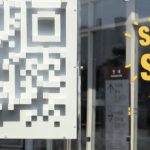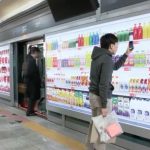
In May 2012, eMart created the Sunny Sale campaign, distributing coupons through a sun-activated QR code.
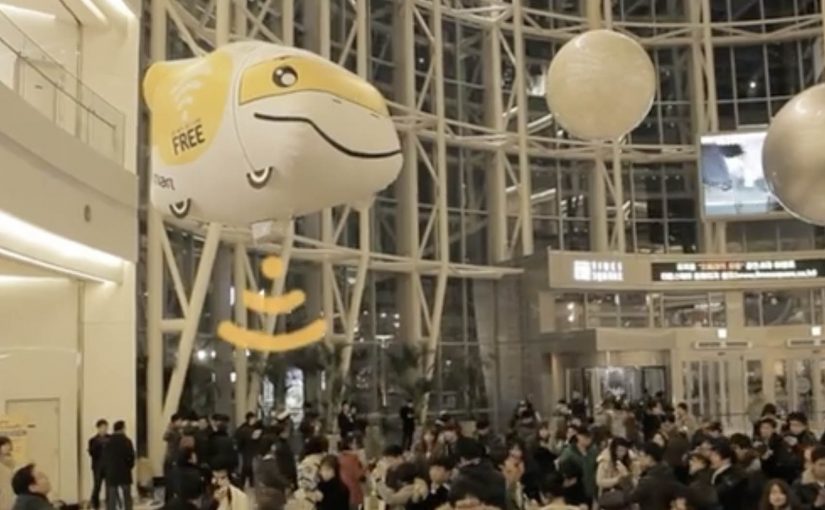
Now, in its latest campaign, eMart creates “Flying Stores”. These are truck-shaped balloons fitted with a Wi-Fi router. These balloon stores float across Seoul, and people who cannot get to an eMart store during the day can connect to the balloon’s Wi-Fi signal and order directly online.
Wi-Fi as the storefront
The mechanism is a mobile commerce shortcut disguised as outdoor media. The balloon is the attention object, but the real call-to-action is the hotspot. Connect. Land inside the eMart mobile experience. Buy now, while you are in transit or between errands. Because joining a Wi-Fi network is a familiar, low-friction action, the hotspot makes the “store comes to you” promise feel immediate.
In dense urban retail markets, removing distance and time as barriers is often the fastest route to incremental mobile conversion.
The real question is whether your activation builds a functional shortcut into the customer journey, not just a spectacle around it.
Why it lands
It targets a real constraint, not a demographic. People are time-poor, and “accessibility” often decides which retailer wins repeat behavior. The balloon flips accessibility from “go to the store” to “the store comes to you,” with Wi-Fi as the bridge.
Extractable takeaway: When your growth problem is “people can’t get to us,” do not just advertise harder. Create a literal on-ramp that collapses the journey from attention to transaction into one simple action that feels native, like joining a Wi-Fi network.
What to steal for your next retail activation
- Make the trigger physical, then make the conversion digital. The balloon earns attention. The phone closes the sale.
- Design for commuters. Transit corridors are full of intent, but short on time. Your flow must be fast.
- Give the audience a reason to connect. Free Wi-Fi is a utility. Utility beats persuasion in the first 10 seconds.
- Measure beyond views. If it is meant to drive commerce, track app installs, orders, and repeat usage, not just impressions.
- Reinforce the pattern with a related example. See the 2011 flying fish balloons campaign for the Sea Life park in Speyer, Germany.
A few fast answers before you act
What is an eMart “Flying Store”?
A truck-shaped balloon equipped with a Wi-Fi router that people can connect to, then use to enter eMart’s mobile experience and shop online.
Why use Wi-Fi instead of a QR code this time?
Wi-Fi turns the activation into a utility, not just a scan. It creates a direct, immediate pathway into mobile shopping, especially for people on the move.
What makes this more than a PR stunt?
The hotspot is a functional distribution layer. If the mobile flow is good, the activation can produce measurable installs and transactions, not only buzz.
What should you measure to judge success?
Track connects to the hotspot and the downstream actions you care about, like app installs (if required), orders, and repeat usage, not just media impressions.
What is the biggest risk in copying this idea?
If the connection experience is unreliable, slow, or confusing, the novelty becomes frustration. Utility-led activations only work when the utility works.