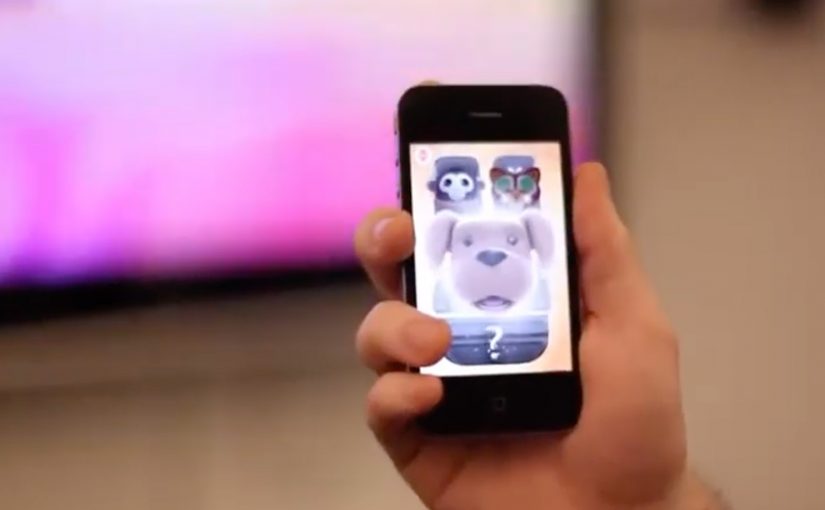
You watch the Honda Jazz “This Unpredictable Life” TV spot. At the same time, you open a companion iPhone app and literally “grab” what is happening in the ad. A character jumps onto your phone in the exact moment it appears on TV. Then you take that character with you and keep playing after the commercial ends.
Wieden + Kennedy London is behind this interactive TV campaign for the new Honda Jazz. The idea is simple and sharp. Use the iPhone as a second screen that syncs to the broadcast and turns a passive spot into a real-time experience. Here, “second screen” means the phone becomes the companion interface while TV stays the primary video canvas.
What the iPhone app does while the ad plays
The mechanic is “screen hopping.” The iPhone app recognises the sound from the TV ad and matches it to predefined audio fingerprints. That timing tells the app exactly which character or moment is live in the commercial, so it can surface the right interactive content on your phone in real time. Because the sync is driven by the ad’s audio, the handoff can happen on the exact beat the viewer sees on TV, which is what makes the interaction feel seamless.
In European consumer-brand marketing teams, this pattern matters most when broadcast reach and mobile engagement are owned and designed as one experience.
The real question is whether your second-screen sync can stay instant and obvious enough to feel like part of the spot, not a separate product.
What happens after you “grab” a character
Once a character lands on your iPhone, you interact with it away from the TV. You can trigger behaviours and mini-interactions, including singing into the phone to make characters react and dance. The TV spot becomes the gateway. The mobile experience becomes the engagement layer you keep.
Why this matters for interactive advertising
This is a clear step toward campaigns that treat broadcast as the launchpad and mobile as the control surface. When the second screen is tightly synchronised, you can design moments that feel native to the content people are already watching, rather than forcing a separate “go online later” call-to-action. This is worth doing when the sync is instant and the post-spot interaction is fun enough to continue without the TV.
Extractable takeaway: If you want broadcast to create action, design the mobile handoff so it happens on the same beat the viewer sees on TV, then give the phone a simple loop that keeps going after the spot ends.
This is also not the first time an iPhone engagement model starts to bridge media and action. A related example uses a similar iPhone-led interaction pattern for coupons and augmented reality: location based augmented reality coupons.
Design cues to reuse from this campaign
- Anchor everything on a single trigger. Let the TV spot be the trigger, and let the phone pick up the same moment without delay.
- Make the interaction obvious in one move. “Grab a character” is a clean mental model that needs almost no instructions.
- Carry the payoff beyond the broadcast window. Treat the spot as the gateway and the phone as the layer that continues after the ad ends.
- Keep the experience playful, not feature-heavy. Simple behaviours and reactions beat complex menus when timing is the point.
A few fast answers before you act
What is “screen hopping” in advertising?
Screen hopping is when content “jumps” from one screen to another during a live experience. Here, the TV spot triggers synchronized content on an iPhone so viewers can capture and interact with elements of the ad.
How does the Honda Jazz app sync to the TV commercial?
The app uses audio recognition. It matches the ad’s sound to predefined audio patterns so it knows what is playing at any moment and can show the right character or interaction on the phone.
What is the value of a second-screen experience like this?
It extends a short broadcast moment into a longer engagement loop. The ad becomes a gateway. The phone becomes the interactive layer that continues before, during, and after the spot.
What should a brand get right to make this work?
Timing and simplicity. The sync must feel instant, the interaction must be obvious, and the “reward” for participating must be fun enough to carry beyond the TV moment.