
smart fortwo: parKING

smart fortwo: parKING

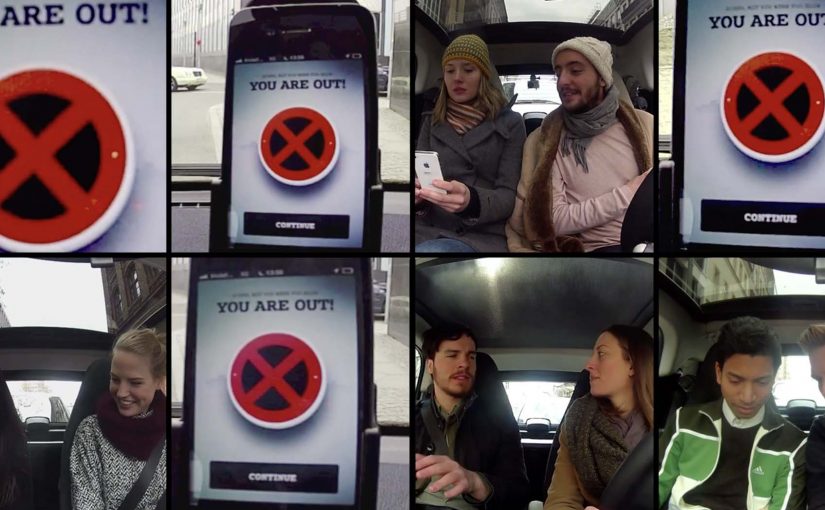
Parking in the city is rarely fun, so BBDO Germany turns a regular test drive for the smart fortwo into an interactive parking game inspired by musical chairs.

An iPhone app plays music and directs teams around central Berlin. When the music stops, teams have to find a parking spot immediately. The last team to park and verify their location with a photo upload is eliminated. The competition runs out of the smart Center Berlin, where eight teams battle to become Berlin’s first “parKING”. In this activation, “parKING” names the elimination-style parking race where the last team to park when the music stops is out.

How the game works as a test drive

The mechanism is simple. A timed audio cue creates urgency. GPS-style direction turns the city into the board. Photo proof keeps it honest. Underneath the playfulness, every round forces the product truth the brand wants to dramatize. In a dense city, a small car that can slip into tight spots changes the outcome. Because the win condition is parking fast in tight spots, the fortwo’s city-fit advantage shows up as a competitive edge.

In urban European mobility marketing, turning a functional advantage into a public game is a reliable way to make a test drive feel like entertainment rather than evaluation.

The real question is whether the rules make the product truth decide the winner, without narration.

For city-mobility brands, this rule-first approach beats a standard test drive because it turns a claim into observable proof.

Why it lands

It converts a daily friction into a competitive moment, then makes the proof visible. People do not need to be told that parking is painful. They already feel it. The activation reframes that pain as a challenge where speed, composure, and the vehicle’s city fit are the deciding factors.

Extractable takeaway: If your product benefit only matters in a real context, stage a rule-based experience that forces the context to happen. Then let the rules make the benefit obvious without narration or feature lists.

Steal the parKING activation pattern

  • Build the experience around one constraint. Here it is time pressure when the music stops. One constraint keeps the story legible.
  • Use verification that audiences trust. Photo proof is simple and public. It prevents the “this is fake” reaction.
  • Turn the environment into the media. The streets of Berlin are not a backdrop. They are the gameplay.
  • Make the rules do the branding. When the win condition is aligned with the product truth, the brand message arrives naturally.

A few fast answers before you act

What is parKING in one sentence?

It is a city-wide parking game that turns a smart fortwo test drive into musical chairs, guided by an iPhone app and enforced with photo verification.

Why does a game work better than a normal test drive here?

Because it creates stakes and a clear outcome. A standard test drive is private and subjective. A game produces winners, losers, and shareable proof.

What makes this feel “made for Berlin” instead of generic?

The rules depend on dense city parking reality. The city’s constraints are the point, so the activation feels native to the environment.

What is the main risk when brands copy this pattern?

Misaligned rules. If the game’s win condition does not directly demonstrate the product truth, you end up with a fun event that does not build the intended belief.

What is the minimum viable version of this mechanic?

A single timed cue, simple navigation to keep teams moving, and one proof step such as a photo upload. Strip everything else.

Track My Macca’s: Supply Chain Transparency

Track My Macca’s: Supply Chain Transparency

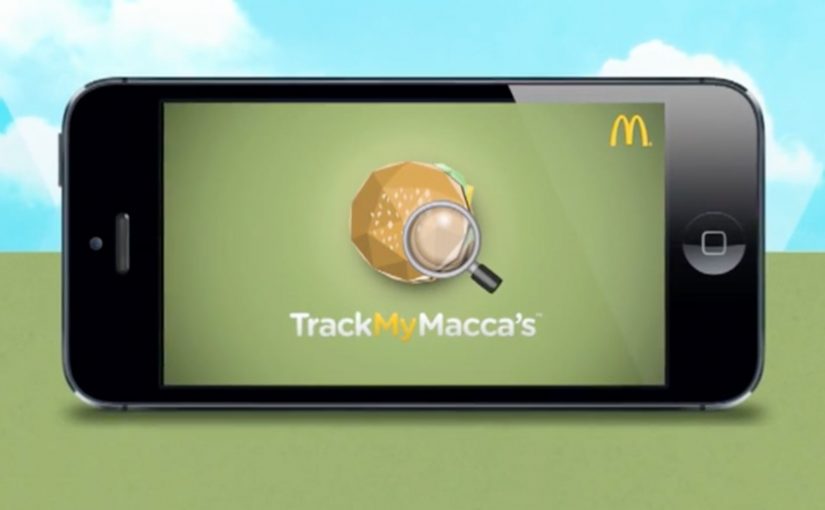
McDonald’s in Australia decided to use technology to tackle one of its biggest problems, the disbelief that its ingredients are fresh, locally sourced and of decent quality. So with image recognition, GPS, augmented reality and some serious integration with its supply chain, they put together a full story behind every ingredient people came across while buying food at McDonald’s.

The real challenge: trust, not awareness

This is not a campaign built to shout louder. It is built to answer the skeptical question that sits in the customer’s head at the moment of choice: “Is this actually fresh, and where did it come from?”

The real question is: how do you turn a trust objection into verifiable context at the point of purchase?

Instead of responding with claims, it responds with traceable context. Ingredient by ingredient.

Why the tech stack matters only if it is integrated

Image recognition, GPS, and augmented reality are the attention layer. The credibility layer is the supply chain integration. Here, “supply chain integration” means the experience is pulling from the same operational sourcing and logistics records the business runs on. Without that, the experience would be a glossy story. With it, the experience becomes proof.

If the experience is not tied to operational data, it becomes transparency theater rather than trust building.

  • Image recognition. Identify what the customer is looking at or buying.
  • GPS. Connect the experience to location and local sourcing claims.
  • Augmented reality. Make information feel immediate and tangible in the buying moment.
  • Supply chain integration. Ensure the “story” maps to real sourcing and logistics data.

In high-volume consumer businesses, credibility is won or lost in the buying moment, not on an “about our ingredients” page.

What makes this a strong model for brand transparency

Transparency only works when it is easy. People will not dig through PDFs or corporate sustainability pages while they are ordering lunch.

Extractable takeaway: When trust is the barrier, bring proof to the point of choice and back it with operational data that can stand up to scrutiny.

What to take from this if you run CX, MarTech, or operations

  1. Start with the objection. The customer’s doubt defines the experience.
  2. Proof beats promise. If you want trust, show traceability, not slogans.
  3. Integrate the system of record. Experiences that depend on trust must connect to operational data.
  4. Design for the moment of choice. The best transparency is delivered exactly when people need it.

Here, “system of record” means the operational data sources that govern sourcing and logistics, not a marketing layer that can drift from reality.


A few fast answers before you act

What is “Track My Macca’s”?

It is a McDonald’s Australia initiative that uses mobile technology to show a story behind ingredients, aiming to build trust in freshness, local sourcing, and quality.

Which technologies were used?

Image recognition, GPS, augmented reality, and strong integration with McDonald’s supply chain to connect the experience to real sourcing and logistics.

Why is supply chain integration the critical piece?

Because the experience depends on credibility. Without operational data behind it, the story would feel like marketing. With it, it can function as proof.

What customer problem does this solve?

It addresses disbelief about ingredient freshness and quality by making provenance and context visible at the point of purchase.

What is the transferable lesson for other brands?

If trust is your barrier, design transparency into the customer journey and connect it to your systems of record, so the experience can stand up to scrutiny.