
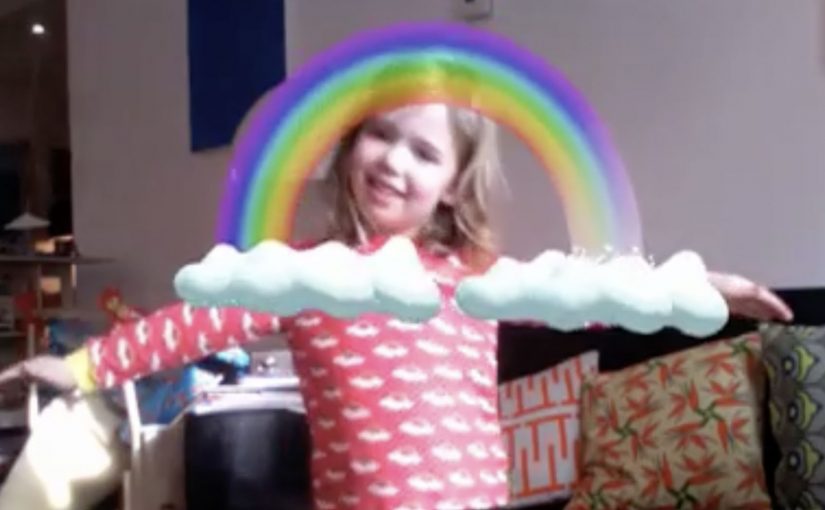
No one likes getting dressed in the morning. It is routine and usually boring. Magic Tee flips that by making clothes feel alive. Put the T-shirt on, stand in front of a webcam, and the print becomes an interactive animation that responds to the child’s movement.
It is described as the first piece of children’s clothing to incorporate augmented reality in this way, designed and developed by creative agency Brothers and Sisters for kidswear brand Brights & Stripes.
How a T-shirt becomes a screen
The mechanism is straightforward. The T-shirt print is designed so a webcam can recognize it reliably, then align a 3D animation to the child’s torso on-screen. When the child moves, the animation moves with them, so the shirt feels like a trigger for a small story rather than a static graphic.
Augmented reality kids clothing, in this context, is apparel whose printed design can be recognized by a camera so digital characters and effects can be layered onto the garment and react to the wearer’s motion.
In consumer brands looking to fuse physical products with digital play, this kind of camera-triggered interaction is a simple way to turn ownership into an experience.
Why this lands with kids and parents
For kids, the reward is immediate. Movement creates feedback, so the child quickly learns that they control what happens. That sense of viewer control is what turns novelty into repeat use.
For parents, the concept reframes clothing from “something you have to put on” into “something that starts play.” It also creates a natural share moment because the experience is easiest to show when someone is watching the screen with you.
What the brand is really doing
On paper, it is an AR stunt. In practice, it is a product differentiation play. The shirt becomes a conversation piece, and the brand earns a place in the child’s routine through interaction rather than purely through design.
It also sets up a longer runway. If the platform exists, new prints can unlock new animations, which turns a clothing line into a renewable content system.
What to steal for your next product experience
- Make the trigger physical. When the product starts the experience, engagement feels earned.
- Keep the first win fast. The first 10 seconds should produce a visible reaction.
- Design for repeat play. Add simple variation so it does not feel “seen once.”
- Build a shareable moment. Parents share outcomes, not features. Give them an outcome.
A few fast answers before you act
What is the core idea of Magic Tee?
A children’s T-shirt that acts as a trigger for an on-screen AR animation. A webcam recognizes the print and overlays moving characters that respond to the child’s motion.
Is this mobile AR or webcam-based AR?
As described in the campaign write-ups, it is webcam-based. The interaction happens when the child stands in front of a computer camera and sees the augmented layer on screen.
Why use clothing as the marker instead of a card or poster?
Because the marker is worn. That makes the experience personal, repeatable, and closely tied to identity and play.
What makes interactive apparel feel “not gimmicky”?
Speed and reliability. If recognition is instant and the animation responds smoothly to movement, the experience feels like play. If setup is slow, it feels like tech.
What is the most transferable lesson for marketers?
Turn the product into the interface. When the item in the basket is also the trigger for the experience, you get differentiation and word of mouth without adding more media.