
Garage Beer: We Want Your Pee Stunt Becomes A System

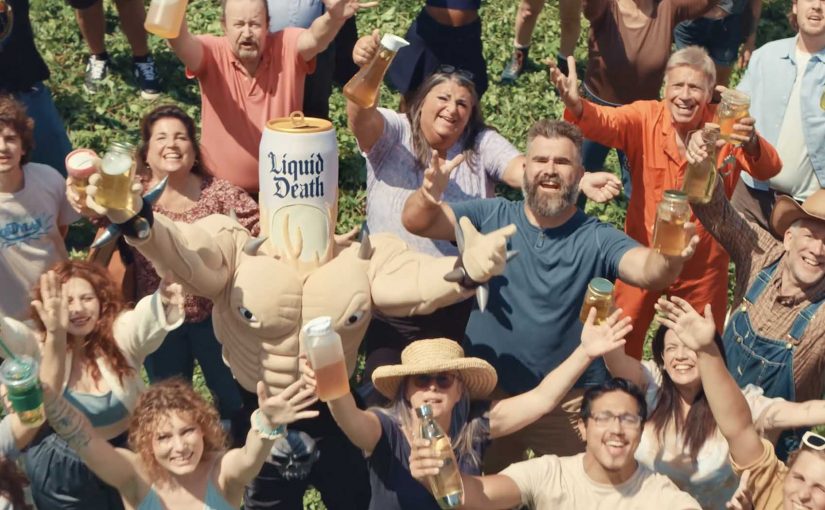
Garage Beer co-owner Jason Kelce looks into the camera, holds up a jar of yellow liquid and sings the campaign’s line: “We want your pee.”

What follows is not just a crude song. Garage Beer Classic Light Beer and Liquid Death Sparkling Energy are part of the joke, a limited-edition resealable “Data Center Coolant Collector” makes it physical, and the campaign page gives people somewhere to go next.

The “We Want Your Pee” campaign is best read as a campaign system. A campaign system is a set of connected touchpoints that gives one creative idea a different job at every stage, from attention to action, consented data and commercial follow-through. The useful lesson is not to copy the provocation, but to build the route from attention to measurable action before launch.

The mechanism: Give every partner a job

The campaign starts with a brutally simple chain: drink Garage Beer or Liquid Death Sparkling Energy, create urine, collect it, and supposedly send it to cool an AI data centre. Kelce brings more than a recognisable face: the retired Philadelphia Eagles centre connects the campaign to the NFL, while his brother Travis’s marriage to Taylor Swift places Jason inside a much wider pop-culture context. But the products themselves drive the plot, making the collaboration causal rather than cosmetic.

The wider tension is real: Berkeley Lab estimated that US data centres directly consumed 66 billion litres of water in 2023, although consumption varies materially by cooling system, grid and location.

Because both products are positioned as inputs to the same ridiculous solution, neither brand feels pasted onto the idea. The issue gives the joke relevance, the product logic gives the partnership coherence, and the jingle makes the mechanism easy to retell.

The journey: Give attention somewhere to go

A standalone video could create reach but would leave no owned next step. Here, the collector carries the idea onto the campaign page and into a product interaction. The real question is whether the creative idea survives the handoff from video to owned experience.

The campaign page presents the collector as a limited-edition product. When it is unavailable, the page offers a “Notify Me” registration and an option to join the email list. That turns the punchline into a structured intent signal without forcing every visitor straight into a beverage purchase.

That handoff matters because social attention is rented and short-lived. An owned destination lets the team observe what people do next: watch, browse, register interest, opt into marketing or buy. It creates the possibility to measure them.

The control: Make the joke safe to execute

The same clarity that makes the campaign memorable creates risk. If someone interprets “send your pee” literally, the joke can spill into customer care, fulfillment, reputation and platform moderation.

The official product page explicitly tells people not to actually send their urine. That disclaimer is essential because the clearer the public action, the more precisely the campaign must define where the joke stops.

That handoff matters because the campaign no longer ends with a view. The owned destination creates concrete next actions: browse, register interest, opt into marketing or buy.

The lesson: Make the products carry the idea

The useful part of this campaign is that the drinks, collector and campaign page are not afterthoughts. The drinks create the fictional coolant, the collector makes it tangible, and the page turns the punchline into a product interaction.

Use a simple test before approving the work: if the products can be removed without changing the idea, the brands are sponsoring the entertainment rather than driving it.


A few fast answers before you act

What is the “We Want Your Pee” campaign?

“We Want Your Pee” is an August 2026 campaign from Liquid Death and Garage Beer featuring Jason Kelce. It uses a song and a fake proposal to cool AI data centres with urine to draw attention to water consumption and promote both beverage products.

Why do Garage Beer and Liquid Death fit together?

Garage Beer and Liquid Death fit because both products have a functional role inside the joke: consumers drink them, produce the supposed coolant and use the co-branded collector. The partnership is part of the mechanism, not just a shared logo treatment.

What makes this more than a video stunt?

The campaign connects the film to a physical collector, an owned product page, an availability notification, an email option and an explicit disclaimer. Those touchpoints give attention a route into action, consent and measurement.

Is the campaign really asking people to mail urine?

The creative idea says people should send urine to data centres, but the official product page explicitly tells consumers not to do it. The mailing instruction is satire, not a real fulfilment model.

What should another brand copy from this campaign?

Another brand should copy the connected design, not the crude joke. The useful pattern is a clear product role for every partner, an owned next step, governed risk and a measurement plan that follows the consumer across touchpoints.

How should a connected stunt be measured?

A connected stunt should be measured at each handoff: content engagement, visits to the owned destination, product interaction, purchase or registration, valid marketing consent and later product behaviour. The owners and baselines should be agreed before launch.
Formula E: Leap of Faith

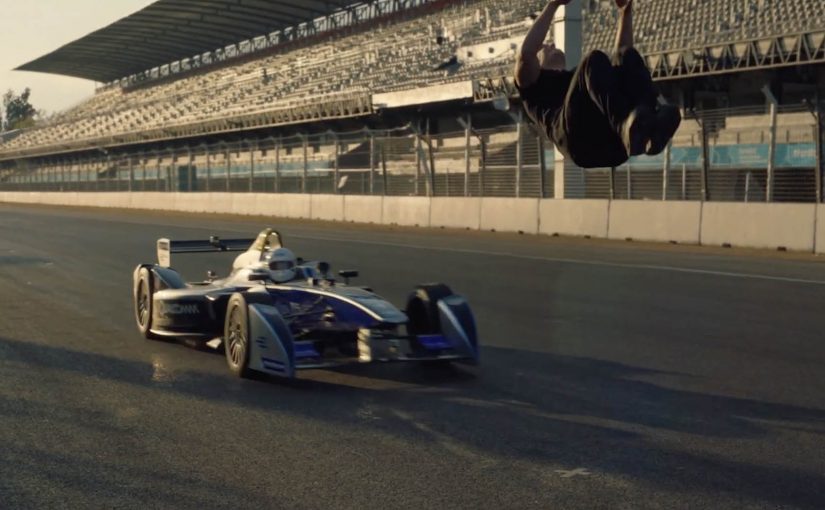
A race car comes up fast from behind. Damien Walters cannot see it. He commits anyway, throwing a backflip that clears the car at speed, landing as if it is routine.

Watch the perfectly synchronised leap below.

One trick, built on timing discipline

The mechanic is simple to describe and hard to execute. A blind backflip over a moving Formula E car. What makes it work is timing control. The driver holds a consistent approach speed, and the stunt is triggered off a repeatable timing reference so the flip happens at the exact moment the car reaches the take-off zone.

In sports branded content, the cleanest way to earn attention is to stage a single, unmissable proof where human skill and the sport’s technology meet in the same frame.

Why it lands

This is a spectacle with a clear question and a clear answer. Can he do it. Then, there it is. The real question is whether the stunt can make precision feel visible rather than merely claimed. The “blind” constraint adds tension because it removes the most obvious safety cue, and the viewer instinctively runs the risk calculation while watching. The payoff is the feeling of precision, not chaos. It reads less like danger for danger’s sake and more like controlled performance.

Extractable takeaway: If your story is “this is high-performance and precise,” build a moment where the viewer can see precision as a binary outcome, and keep the framing uncluttered enough that nobody misses the proof.

What Formula E gets out of it

The stunt borrows the language of elite motorsport. Speed, control, engineering, nerve. It also gives Formula E an easily shareable “you have to see this” asset that travels beyond core racing fans, while still feeling native to the category.

What to steal from the stunt

  • Make the promise visible. Translate “precision” into a single, legible pass or fail moment.
  • Add one constraint that increases tension. Blind, one-take, fixed distance, single attempt. Keep it understandable.
  • Keep the shot honest. The simpler the framing, the more the audience trusts what they are seeing.
  • Design for replay. If the moment is short and clean, people will rewatch and repost without needing context.

A few fast answers before you act

What is “Leap of Faith” in one sentence?

A branded stunt film where Damien Walters performs a blind backflip over a speeding Formula E car with tight timing synchronisation.

What makes the stunt feel different from a normal trick shot?

The car approaches from behind, so the timing has to be pre-controlled rather than visually adjusted, which raises tension and makes precision the headline.

Why does this format work for a sports brand?

It communicates the sport’s core attributes, speed and control, in a compact proof that is understandable even to non-fans.

What is the main creative risk?

If the production feels over-edited or overly cinematic, audiences question authenticity and the share impulse drops.

When should you use a “single proof moment” idea like this?

When your brand story is performance-based and you can express it as one unmistakable action that holds attention in the first three seconds.

NIVEA Creme: Second Skin Project

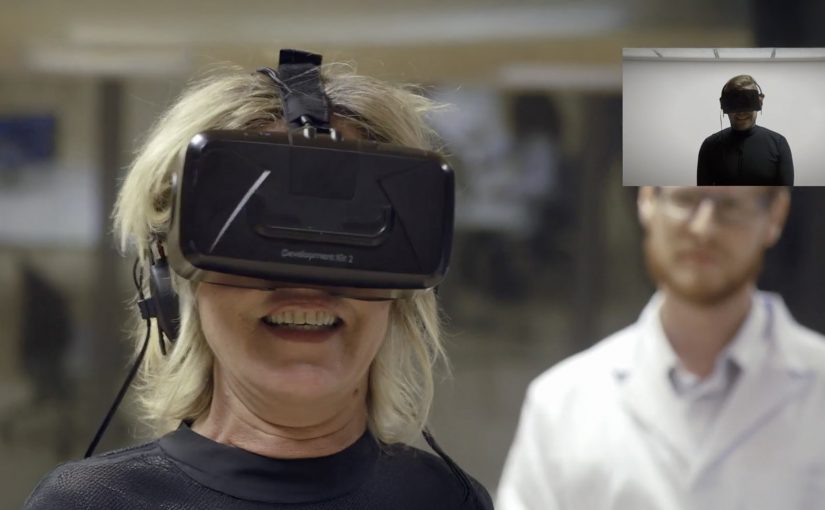
A mother puts on a headset and a skin-like suit. Her son does the same, thousands of kilometres away. The promise is simple. If they cannot be together for Christmas, technology will let them feel a hug anyway.

That is the set-up in NIVEA Creme’s “Second Skin Project” with Leo Burnett Madrid. The film introduces Laura in Madrid and her son Pablo, who is away volunteering in Paraguay. They are invited to test a “Second Skin” garment that is presented as a high-tech fabric designed to simulate human skin and transmit the sensation of touch at distance, paired with virtual reality headsets.

The story then pivots. What looks like a tech demo is used to make a point about touch, not technology. The most persuasive moment is not the suit. It is the human reunion that follows, designed to underline NIVEA Creme’s belief that nothing beats skin-to-skin contact.

The “Second Skin” mechanism that pulls you in

The film borrows credibility from advanced-sounding materials and VR. That framing creates anticipation, because the viewer wants to know whether the experiment can actually work. The suit and headset are the narrative engine that earns attention for long enough to land the real message.

In global consumer brands where heritage products compete with endless alternatives, emotional proof often carries more weight than functional claims.

The real question is whether the tech is the story, or whether it is just a credible pretext for the brand to own the value of touch.

The twist that protects the brand meaning

There is a risk with tech-led emotion. The technology can become the hero and the brand becomes a sponsor. This script avoids that by using the tech as a decoy. The reveal shifts the spotlight back to the product truth. A hug is still the best “gift” and NIVEA Creme wants to be associated with that intimacy.

Extractable takeaway: When you borrow a shiny mechanism to earn attention, make the emotional payoff explicitly restate what the brand believes, or the gadget takes the credit.

How to use “purpose + tech” without losing the human truth

  • Use technology as the hook, not the conclusion. Let it earn attention, then pay it off with a human truth.
  • Make the brand stance explicit. Here the stance is clear. Technology can be amazing, but touch matters more.
  • Cast real stakes. Distance, holidays, and family history make the outcome feel earned.
  • Keep the product role emotional, not technical. NIVEA Creme is not “the innovation”. It is the comfort cue that frames the story.

A few fast answers before you act

What is the NIVEA Creme Second Skin Project?

It is a Christmas-season film and experiment setup where a mother and son test a VR-led “Second Skin” suit that is presented as transmitting the feeling of touch at distance, then the story reveals the value of real human contact.

Why does the campaign use VR and a “second skin” suit?

Because it creates a believable question the audience wants answered. Can technology replicate a hug? That curiosity holds attention long enough for the campaign’s real point to land.

What is the core message NIVEA Creme is trying to own?

That skin-to-skin contact matters. The work uses technology to highlight that, even in a world of advanced tools, nothing replaces human touch.

What makes this more than a generic emotional video?

The narrative structure. It starts as a tech experiment, then pivots into a human reunion. That contrast makes the conclusion feel stronger than a straight sentimental story.

What is the biggest risk with “tech-as-story” campaigns?

Audience misattribution. People remember the gadget and forget the brand meaning. The fix is to ensure the emotional payoff clearly belongs to the brand stance, not the device.