When the medium is literally the product moment
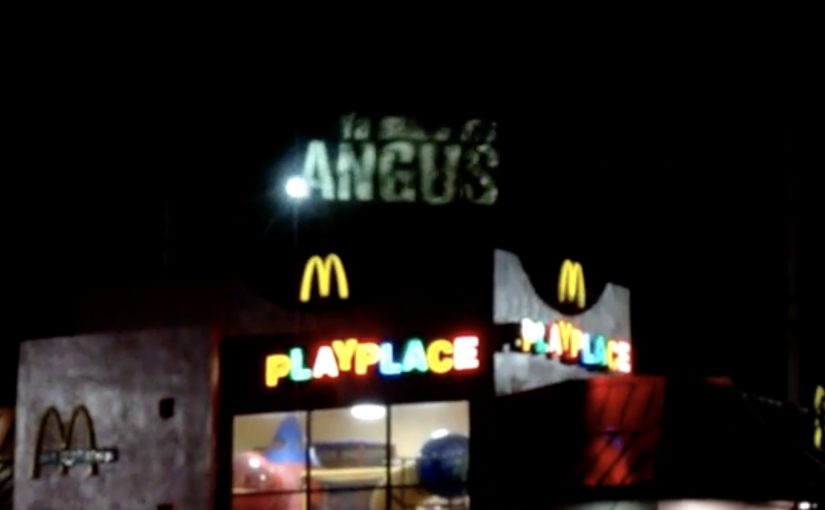
A great ambient strategy by Leo Burnett Puerto Rico to launch the Angus Burger for McDonald’s.
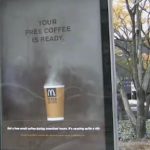
The mechanic: “smokvertising” in one move
Here, “smokvertising” means using real grill smoke as the placement. As smoke rises, imagery and copy are projected onto it, so the message appears to live inside the smell and heat of cooking rather than on a static board.
In high-frequency food and beverage categories, ambient work performs best when it hijacks a real-world byproduct of consumption and turns it into a media surface.
Why it lands
This is attention without shouting. People notice it because it behaves unlike advertising, then the sensory context does the rest. Smoke is already a cue for freshness and grilling, so the brand gets meaning “for free” before a single word is read. It also creates a built-in crowd moment: smoke draws eyes, the projection rewards the look, and the whole thing becomes naturally filmable.
Extractable takeaway: If you want a product to feel immediate, put the message inside an existing sensory cue people already associate with the product, then keep the copy minimal and let the environment do the persuasion.
What the brand is really buying
This is not only awareness. It is salience. The work aims to anchor “Angus Burger” to the visceral trigger of grilling, so the next time someone sees smoke, they are primed to think of the product.
The real question is how to bind appetite cues and brand memory in the same instant.
What food brands can borrow from this
- Start from a native signal. Find the byproduct or ritual your category already owns (smoke, steam, heat, condensation) and treat it as media.
- Make the trick readable instantly. Ambient placements succeed when the viewer understands the rule in under a second.
- Keep the craft on-message. The “wow” should reinforce the appetite cue, not distract from it.
- Design for phones. If it films cleanly, it travels without needing paid amplification.
A few fast answers before you act
What is McDonald’s “Grill Smoke” activation?
It is an ambient out-of-home concept where grill smoke becomes the “screen” and brand visuals are projected onto it to promote the Angus Burger.
What is the core creative mechanic?
Use a real, moving, sensory element (smoke) as the media surface, then overlay a simple projected message that only exists while the smoke exists.
Why does this beat a normal billboard for a food launch?
Because it collapses message and appetite cue into the same moment. The medium already signals “fresh off the grill,” which makes the product claim feel more believable.
What’s the transferable lesson for other brands?
When you can borrow a natural environmental cue, embed your message into it instead of placing your message next to it.
What is the main risk of copying this approach?
If the effect is hard to see quickly, or if the sensory cue does not match the product promise, the execution becomes a gimmick rather than a brand reinforcement.