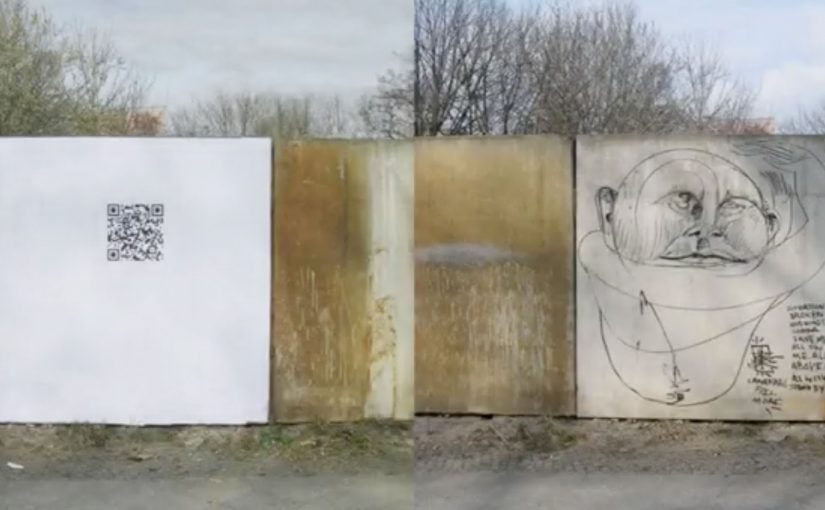
QR Codes are now being used to preserve graffiti for posterity by photographing the graffiti before it is removed. After the graffiti has been cleaned off by local authorities or a building owner, a QR Code is placed in the exact location which leads to the original image of the graffiti. In this way, a mobile phone with a QR-Code Reader can be used to travel back in time. Here, “time travel” means scanning a code on a cleaned wall to see the photo of what used to exist there.
How the “time travel” mechanism works
The system is straightforward: capture the artwork while it exists, then replace the physical mark with a digital pointer after it disappears. The QR code becomes a permanent address for a temporary piece. Because the code stays put while the paint does not, the link between place and memory survives removal.
In cities where street art is constantly overwritten, cleaned, or redeveloped, lightweight digital markers can preserve cultural memory without freezing the city in place.
The real question is whether you want to erase the mark, or keep a findable trace of it in the same place.
This is the right preservation trade-off: let surfaces change, but keep the memory retrievable where it mattered.
Why it lands
It respects ephemerality instead of fighting it. Graffiti stays transient, but its trace stays findable.
Extractable takeaway: Preservation becomes compelling when it is tied to a precise location and low-friction. If people can access “what used to be here” in the exact place they are standing, the archive feels like part of the city rather than a separate museum.
It puts the archive back on the street. The documentation is not hidden in a database. It is anchored to the exact wall where the work lived.
It makes discovery participatory. You have to scan, which turns the passer-by into an active retriever of the past, not just a viewer.
Borrowable moves for place-linked archives
- Anchor digital content to a precise physical spot. Place is the interface, not just the backdrop.
- Design for “after removal”. If the thing you love will disappear, make the replacement object carry the memory.
- Keep the interaction simple. A scan is a smaller ask than an app download or a long URL.
A few fast answers before you act
What problem does this solve?
It preserves the visual record of graffiti that is likely to be removed, while still letting the city clean or repaint surfaces.
Why use QR codes instead of a normal plaque or sign?
A QR code can point to a photo archive and scale cheaply. It also keeps the physical footprint small.
What makes this feel like “traveling back in time”?
You stand in the present at a cleaned wall, scan the code, and instantly see what used to exist in that exact location.
What are the key dependencies for this to work long-term?
The linked image hosting must stay live, and the code must remain readable and not be removed or damaged.
How could a city or brand adapt the idea?
Use location-linked markers to preserve temporary culture. Murals, pop-up installations, event posters, even construction hoardings, while keeping the interaction one-step simple.