
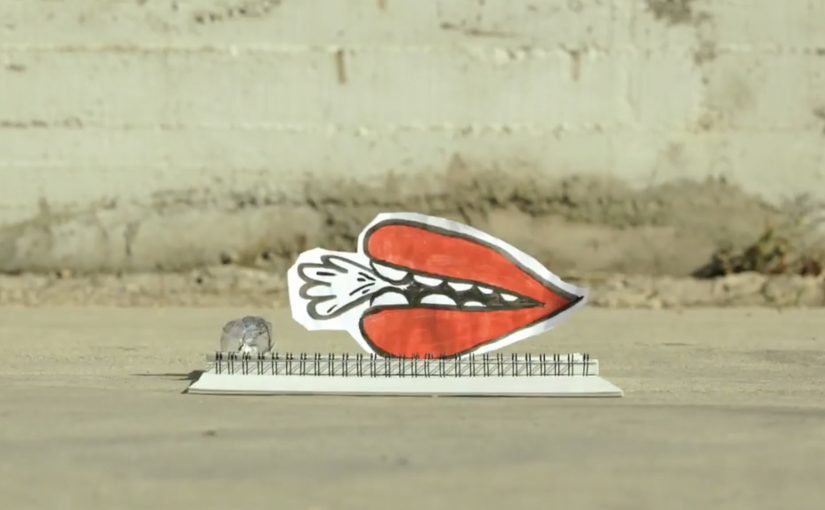
Orbit and its agency Evolution Bureau (EVB) launch an experimental video that leans hard into craft. A stop-motion film built from original drawings, animated into a world where mouths literally clean up what is dirty.
The story is designed to carry Orbit’s “clean” brand essence while nudging a broader idea about keeping the world cleaner too. It is not a product-demo spot. It is a mood piece, delivered through hand-made texture.
How the stop-motion idea is constructed
The mechanism is stop-motion animation created from original artwork by Goons, then assembled into a sequence of “cleaning” actions across a rundown environment. Campaign coverage describes the film as being built from hundreds of drawings, shot into motion over a short production window.
In global FMCG brand communications, craft-forward films like this work best when the technique is not decoration, but the proof that the brand promise is being taken seriously. Here, craft-forward means the production method is doing part of the persuasion, not just adding surface style.
Why this lands as an Orbit idea
“Clean” is usually communicated with polish. This flips it by starting in mess and showing transformation. The stop-motion texture makes the cleaning feel earned, not airbrushed, and the repeated mouth motif keeps it anchored to gum without needing a literal chewing scene.
Extractable takeaway: If your brand essence is a feeling, pick a production method that physically embodies that feeling. Then make the story a sequence of transformations, so the viewer can see the promise happening rather than being told about it.
What the film is really trying to achieve
The real question is how to make Orbit’s clean promise feel distinctive again without defaulting to a standard freshness demo.
The business intent is to refresh Orbit’s “good clean feeling” territory with something unexpected and art-led. Experimental craft signals modernity and confidence, and it gives the brand a shareable artifact that can travel beyond conventional media placements.
What to steal for your own brand storytelling
- Let craft do the persuasion. When the technique is distinctive, it becomes the reason people watch.
- Show transformation, not claims. “Before and after” storytelling carries benefit without needing product exposition.
- Keep one repeating brand cue. Here, the mouth motif keeps the film on-brand even when the story goes abstract.
- Make the film rewatchable. Dense detail rewards a second view, which is a practical lever for shareability.
A few fast answers before you act
What is the core idea of Clean It Up?
A stop-motion film where illustrated mouths clean up a dirty environment, translating Orbit’s “clean” promise into a literal transformation story.
Why use stop-motion and drawings instead of a normal shoot?
Because the handmade texture signals care and originality. It also makes “cleaning” feel physical and constructed, not just edited.
What does this communicate about the brand?
That Orbit is confident enough to express its benefit through art and transformation, not only through product usage shots or functional demos.
When does a craft-led approach like this work best?
It works best when the production technique is itself evidence of the brand promise. If the method only adds style, the film may be memorable without building the brand.
What is the main pitfall if you copy this approach?
If the craft is high but the brand cue is weak, the film becomes “a nice animation” that could belong to anyone. You need one unmistakable anchor inside the artistry.