A car commercial painted on a fake nail
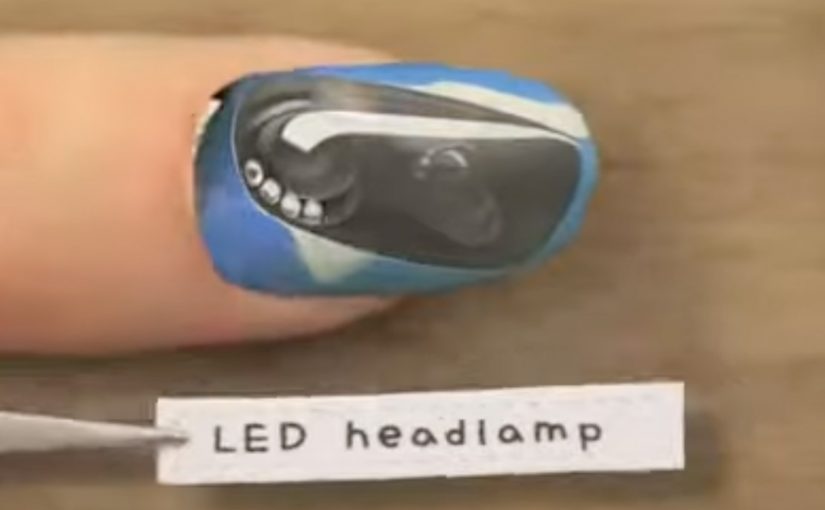
Kia wanted to highlight the micro-features, meaning the small design and usability details, of their smallest car model, the Picanto. So they created a stop-motion car commercial on a fake nail. The film was billed at the time as the world’s first nail art animation.
It reportedly took 25 days to create, and used 1,200 bottles of nail polish across 900 fake fingernails.
The trick: match “micro-features” with micro-scale filmmaking
Stop-motion is an animation technique where you photograph small, incremental changes frame by frame, then play the frames back to create motion.
Here, the canvas is the punchline. By putting the story on a fingernail, the craft becomes the message. Because the viewer has to pay attention to tiny brushwork to follow the motion, the “micro” idea feels experienced, not merely claimed.
Kia’s Picanto Nail Art Animation is a stop-motion commercial created by painting hundreds of miniature frames onto fake fingernails, turning the “micro” idea into a literal production constraint.
In urban small-car marketing, novelty only matters when it directly reinforces the product promise in a way people can retell in one sentence.
The real question is whether your creative constraint makes the product promise feel inevitable, not just interesting.
This kind of craft-heavy micro-format is worth copying only when the constraint directly maps to the attribute you want people to believe.
Why it lands: the medium proves the claim
This is not just “a weird technique”. It is a tight alignment between what Kia wants you to notice and what the viewer cannot help noticing. Patience, precision, tiny details.
Extractable takeaway: When the medium forces attention onto the same detail you are selling, the audience experiences the claim rather than evaluates it.
The result is a feature demo that does not feel like a feature demo, because the viewer is busy admiring how it was made.
What the brand is buying with this level of craft
The intent is simple. Make a small car feel like a smart choice, not a compromise. Micro can mean cheap or micro can mean cleverly designed. This execution pushes the second interpretation.
It also creates built-in distribution. People share the making-of story as much as the spot itself.
Steal this micro-detail storytelling pattern
- Let the production constraint carry the positioning. If you sell “small but smart,” make the format small but smart.
- Design for instant explainability. “A car ad on a fingernail” is a headline by itself.
- Make craftsmanship visible. When the effort is obvious, skepticism drops.
- Connect novelty to product truth. Weirdness alone fades. Alignment endures.
A few fast answers before you act
What is Kia’s Picanto Nail Art Animation?
It is a stop-motion commercial for the Kia Picanto created by painting animation frames onto fake fingernails, so the car and its features appear in motion on a tiny nail-sized canvas.
How was the stop-motion effect created on nails?
Each frame was painted as a miniature nail artwork on separate fake nails. The nails were then photographed frame by frame, and the images were stitched together to create movement.
Why is this a smart way to communicate “micro-features”?
Because the medium embodies the message. A micro-scale format forces attention onto tiny details, which makes “small but thoughtfully designed” feel proven, not claimed.
How long did it reportedly take, and what made it so labor-intensive?
It reportedly took 25 days and required painting and photographing hundreds of tiny frame changes. The labor is the point. The visible effort makes “micro-details” feel credible.
What should you copy if you want to tell a “detail story” in your own category?
Pick a constraint that naturally spotlights the detail you care about. If the constraint does not reinforce the promise, the craft reads as novelty and the message evaporates.