
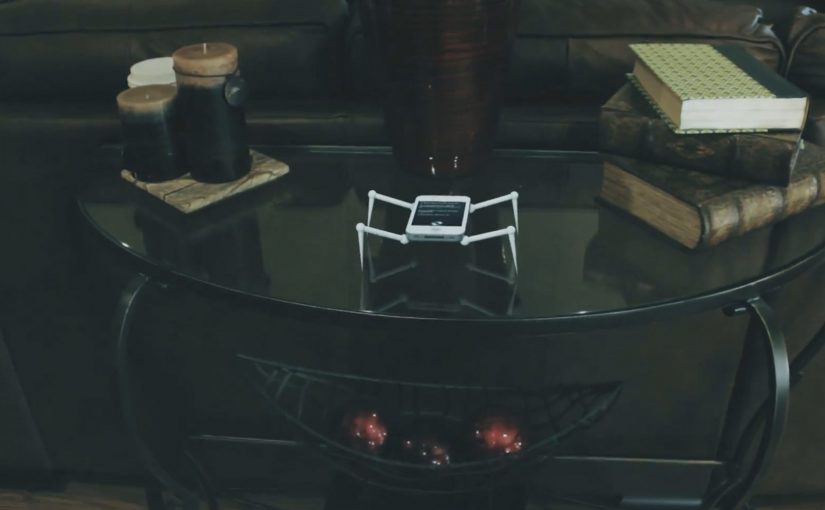
Here are two videos (fictional and real) that create the same feeling. A Skynet reality does not seem too far away.
Two clips, one unsettling takeaway
One is a short parody where a voice assistant turns from helpful to threatening. The other is a real lab demo where tiny quadrotors fly as a coordinated swarm. Put them next to each other and the “machines are getting clever” idea stops being a movie line and starts feeling like a trajectory.
Fiction, then engineering
Psycho Siri
Andrew Films USA delivers a compact piece of sci-fi anxiety. Siri is framed as familiar, then reframed as unpredictable, with polished visual effects that make the escalation feel plausible.
A swarm of Nano Quadrotors
GRASP Lab at the University of Pennsylvania shows coordinated micro flight with a team of nano quadrotors, presented as experiments in swarm behavior and formation control. The choreography is the point. It looks like one organism, not many small machines.
Here, “swarm behavior” means several machines coordinating as one system rather than acting as isolated units.
In consumer technology and robotics, capabilities move from demo to everyday life faster than most people update their mental models.
The real question is not whether machines look intelligent, but whether people can understand, predict, and control what they do.
Why it lands: the same story from two directions
Parody works because it exaggerates a fear people already carry. When the “assistant” becomes the aggressor, the joke is that the interface you trust most is the one you cannot physically switch off in the moment.
Extractable takeaway: When technology feels “sudden”, it is often because interface adoption outpaces public understanding of the underlying capability. Brands and product teams win trust by making capabilities legible, bounded, and explainable before they become ambient.
The swarm demo lands for the opposite reason. It is not exaggerated. It is controlled, repeatable engineering that still feels uncanny because coordination at that scale used to belong to animation.
Smart systems should earn trust through visible boundaries and user control, not spectacle alone.
What to steal if you build products around “smart” systems
- Show constraints, not just power: users relax when they understand what the system cannot do.
- Design for graceful failure: surprise is fun in demos, but costly in daily use.
- Make control obvious: clear opt-outs and visible states reduce anxiety.
- Translate capability into plain language: the best trust-building copy explains behavior, not architecture.
A few fast answers before you act
What is the point of pairing these two videos?
They tell the same story from different angles. One is cultural fear through fiction. The other is real capability through engineering. Together they make the “Skynet” feeling emotionally credible.
What makes swarm robotics feel unsettling to non-experts?
Coordination. Many small machines behaving like one system reads as intelligence, even when it is pre-programmed control and sensing.
Is this actually “AI taking over”?
No. One clip is fiction. The other is a technical demonstration of coordinated flight. The useful takeaway is about perception, trust, and control, not doomsday prediction.
What should product teams do to reduce user anxiety around smart systems?
Make system boundaries explicit, provide obvious controls, and communicate how decisions are made and when humans can override them.
What is a practical business use of swarm behavior?
Tasks that benefit from coverage and redundancy, like inspection, mapping, search, and coordinated movement in constrained spaces. The key is safety, predictability, and clear operational limits.