
Skip to content
SunMatrix Ramble

SunMatrix Ramble

What Matters in Marketing and Digital Innovation

  • ABOUT
  • CONCEPT INDEX
  • CONTACT

Categories

Tag: loneliness

Vodafone Romania: Sunday Grannies

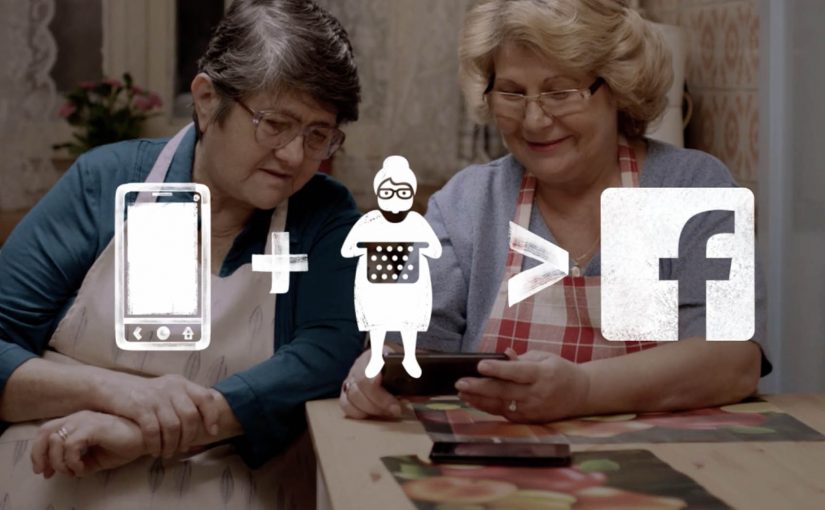
Two Romanian widows are still cooking Sunday lunch as if the whole family is coming. Vodafone Romania and McCann Bucharest turn that habit into an invite, pairing “Sunday Grannies” with students who miss a home-cooked meal.

The campaign is described as starting from a loneliness insight about older people living alone. It then uses a simple Facebook presence to make the invite visible and easy to accept. Trade coverage reports that the page reached hundreds of thousands of likes, drew TV coverage and celebrity visits, and was credited with a strong lift in 4G smartphone sales.

How the idea actually works

This is social service marketing in the literal sense. By that, I mean a brand-built service that solves a small human problem in the real world, with the product making the exchange possible. The brand builds a small, real-world service and lets the product be the enabling infrastructure, not just the media spend.

Mechanically, it is a tight loop. Create a public, repeatable moment. Post the Sunday menu. Invite people into a physical table. Capture the warmth and social proof. Repeat weekly so the story compounds, and so other households can copy the pattern.

In European telecom markets where network claims quickly converge, service-led ideas win when the product is the connective tissue of the service, not a logo on the poster.

Why it spreads faster than a brand message

The campaign travels because it resolves two real tensions at once. Older people who want company do not want pity. Students who want comfort do not want charity. A shared meal removes the awkwardness, and Facebook removes the friction of making the first move. The brand is present, but it is not the protagonist. The relationship is.

Extractable takeaway: If you want earned reach, design a repeatable social ritual with a clear role for each side, then use your platform or product to remove the one piece of friction that normally stops it from happening.

The brand job it quietly does

Vodafone is not “talking about connectivity”. It is demonstrating it in a setting people already understand, family lunch. That matters because telecom benefits are otherwise abstract. Here, mobile internet becomes the bridge between offline loneliness and online invitation, with the brand positioned as the enabler of human reconnection.

The real question is whether the product is doing real connective work in the exchange, or whether the brand is only borrowing emotion from it.

What to steal for your next service-led campaign

  • Start with a human surplus. In this case, it is too much food and too much empty table, every Sunday.
  • Pair it with a clear unmet need. Students want a home meal and belonging, not another discount.
  • Use one platform behavior people already do. A simple page and posts beat a complex build when speed and shareability matter.
  • Make it weekly. Cadence creates anticipation, habit, and accumulated proof.
  • Let the product be functional. Connectivity is the mechanism, not a claim in the closing frame.

A few fast answers before you act

What is “Sunday Grannies” in one line?

It is a Vodafone Romania and McCann Bucharest activation that invites students to weekly home-cooked lunches hosted by elderly women, using Facebook to match people and normalize the first step.

What is the core mechanism I can reuse?

Create a repeatable social ritual, publish a clear invitation, and use your product or platform to remove the friction of connecting two groups who both benefit but rarely meet.

Why does the Facebook layer matter?

It turns a private act, Sunday lunch, into a public, low-risk invite with social proof. People can see it, share it, and join without an awkward cold approach.

What results were reported?

Trade coverage and the case study report large page growth, mass media pickup, and a reported 4G smartphone sales lift. Some reporting also credits the work with increased social media adoption among seniors.

Is this “purpose marketing” or “product marketing”?

Both, when done correctly. The social good is real, but the product is also structurally necessary for the service to function, which is what makes the brand linkage credible.

What is the biggest failure mode if I try this?

Turning people into a prop. If the ritual feels extractive, one-sided, or performative, it collapses. The exchange must be dignified for both sides and valuable even without the brand story.
Posted on June 26, 2015March 6, 2026Categories Marketing Strategies, Power of Online, Social Media, Social ServiceTags 4G, Bucharest, Bunici de duminica, Cannes Lions, Community building, elderly people, facebook, loneliness, McCann, McCann Bucharest, McCann Erickson, McCann Erickson Bucharest, problematic social issue, purpose-led marketing, Romania, Romanian widows, seniors, social service, Sunday Grannies, vodafone, Vodafone 4G, Vodafone Group Plc, Vodafone Romania

Vattenfall: Neighbor Dining Social Initiative

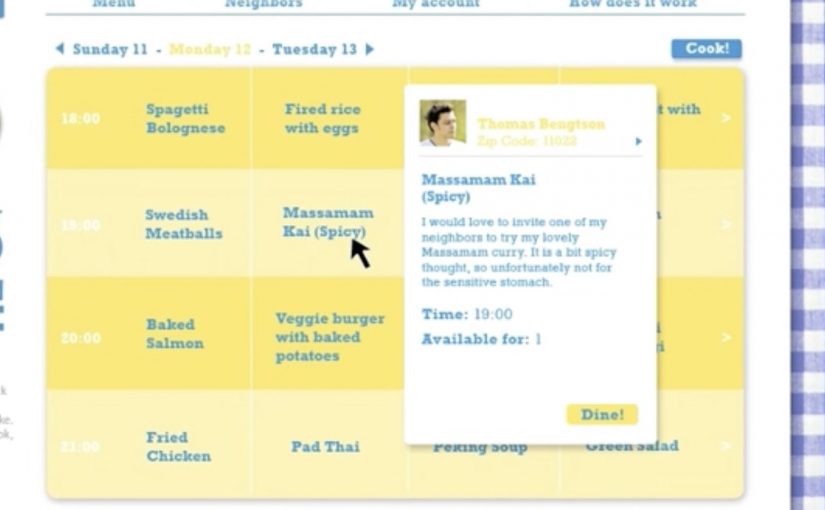
Here is an interesting social initiative from student Luong Lu, aimed at Vattenfall, one of Europe’s leading energy providers.

The proposal is simple: encourage neighbors to connect over dinner. Fewer solo meals means fewer parallel ovens, hobs, lights, and dishwashers running at the same time. In return, households save energy and people get a reason to sit with someone instead of eating alone.

The idea in one line

Create a Vattenfall-supported “neighbor dining” program that makes it easy to host or join a nearby dinner, with the promise of lower combined energy use and a lighter sense of isolation.

The real question is whether Vattenfall wants to be evaluated on helping customers consume less, not only on supplying more.

In urban European households where many people live alone, social connection and resource efficiency often collide in the same everyday routines.

The concept is also positioned as a response to the broader loneliness discussion. It references research that frames loneliness as a major health issue, sometimes compared against other lifestyle risks. Whether or not you buy the ranking, the insight is clear: more people living alone creates both social and energy inefficiency.

Cool idea. But let’s see if Vattenfall takes it up.

Why it works as a brand move

Because the program consolidates cooking and cleanup into one shared set of appliances, the “use less together” promise stays grounded in a daily routine, which is why the brand role as facilitator feels credible.

Extractable takeaway: If your sustainability promise depends on behavior, design a social ritual that makes the better choice feel like a life upgrade, then make participation frictionless.

  • It turns an energy brand into a facilitator. Instead of only billing for consumption, the brand idea is to help customers use less by changing habits that drive waste.
  • It connects the value exchange. The “reward” is not points or a gimmick. It is lower usage plus a genuinely human benefit, shared time.
  • It scales through participation. Dinner is a repeatable ritual. If people enjoy the experience once, it has a natural chance of becoming a pattern.

Vattenfall should pilot a program like this if it wants its brand to stand for smarter living, not just metered consumption.

Steal this from neighbor dining

  • Attach sustainability to a social ritual. The fastest habit changes are the ones that feel like life upgrades, not sacrifices.
  • Design for low friction. The hard part is not the idea. It is matching, trust, and timing. Make those steps effortless.
  • Make the benefit measurable. If you claim energy savings, show a simple before-and-after estimate that feels believable and personal.

A few fast answers before you act

What is “neighbor dining” in this concept?

A program that helps people nearby share a meal, with the side effect of using fewer duplicated household appliances and creating more social connection.

How would this reduce energy use in practice?

One shared oven and one shared cleanup can replace two or more separate cooking and washing cycles, especially in apartment buildings where people cook at similar times.

Why would an energy company do this?

It positions the brand as a partner in smarter living, not just a utility. It can also reduce peak demand if it shifts or consolidates usage patterns.

What is the biggest barrier to making it real?

Trust and logistics. People need simple ways to verify participants, set expectations, and feel safe when meeting strangers for dinner.

What would make the program feel credible?

Clear participation rules, lightweight verification, and a transparent way to estimate energy savings without overpromising.

Posted on October 27, 2010March 2, 2026Categories Power of OnlineTags community dining, customer bills, dinner, energy saving, loneliness, Luong Lu, Neighbor Dining, sharing economy, social connection, Social Energy Saving, Social Ideas, social initiative, student concept, Vattenfall, Vattenfall Social Ideas, Vattenfall Social Media Idea
SunMatrix Ramble: Independent perspectives on marketing and digital innovation since 2009