JavaZone is a conference in Scandinavia where developers meet, listen to talks, and plug into the wider community. The fun part is that the people behind it also know how to market it like a movie.
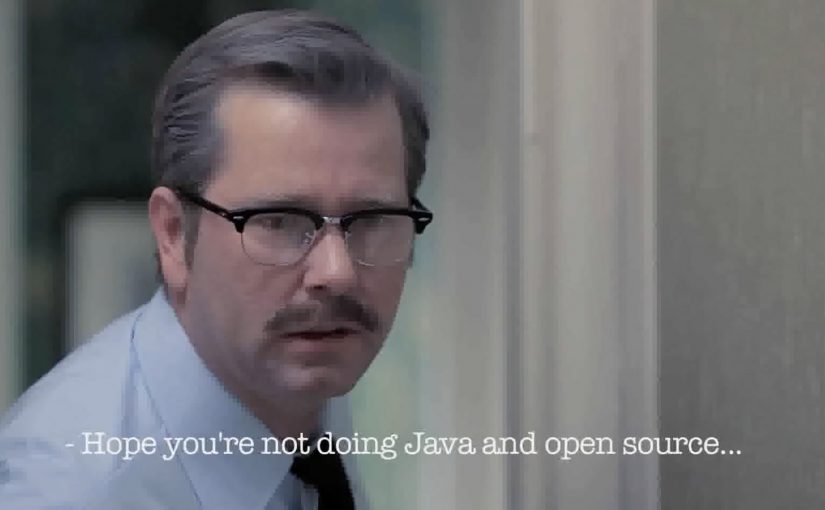
The trailer below is for an imaginary film called Java 4-ever. It is a full-on romance setup, but the forbidden love is not a person. It is a programming language.
A conference trailer that behaves like entertainment
The mechanic is simple. Instead of explaining “why you should attend”, JavaZone ships a piece of content you would watch even if you did not care about the conference. That content then does the job of awareness and persuasion on its own. That works because entertainment lowers resistance, so the conference earns attention before it asks for registration.
In developer communities, the fastest way to build affinity is to show you understand the culture. Then use that understanding to earn attention before you ask for registration.
Why it lands
The craft is not in the jokes alone. It is in how accurately it borrows the language of dramatic trailers. Serious music, tense reveals, disapproving family energy, and the familiar “I cannot hide who I really am” arc. The parody works because it treats tech tribalism, the identity-level loyalty people attach to tools and languages, as real emotion, which is exactly how it feels inside communities.
Extractable takeaway: If your audience is allergic to hype, do not “market” at them. Entertain them with something culture-true, and let the entertainment carry the message.
What the Java 4-ever format achieves
The real question is whether your event marketing feels native to the community you want to gather, or like promotion imported from outside it.
A trailer is short, rewatchable, and instantly shareable. That makes it a high-leverage asset for an event. One video can act as a brand statement, a community signal, and a distribution engine, all without needing a media budget narrative.
For technical events, culture-literate entertainment is stronger than benefit-led promotion when the goal is to earn voluntary attention.
What to steal for your own event
- Write for the in-jokes, but keep the story universal. People should get it even if they are not in the tribe.
- Use a familiar format. Trailers, sitcom cold-opens, and “documentary” cuts carry their own viewing habits.
- Make the asset stand alone. If the content only works after someone knows your event, it will not travel.
- Let craft be the credibility. In technical audiences, quality signals respect more than claims do.
A few fast answers before you act
What is this video actually doing for JavaZone?
It acts as cultural marketing. A shareable parody signals “this is your kind of community”, and that signal can be stronger than a feature list of talks.
Why choose a movie-trailer format?
Because audiences already know how to watch a trailer. The format compresses story, emotion, and memorability into a minute-scale asset.
What is the key creative insight?
Technical preferences often behave like identity. Treating that identity seriously, through parody, is what makes it feel accurate and funny.
How do you measure success for content like this?
Shares, rewatches, and discussion inside the community. Then correlate spikes in attention with registration momentum and speaker or sponsor interest.
Does this only work for developer audiences?
No. The transferable move is not the coding joke. It is wrapping your message in a format the audience already likes to watch and share.