
On 06/10/2011 my day starts at 5:30am. Blurry eyed, I press the home button on my iPhone, and the first thing I see is a push notification from NDTV India: “Steve Jobs, Apple’s visionary, dies at 56.”
The next few seconds feel like some invisible force knocks the air out of me. The Newton equivalent from the modern world is just gone in a blink of an eye. By “Newton equivalent” I mean a once-in-a-generation inventor whose work changes how ordinary people live.
While all the social channels flood with people sharing the news, all I can do is post a few tribute pictures on Facebook. I want to write a few lines about it on Ramble, but I sit speechless throughout the day. In fact the days that follow feel similar, and I cannot find the words to pen down anything, that is until now.
The real question is what a tribute has to do to feel earned.
Two tributes that feel right in this moment
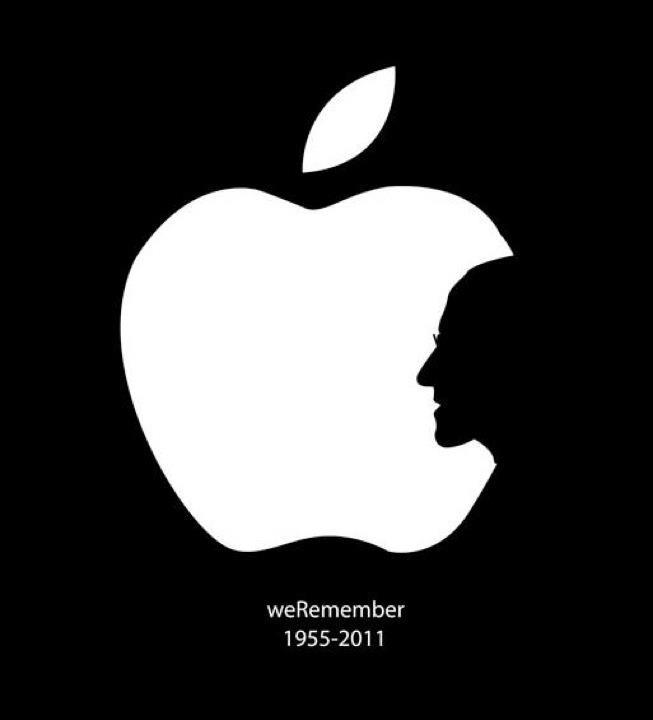
Of the dozens of memorial photos and videos created to honor Steve Jobs, I keep coming back to the following as the most appropriate for the occasion.
Mechanism-wise, both tributes rebuild a public feeling from familiar materials. One uses sounds and a voice people associate with Apple products. The other uses a simple office material to create something large, collective, and visible.
In global consumer-tech culture, where product design quietly rewires daily habits, tributes built from the culture itself tend to feel the most honest.
A tribute earns its place when it demonstrates craft and restraint, not when it tries to explain impact with adjectives.
1) AzR’s Apple-sampled tribute
A musician who calls himself AzR creates a video built from sounds sampled from Apple products and Steve’s 2005 Stanford commencement speech. Sampling here means recording short sounds from devices and using them as instruments in a new composition. Every instrument, including drums, is sampled from a Mac product, tuned by ear, and replayed in the context of the song.
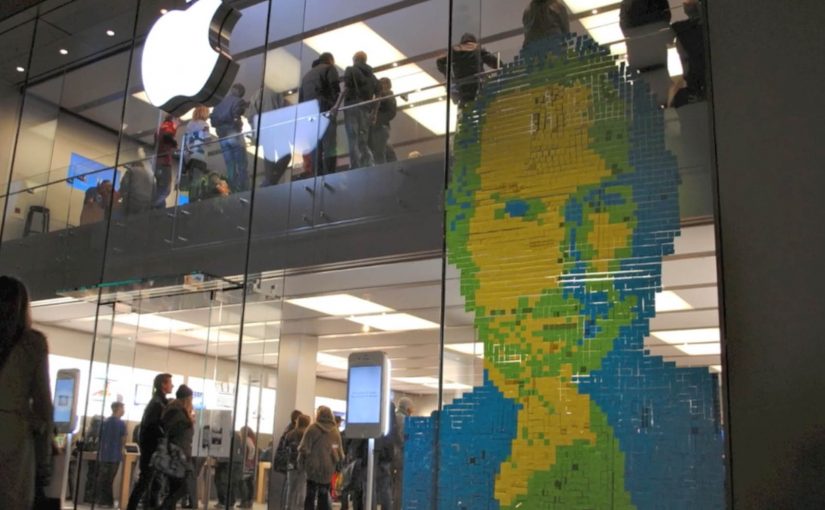
2) 4,001 Post-it Notes in Munich
Fans in Germany find a wonderful way to express their respect. They create a portrait of Steve Jobs out of 4,001 Post-it Notes. The portrait adorns the front-facing glass walls of an Apple Store in Munich, Germany.
Why these tributes land
They do not ask you to agree that Steve Jobs mattered. They let you hear and see how his work lives inside everyday objects and shared spaces. That mechanism makes the respect feel physical rather than rhetorical.
Extractable takeaway: If you want a tribute to travel, build it from the same materials the person put into the world, then make it simple enough to share in one listen or one glance.
What stays with me
To sum up, I am glad to have lived in a period of world history that witnessed Steve Jobs change the world.
How to make a tribute feel earned
- Start with a material. Use a concrete artifact, a sound, a tool, a place, then build the tribute around it.
- Make it shareable fast. If it does not land quickly, it will not travel.
- Let people participate. The Munich wall works because many hands make one face.
- Keep the words minimal. Craft carries more respect than adjectives.
A few fast answers before you act
What is this post about?
It is a personal note from the morning I saw the news, plus two tributes that capture why Steve Jobs mattered to people.
Which two tributes are highlighted?
AzR’s music video built from sounds sampled from Apple products and Steve Jobs’ 2005 Stanford commencement speech. A 4,001 Post-it Notes portrait on an Apple Store in Munich, Germany.
Why does the Apple-sampled video work?
It turns familiar device sounds and a familiar voice into a new piece of music. That craft makes the tribute feel earned rather than narrated.
Why does the Munich Post-it portrait stand out?
It is physical, collective, and public. It turns respect into a visible act that other people can walk past and feel.
What is the simplest takeaway?
Some people do not just build products. They reshape culture and daily behavior. When they are gone, you feel the absence immediately.