
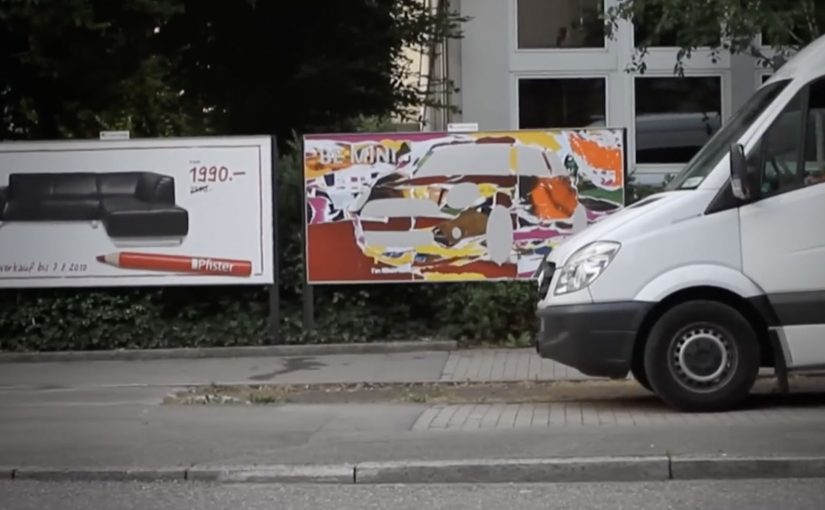
MINI: The Art of Omission Posters

MINI: The Art of Omission Posters

A “MINI” has only the things it really needs. That means getting rid of the superfluous and keeping an eye on the essentials. MINI calls this “Minimalism”.

So Draftfcb/Lowe Group in Zürich creates a poster series across Switzerland that demonstrates the MINI art of omission in an intentionally simple way. Here, “art of omission” means the idea is carried by what you remove, not what you add. Reportedly, more than 20 executions appear in the wild, framed as genuine, unique works of art rather than disposable tactical print.

Minimalism as a communication system, not a slogan

The mechanism is straightforward: take the brand’s “minimum necessary” philosophy and express it through omission, letting what is missing do as much work as what is shown.

In European automotive advertising, stripping a message down to a single visual point is often the fastest way to win attention in cluttered public spaces.

Why omission cuts through

Most posters fight for attention by adding. More copy. More product shots. More badges. Omission flips that logic. The real question is whether your idea is strong enough to survive subtraction. If simplicity is part of the product truth, omission beats piling on claims. The viewer has to resolve the idea themselves, and that small moment of mental completion makes the message stick.

Extractable takeaway: If the audience can reconstruct the meaning from what you remove, the idea is strong. If they need you to explain it, you are not done simplifying.

What the street placement adds

Putting the work across Switzerland turns “Minimalism” into a repeated encounter, not a one-off reveal. Repetition is the multiplier here, because every new variation reinforces the same discipline: remove anything that does not earn its place.

How to apply omission in your next poster

  • Use subtraction as the creative device. If you cannot remove an element without losing the point, it is probably essential.
  • Let the format carry the proof. A minimalist brand idea is more believable when the execution is minimalist too.
  • Design for one-second comprehension. The fastest posters are the ones that do not ask for reading.
  • Build a series, not a single hero. Variations teach the audience the “rule” of the campaign.

A few fast answers before you act

What is this MINI “Minimalism” poster idea in one line?

A Swiss poster series that communicates MINI’s “keep only what you need” philosophy by using omission as the main creative device.

Why does omission work better than adding more message?

Because it interrupts expectations in public space and forces a quick mental “solve”, which increases recall.

What makes this feel clutter-breaking?

The work reduces visual noise instead of competing with it, so the absence becomes the attention trigger.

When should a brand use this pattern?

When the brand truth can be expressed as one visual point, and when simplicity is a credible part of the product story.

How do you decide what to remove without losing meaning?

Strip the execution until the message breaks, then add back only the one element that restores the point. If you need multiple add-backs, the idea is not single-point yet.
Mercedes-Benz Interactive Print Ad

Mercedes-Benz Interactive Print Ad

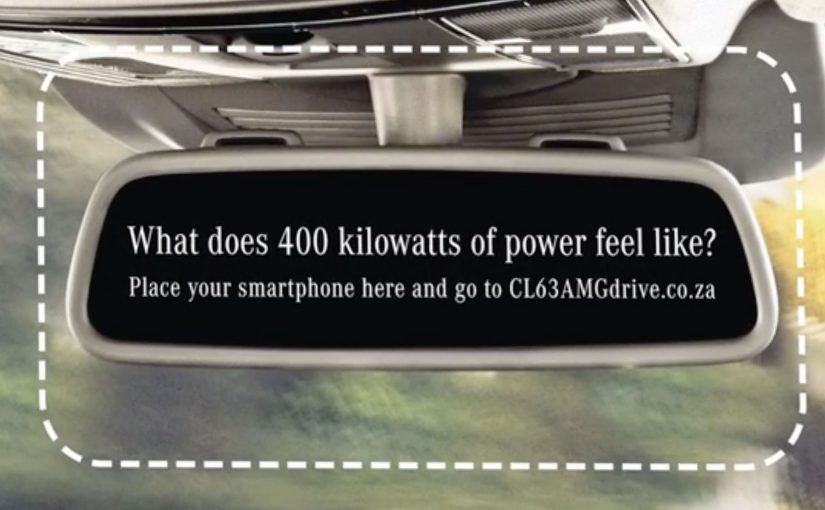
The interactive print ad mania continues. After RWB and Axa, we have Mercedes Benz joining in with their ad for the new Mercedes CL63 AMG. Here, “interactive print” means a printed ad that triggers a second action beyond the page itself.

Why “interactive print” keeps showing up

Print is fighting for attention against screens, so the stronger responses are the ones that make print behave a little more like digital. That works because the page stops acting like a finished message and starts acting like a trigger, which gives people a reason to continue.

Extractable takeaway: Interactive print works when the page creates one obvious next step that makes the brand promise feel more vivid, not when it adds novelty without payoff.

In brand marketing, this matters because print only earns another look when it turns attention into a deliberate next step.

What Mercedes-Benz is trying to do

The real question is not whether print can be made interactive, but whether the interaction makes the brand feel more immediate and memorable.

Interactive print is only worth doing when the mechanic sharpens the brand idea rather than distracting from it.

For Mercedes-Benz, the business intent is to make the CL63 AMG feel more active, premium, and attention-worthy by turning a static print placement into a more engaging brand encounter.

The useful takeaway for brands

  • Give print a job. Not just to inform, but to activate.
  • Keep the interaction obvious. If the mechanic needs explanation, it dies on the page.
  • Let the reveal earn the attention. The payoff should justify the extra step.

A few fast answers before you act

What is this Mercedes-Benz post pointing to?

It points to Mercedes-Benz joining the interactive print wave with an execution for the Mercedes CL63 AMG.

What were the earlier references in this interactive print trend?

Earlier examples referenced here include the RWB execution and an AXA-related print activation.

What is the core mechanic of interactive print ads?

The print ad becomes a trigger that invites a second step, so the experience continues beyond the page.

Why does the format matter in 2011?

It helps print compete by creating engagement rather than relying on a static message alone.

What should brands learn from this format?

Brands should use interactivity only when it makes the printed asset more useful, more memorable, or more aligned to the brand idea.

Reporters Without Borders: QR Codes That Speak

Reporters Without Borders: QR Codes That Speak

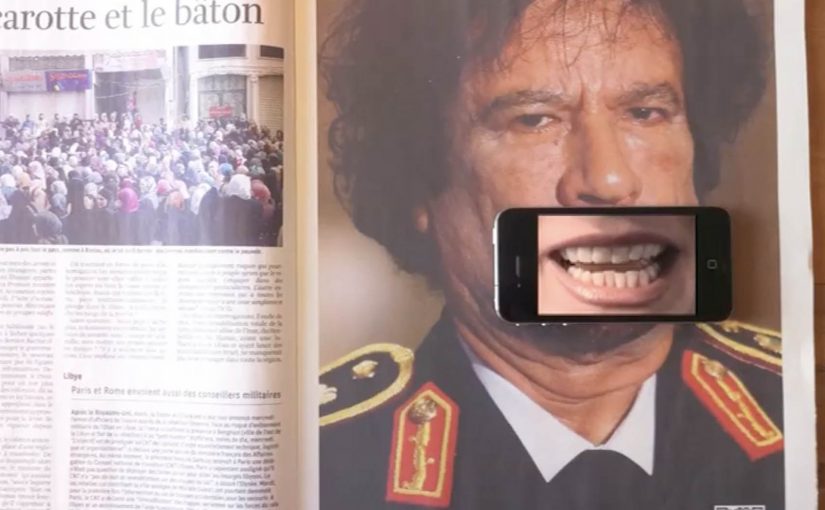
You scan a QR code in a magazine ad, then hold your iPhone over a leader’s mouth. A QR code, short for Quick Response code, is a printed shortcut that opens a mobile destination. The mouth starts talking. But it is not the leader’s voice. It is a journalist explaining what censorship looks like in that country.

Print ads are hitting above their weight lately. Recently, you could test-drive a Volkswagen right inside a print ad, thanks to a special app. Now, QR codes are used to get dictators talking in a set of print ads created by Publicis Brussels for the free-press advocacy group Reporters Without Borders (RWB).

In the ads for RWB you scan the QR code with your iPhone and then place the phone over the leader’s mouth. The mouth starts talking, but it turns out to be the voice of a journalist discussing media censorship in that particular country.

Currently there are Gaddafi, Ahmadinejad and Putin versions.

In public-interest and advocacy communication, this kind of print-to-phone interaction works because it turns a static message into a lived moment of contradiction. The “authoritarian voice” is visually present, but the truth comes from someone who is usually silenced.

How the ad “speaks”

The mechanism is a simple overlay. The printed QR code launches a mobile experience, and the phone screen becomes the animated mouth layer when you align it with the face in the ad.

QR codes act as a bridge from paper to a mobile destination. The ad uses that bridge to deliver audio and motion, without needing the page itself to be electronic.

In advocacy and public-interest communication, print-to-phone interactivity works best when it creates a moment of moral contrast, not a tech demo.

The real question is whether the interaction changes what the message means, or just adds motion.

Why this lands harder than a normal poster

The interaction forces you to participate in the message. You physically place your device over the mouth, so you are complicit in “giving a voice”. Then the reveal flips expectations and reframes the act as a statement about censorship. Because the phone screen becomes the moving mouth layer, the reveal is immediate and hard to dismiss. This is a strong pattern for interactive print: make the overlay carry meaning, not novelty.

Extractable takeaway: If the mobile layer can be removed without changing the message, the interaction is optional. Design the overlay so the meaning only exists when the viewer lines it up and activates it.

What to steal for interactive print

  • Make the overlay do meaning work. The phone is not a gimmick. It is the message delivery device.
  • Engineer a single, clear reveal. The twist needs to land in seconds.
  • Design for alignment and clarity. If the user cannot line it up easily, they quit.
  • Keep the outcome unmistakable. Audio plus a visible mouth movement makes the payoff obvious.

A few fast answers before you act

What is the core idea of these Reporters Without Borders print ads?

They use a QR code and a phone overlay to make a leader’s mouth appear to speak, then reveal a journalist’s voice explaining censorship in that country.

Why use QR codes in a print campaign like this?

QR codes create a fast bridge from paper to mobile audio and motion, which lets print deliver a message that feels alive rather than static.

What makes this more than a tech trick?

The interaction supports the meaning. You “activate” speech, then hear the voice of journalism instead of power, which reinforces the theme of suppressed information.

What are the main execution risks?

Poor alignment, slow loading, or unclear instructions. Any friction can break the moment before the reveal lands.

How can brands apply the pattern without copying the politics?

Use print as the stage and mobile as the moving layer. Make the overlay essential to the message, and build toward one clean, immediate reveal.