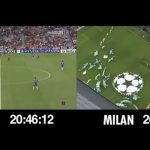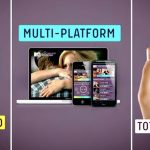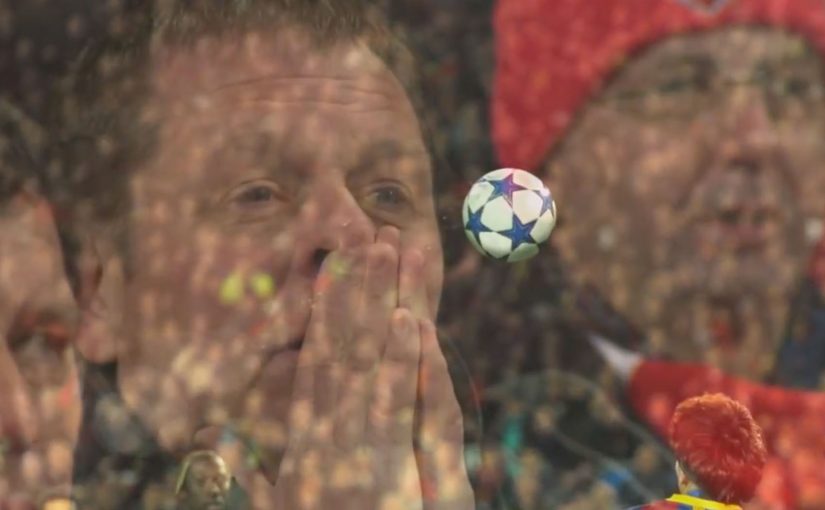
The UEFA Champions League attracts massive global audiences, and a large share of fans watch matches at home. Heineken’s release references over 150 million TV viewers watching live UCL coverage per match week in 220+ territories. Heineken and AKQA used that context to build Heineken StarPlayer, a dual-screen app designed to let fans interact in real time with the nail-biting action.
With StarPlayer, fans play along live on desktop and mobile by anticipating what will happen in key match moments, in real time. The promise is simple. Turn passive viewing into a competitive layer of predictions, banter and shared tension.
What StarPlayer actually adds to the match
The mechanic is built around micro-moments. Here, “micro-moments” means the short, repeatable windows where a single prediction fits without pulling you away from play. Corners, free kicks, penalties, shots, and short time windows where a fan can commit to a forecast. If you are right, you gain points. If you are wrong, you lose ground. The point is not the points. The point is sustained attention and social comparison. Because each forecast is time-boxed and resolved by the next play, the loop creates tension and keeps fans scanning for the next peak moment.
In sports sponsorship, the hard part is not reach. It is converting 90 minutes of attention into 90 minutes of participation.
In global sports sponsorships, the scarce resource is not exposure, it is credible participation during the live window.
The real question is whether you can turn the second-screen reflex into a ritual that heightens the match instead of competing with it.
Why the dual-screen idea fits the way fans really watch
StarPlayer leans into two truths. First, a lot of fans watch at home rather than in stadiums. Second, many are already using a second device during the match, either to check stats, message friends, or follow commentary. StarPlayer turns that second-screen habit into a structured game loop. It also respects viewer control. You can engage in bursts, choose the moments you want to play, and keep your focus on the match while the phone or laptop becomes your companion layer.
Extractable takeaway: If your audience already second-screens, convert that habit into one-tap decisions tied to predictable peaks, so the companion layer adds tension without stealing attention from the main screen.
What the brand is really buying
Heineken positions StarPlayer as “made to entertain” applied to sport viewing. The business intent is to make the sponsorship feel like an experience, not just a logo. If the brand becomes part of the ritual, it earns recall that is tied to real match emotions, not ad breaks. This kind of activation is worth doing only when it becomes part of the viewing ritual, not an interruption layered on top.
The work later earns major industry recognition. Heineken Star Player is listed as a Cyber Gold Lion (Mobile) at Cannes Lions, credited to AKQA London.
Steal the second-screen prediction loop
- Design around predictable peaks. Build interactions for moments people already lean forward for.
- Keep the loop lightweight. A decision in seconds beats anything that competes with the main screen.
- Make it social by default. Rivalry, banter and comparison are the fuel. Solo play is the backup.
- Optimise for “stickiness”, not clicks. The win condition is returning to the second screen again and again during the match.
A few fast answers before you act
What is a “dual-screen” experience in sports marketing?
A dual-screen experience is when the main content stays on TV, while a phone or laptop adds a companion layer. The second screen can enable play, prediction, stats, chat, or rewards without interrupting the match.
Why do prediction mechanics work especially well in live sport?
Because sport is already a sequence of uncertain outcomes. Predictions let fans externalise their gut feel, then get instant feedback, which creates tension and repeat engagement.
What is the simplest version of Star Player a brand could copy?
Pick 5 to 10 repeatable match moments. Create one-tap predictions with a short countdown. Score it. Add a friend leaderboard. Keep everything playable in under five seconds.
How do you avoid the second screen distracting from the match?
Design for bursts. Keep interactions tied to natural pauses or peak moments. Use quick taps, not typing. The TV remains the hero.
What metrics matter for a second-screen activation?
Time-in-experience per match, repeat participation across matches, and social play rate. For brand outcomes, track recall and sponsorship attribution uplift, not just installs.