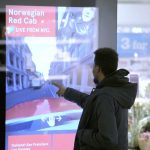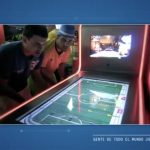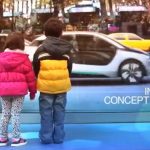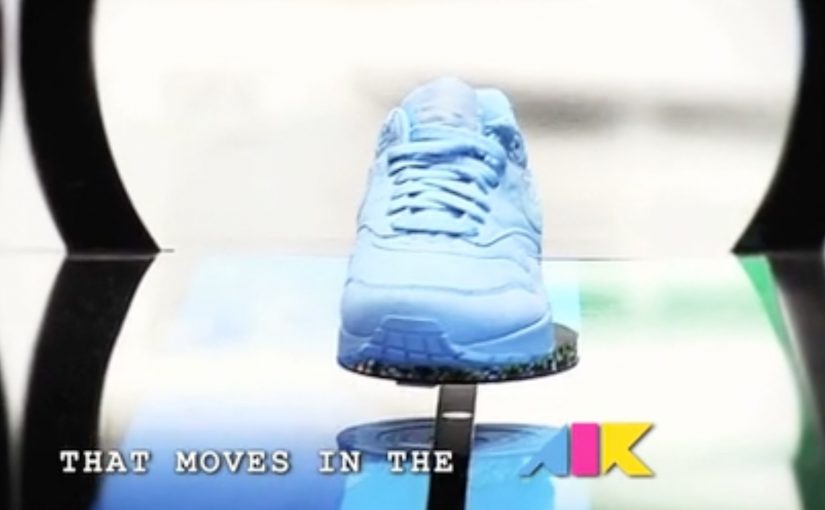
A Nike Air shoe hovers above a levitating platform in-store. The installation makes “Air” physical. The shoe looks suspended, and the display behaves like it is defying gravity.
The idea. Bringing “Air” to life
This digital installation for Nike, by +Castro and BBDO Argentina, turns the Nike Air story into something you can experience in a store. A levitating shoe platform suspends the new range of Nike Air shoes and makes the benefit feel real, not claimed.
How it works. Blow to race
The twist is that the experience is not limited to the store. If you are in-store, or even online at The Nike Air Show, you get to race the Nike Air shoes live by blowing into a microphone. The installation reads the volume of air you blow and translates it into power for your Nike Air Race. It also lets one shared mechanic run across both environments. Here, the shared mechanic is simple: blowing air is the input that powers the race in-store and online.
In retail and experiential marketing, the strongest product demos make an invisible benefit visible through a simple action the shopper can trigger.
Why it works. In-store plus online, one mechanic
The activation keeps the interaction simple and intuitive. Air in. Speed out. It also connects two environments that are usually separate. A physical point of sale moment and an online experience. Because the same input powers both versions, the idea is easy to understand, easy to demonstrate, and easy to retell.
Extractable takeaway: When a product promise is abstract, the fastest way to make it believable is to turn it into a simple user action that works the same way across channels.
What the business move really is
The real question is whether one product truth can drive attention, participation, and memory across both retail and online touchpoints.
The stronger strategy is to use one product truth across both environments, not to treat the store demo and the online experience as separate ideas.
What to steal for in-store to online experiences
- Make the product benefit physical. The levitating platform turns “Air” into something people can literally see in-store.
- Use one simple input as the bridge. Blowing into a microphone works in a shop environment and maps cleanly to an online race mechanic.
- Turn a demo into a challenge. Racing converts “looking at” into “doing”, which increases dwell time and talk value.
- Let the same idea travel across channels. The installation is the proof. The online experience is the shareable continuation.
A few fast answers before you act
What is the Nike Air digital installation?
The Nike Air digital installation is a levitating in-store platform that suspends Nike Air shoes and turns the “Air” benefit into a physical experience.
What is the interactive element?
The interactive element is a microphone-based mechanic where people blow air to generate power for a live Nike Air Race.
Where does the race happen?
The Nike Air Race happens in-store and online at The Nike Air Show.
Who is behind the work?
The work is by +Castro and BBDO Argentina.
What is the transferable pattern?
The transferable pattern is to make the product benefit tangible, then use one simple input to connect the in-store moment to a parallel online experience.