
Quilmes: Mitigol

Quilmes: Mitigol

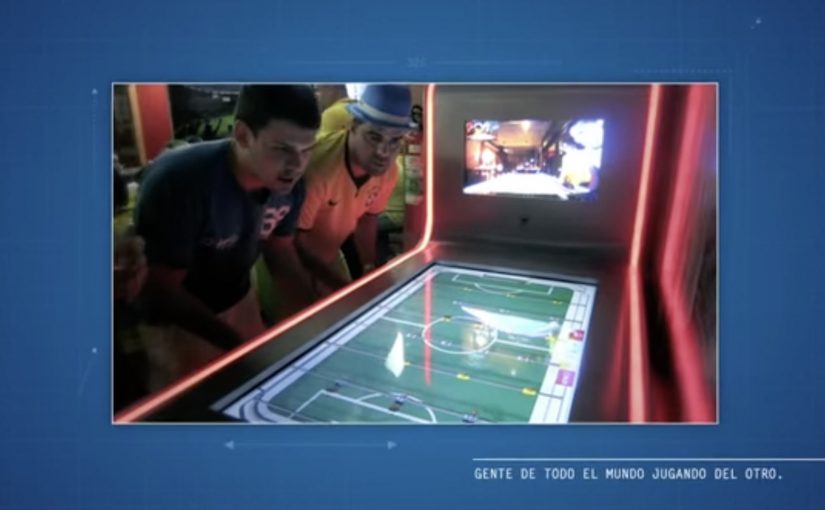
Quilmes and their agency +Castro reinvented the classic game of foosball. In its new version they enabled Argentinians and Brazilians to play each other in real time through a custom made digital foosball table.

Dubbed “Mitigol”, the activation turns foosball into a cross-border live match. One half of the table was placed in Argentina and the other half in Brazil. During the game, players could see their opponent via special in-built video cameras that further enhanced the real time experience of the game. As a prize, Quilmes gave away free beer.

How Mitigol works

The mechanism is a physical game with a digital bridge. A custom table syncs the ball and player movement across distance, while embedded cameras add face-to-face presence so it feels like a real match rather than a remote demo.

In sports and event-led marketing, shared-play installations can turn rivalry into participation because they give fans something to do together, not just something to watch.

Why it lands

This works because it makes a national rivalry tangible without needing a screen-first experience. Foosball already has competitive tension built in, so the cross-border connection raises the stakes instantly. The cameras then do the emotional work by proving the opponent is real, right now, reacting in real time.

Extractable takeaway: When you want “real time” to feel meaningful, do not rely on the word. Add one physical interaction that people already understand, then layer in live presence so the distance becomes the headline.

What Quilmes is really buying

The real question is how to turn passive rivalry into a shared act people want to join.

Beyond novelty, Mitigol is a closeness story. It borrows the energy of an event moment and converts it into a branded experience where the fan is the performer, not the spectator. The prize is just the nudge that keeps the line moving and the competition sharp.

What to steal from Mitigol

  • Start with a familiar game. If the rules are known, participation spikes.
  • Make distance visible. The split-table concept is the idea. Do not hide it.
  • Add live presence. Cameras or live feedback make “remote” feel human.
  • Reward the behavior you want. Small, immediate prizes keep throughput high.

A few fast answers before you act

What is Mitigol?

It is a custom foosball table experience that connects two locations so players in different countries can play the same match in real time.

Why split the table across Argentina and Brazil?

Because the physical split makes the cross-border rivalry concrete. It is instantly legible as “we are playing each other right now”.

What role do the built-in cameras play?

They add live presence and reaction, which makes the experience feel like a real opponent rather than a remote simulation.

What is the simplest way to copy the principle?

Take a familiar physical activity, connect it across distance with tight synchronization, then add a live human layer so the interaction feels personal.

What should you measure for an activation like this?

Participation volume, repeat play, dwell time, and how often spectators convert into players once they see it in action.
Nike Air Digital Installation

Nike Air Digital Installation

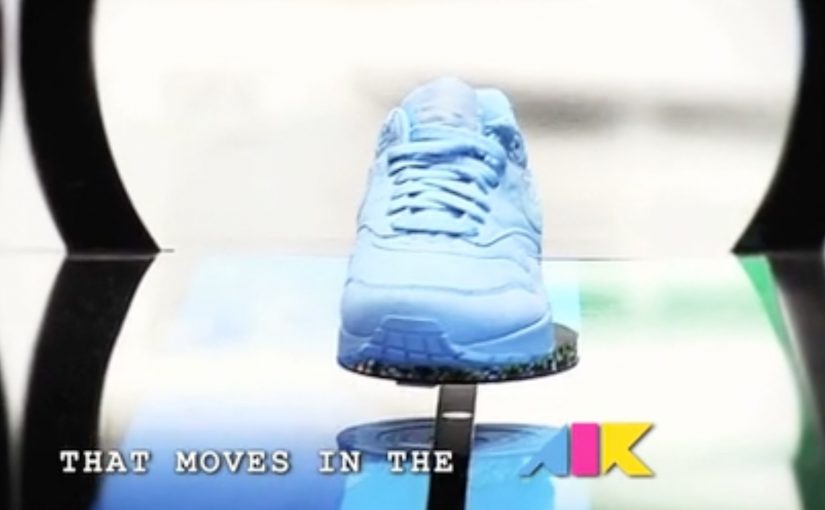
A Nike Air shoe hovers above a levitating platform in-store. The installation makes “Air” physical. The shoe looks suspended, and the display behaves like it is defying gravity.

The idea. Bringing “Air” to life

This digital installation for Nike, by +Castro and BBDO Argentina, turns the Nike Air story into something you can experience in a store. A levitating shoe platform suspends the new range of Nike Air shoes and makes the benefit feel real, not claimed.

How it works. Blow to race

The twist is that the experience is not limited to the store. If you are in-store, or even online at The Nike Air Show, you get to race the Nike Air shoes live by blowing into a microphone. The installation reads the volume of air you blow and translates it into power for your Nike Air Race. It also lets one shared mechanic run across both environments. Here, the shared mechanic is simple: blowing air is the input that powers the race in-store and online.

In retail and experiential marketing, the strongest product demos make an invisible benefit visible through a simple action the shopper can trigger.

Why it works. In-store plus online, one mechanic

The activation keeps the interaction simple and intuitive. Air in. Speed out. It also connects two environments that are usually separate. A physical point of sale moment and an online experience. Because the same input powers both versions, the idea is easy to understand, easy to demonstrate, and easy to retell.

Extractable takeaway: When a product promise is abstract, the fastest way to make it believable is to turn it into a simple user action that works the same way across channels.

What the business move really is

The real question is whether one product truth can drive attention, participation, and memory across both retail and online touchpoints.

The stronger strategy is to use one product truth across both environments, not to treat the store demo and the online experience as separate ideas.

What to steal for in-store to online experiences

  • Make the product benefit physical. The levitating platform turns “Air” into something people can literally see in-store.
  • Use one simple input as the bridge. Blowing into a microphone works in a shop environment and maps cleanly to an online race mechanic.
  • Turn a demo into a challenge. Racing converts “looking at” into “doing”, which increases dwell time and talk value.
  • Let the same idea travel across channels. The installation is the proof. The online experience is the shareable continuation.

A few fast answers before you act

What is the Nike Air digital installation?

The Nike Air digital installation is a levitating in-store platform that suspends Nike Air shoes and turns the “Air” benefit into a physical experience.

What is the interactive element?

The interactive element is a microphone-based mechanic where people blow air to generate power for a live Nike Air Race.

Where does the race happen?

The Nike Air Race happens in-store and online at The Nike Air Show.

Who is behind the work?

The work is by +Castro and BBDO Argentina.

What is the transferable pattern?

The transferable pattern is to make the product benefit tangible, then use one simple input to connect the in-store moment to a parallel online experience.