
BMW vs Audi: Jump for Joy

A familiar rivalry, reduced to one simple provocation

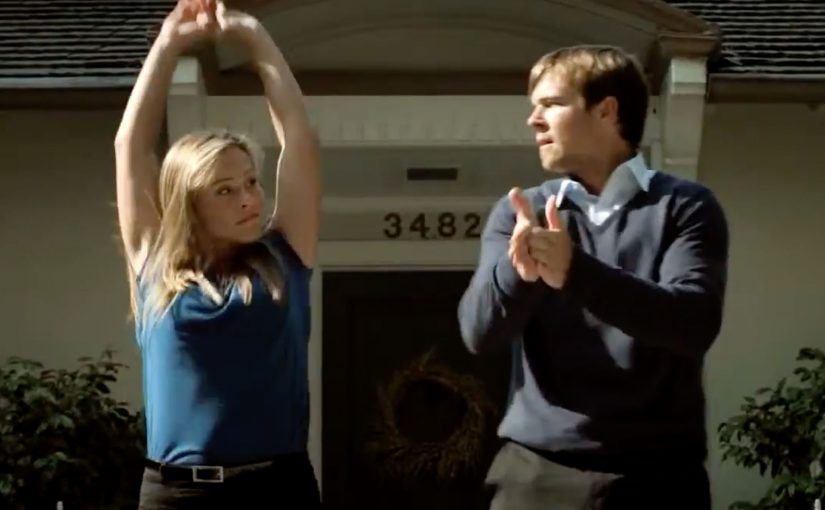
Another BMW vs Audi battle. Here you can watch some amazing ways to take a seat in a BMW.

How the idea works once you look past the stunts

The mechanic is built on a tiny human action with a clear frame. Entering the car becomes the entire performance, with the brand as the stage and the seat as the punchline.

In European automotive markets, playful rivalry cues can turn ordinary product moments into highly shareable entertainment without heavy explanation.

The real question is whether you can turn one repeatable product moment into a contest frame people want to perform and share.

Why it lands: competitiveness plus physical comedy

It works because the viewer instantly understands the rules. There is an implied opponent, a familiar status game, and a stream of surprising variations that reward continued watching. Because the mechanic repeats the same entry move, each new variation lands as a clean surprise rather than confusion.

Extractable takeaway: If you can make the “rules” obvious in one glance, you can build entertainment from repetition, and the audience will do the work of staying engaged for you.

The business intent: own “fun to drive” without saying it

Instead of listing features, the brand borrows emotion. It positions BMW as energetic and confident by making the act of taking a seat feel like part of the driving fantasy. Brand-versus-brand work is strongest when it sells a feeling through behaviour, not feature claims.

What to steal for your next brand-versus-brand moment

  • Use a micro-behaviour as the hook. By micro-behaviour, I mean a tiny, recognisable action people already do, like taking a seat.
  • Let the rivalry do the setup. A known competitor creates instant context without extra copy.
  • Stack variations fast. The replay value comes from “what is the next version” momentum.
  • Make the proposition implicit. Show the feeling the brand wants to own, instead of explaining it.

A few fast answers before you act

What is the core idea of this BMW clip?

It turns the simple act of taking a seat in a BMW into a series of entertaining variations, framed as a playful BMW vs Audi rivalry moment.

How does the mechanic work?

One repeatable action is performed in multiple surprising ways. The audience keeps watching to see the next variation, not to learn features.

Why is brand rivalry effective here?

Because it creates instant stakes and a familiar frame. Viewers immediately understand the “battle” and focus on the execution.

What is the business intent behind this approach?

To reinforce BMW’s energetic, confident brand feel by associating the product with fun and performance, delivered as entertainment rather than claims.

What is the most transferable takeaway?

Choose one product-adjacent behaviour that everyone recognises, then make it repeatable, surprising, and easy to share.
Johnnie Walker: A Walk Through Brand History

A brand history told on foot, in one breath

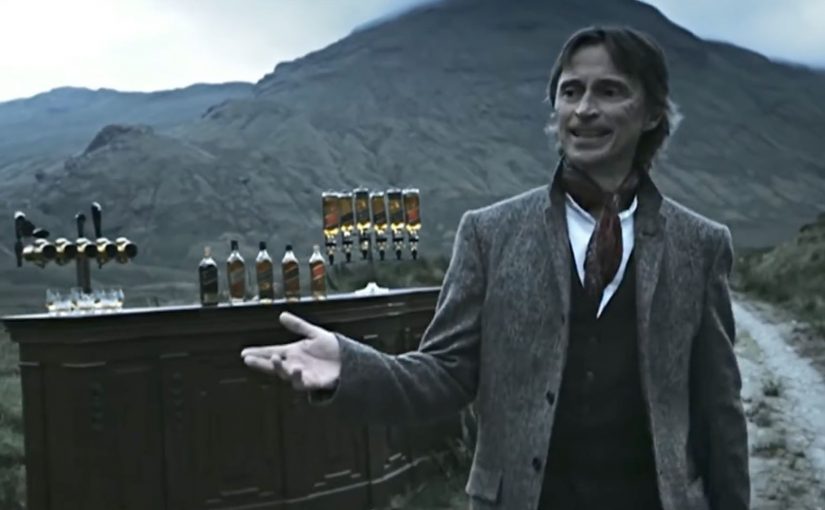
This is about as cool as it gets when telling the history behind your brand. Johnnie Walker and BBH London get Scottish actor Robert Carlisle to narrate the story while walking through the misty Scottish Highlands.

How the idea works once you look past the scenery

The format is disarmingly simple. A single, uninterrupted walking monologue where the scenery keeps moving and the story keeps building, with no hard cuts to “sell” the message. That continuity works because the viewer stays inside one continuous moment, so narrative momentum does the persuasion.

In global FMCG marketing, long-form storytelling can earn attention when it treats the viewer like a participant in the journey rather than a target of a spot.

Why it lands: it refuses to behave like a commercial

This is not a commercial. At least not in the traditional sense. It never ran on TV. It never will. Probably because it is not a nice, short, and sweet 30 seconds long with a fancy logo and URL at the end.

Extractable takeaway: Restraint can be the point. The film feels like a confidence move when the brand lets the message arrive through tone, pace, and presence, not through urgency or repetition.

The business intent: build equity in the “keep walking” idea

The walk is not just a setting. It is the brand metaphor made literal. Movement signals progress, ambition, and continuity, which aligns neatly with premium positioning and long-term brand memory.

The real question is whether your brand can make its story feel like a journey people choose to join, rather than a message they are forced to endure.

For premium brands, this kind of voluntary long-form storytelling is a stronger equity builder than squeezing the same idea into a claim-heavy 30 seconds.

What to steal without copying the Highlands

  • Pick a format that proves the point. Here, a continuous walk embodies persistence better than any tagline could.
  • Trade polish for presence. One voice, one take, real atmosphere. That authenticity carries further than over-produced montage.
  • Let the viewer do the “meaning-making”. The story invites interpretation instead of forcing claims.
  • Design for voluntary viewing. If it cannot survive outside TV, it is not built for modern attention.

A few fast answers before you act

What is the Johnnie Walker film concept here?

A long-form brand story delivered as a single walking monologue through the Scottish Highlands, narrated by Robert Carlisle.

How does the format work mechanically?

It relies on an uninterrupted take and a continuous narrative arc, using movement and pacing to keep attention without conventional ad cuts.

Why does it feel different from traditional advertising?

Because it does not compress into a 30-second claim-and-logo structure. It earns attention through storytelling, tone, and cinematic restraint.

What is the business goal of a piece like this?

To build premium brand equity and strengthen the “keep walking” association by making progress and momentum tangible and memorable.

What is the most transferable takeaway for other brands?

Choose a narrative format that embodies your proposition, then design it to be watched by choice. Not by interruption.

NOFF: Casting Tape

A trailer disguised as something you should not be watching

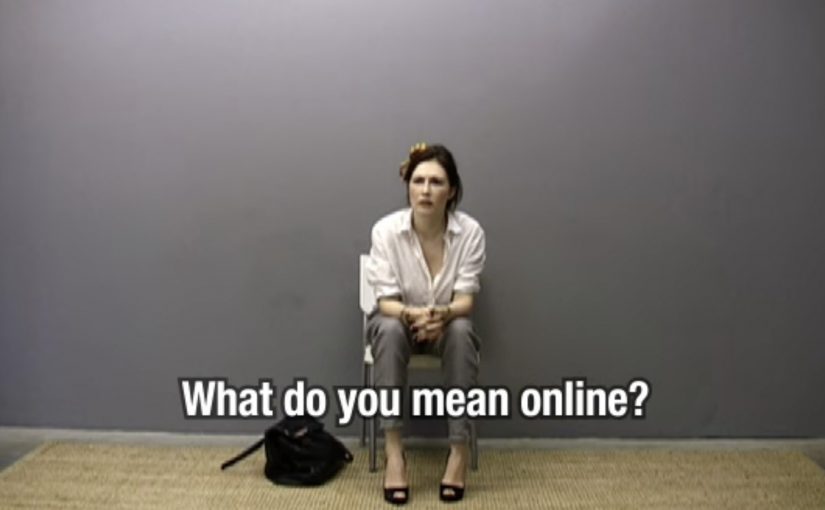
This video is presented as a “casting tape”. A raw, behind-the-scenes style clip featuring Carice van Houten that plays like a leak rather than a polished promo. The format does the heavy lifting, because it invites curiosity first and “what is this for” second.

How the mechanism pulls attention

Instead of explaining the festival with a standard trailer structure, the campaign uses a familiar industry artifact: the audition tape. It pushes it far enough into performance that viewers keep watching to see where it goes. Subtitles widen shareability across audiences who do not speak the original language, and the “found footage” tone lowers the viewer’s ad resistance.

In digital film and festival promotion, simulated behind-the-scenes footage can convert passive viewing into social forwarding because it feels like insider access.

Why it lands

It lands because it borrows the emotional contract of gossip. You are not “watching an ad”. You are watching something you might forward to someone else with a short message like “watch this”. That is the distribution advantage. The entertainment value sits in the format, not in a list of festival benefits. The real question is how to make a broad cultural offer feel like a must-watch artifact instead of a calendar listing. For a festival, this is a stronger opening move than a standard highlights reel because it sells intrigue before information.

Extractable takeaway: If your content offer is broad (a catalogue, a festival, a platform), lead with one irresistible artifact that feels like insider access. One artifact can outperform a perfectly edited overview.

What festival marketers can lift from this

  • Choose a format with built-in curiosity. Auditions, rehearsals, tests, and “first takes” invite completion.
  • Make it feel native to the category. A film festival using casting language is instantly credible.
  • Design for forwardability. A single clip people can share without explanation beats a multi-part explainer.
  • Use subtitles as reach infrastructure. They improve completion and sharing across borders.

A few fast answers before you act

What is this video promoting?

It is positioned as a promo asset for the Nederlands Online Film Festival, using a “casting tape” format to attract attention.

Why use a casting tape instead of a normal trailer?

Because casting tapes carry an “insider” feel. That makes people watch longer and share more readily than they would with an overt trailer.

What role do subtitles play here?

They make the clip understandable outside its native language and increase the odds that viewers will finish and forward it.

What makes this approach risky?

If the “leaked” framing feels deceptive rather than playful, the audience can reject it as manipulation.

How could a smaller festival apply the same idea?

Create one standout “artifact” clip (audition, rehearsal, jury-room moment) that feels like privileged access, then let it act as the entry point to your broader programme.