James Ready: Bar-Ter Campus Tour

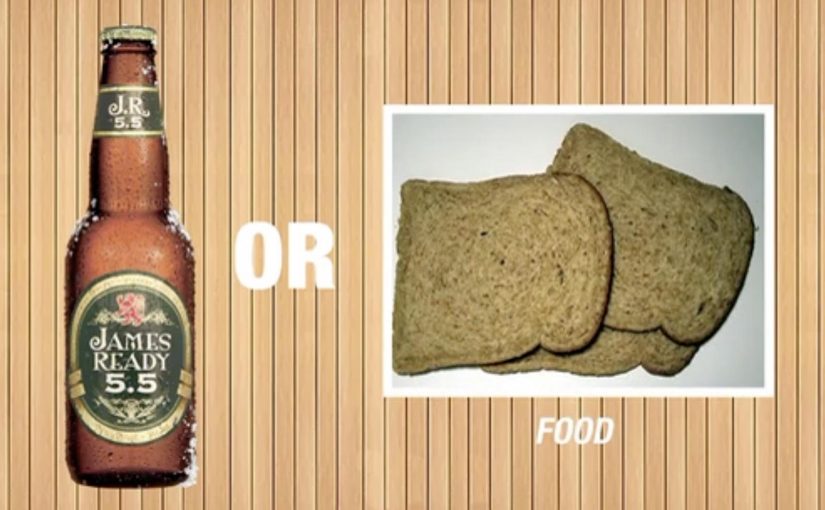
It’s a well-known fact. Students are relatively poor. They have to choose between spending their little money on beer or food, beer or books, and beer or transportation. So Leo Burnett Toronto created The James Ready Bar-Ter Campus Tour. “Bar-Ter” is the campaign’s name for a cap-for-essentials barter mechanic. A way for students to have both. Beer and other necessities.

Students were encouraged to spend their money on James Ready Beer, collect their beer caps, and trade the caps for semi-awesome and useful stuff like detergent, soap, mac n’ cheese, socks and so on.

Beer caps as a campus currency

The idea is disarmingly straightforward. A beer cap becomes a token. Tokens become necessities. Suddenly the brand is not only the thing you buy for a night out, it is also the thing that helps you restock the basics you keep postponing.

Bar-Ter succeeds because it reframes “cheap beer” as “smart trade.” It makes the buyer feel savvy, not broke.

How the Bar-Ter loop works

The loop is simple enough to explain in one breath. Buy beer. Keep caps. Swap caps for stuff you actually need. That simplicity matters because campus promotions only spread when the mechanic is instantly repeatable and easy to tell a friend.

It also builds a visible trail of participation. Caps pile up. People compare counts. The “currency” becomes social proof.

In consumer brands that compete on price and habit, promotions work best when they turn a purchase into a practical ritual people want to repeat.

The real question is whether your promotion creates a repeatable habit or just a one-off spike.

Why it lands with students

Students do not need another discount. They need a way to justify the purchase. Bar-Ter gives them that justification by attaching the brand to everyday utility. The prizes are not aspirational. They are deliberately ordinary, which makes the reward feel honest.

Extractable takeaway: When your audience is cash-tight, utility rewards can justify the purchase better than discounts, because the payoff feels like help, not hype.

There is also a small psychological trick. Collecting caps turns spending into progress. Even if the reward is modest, the accumulation feels like getting somewhere.

What the brand is buying with this promotion

This is not only a giveaway. It is a loyalty habit built on a physical artefact. If you want the cap, you need the brand. If you want enough caps, you need repeat purchase. And because the redemption items are useful, the reward feels earned rather than random.

Industry listings later associated this work with awards recognition, which fits the pattern. A simple mechanic, strong cultural truth, and a clear behaviour change.

Bar-Ter moves worth copying

  • Turn packaging into a token. If the token is already in the product, you lower friction and increase repeat.
  • Reward with utility, not luxury. Useful items make the promo feel like help, not hype.
  • Make progress visible. Collecting is part of the satisfaction. Design the “pile up” effect.
  • Keep the exchange rate legible. If people cannot quickly understand how to win, they will not try.
  • Match the reward to the audience truth. The best prize is the one that feels tailored to their real life.

A few fast answers before you act

What is the James Ready Bar-Ter Campus Tour?

It is a student-focused promotion where people collect James Ready beer caps and trade them for everyday essentials like detergent, soap, mac n’ cheese, and socks.

Why use caps instead of coupons?

Caps are physical proof of purchase that naturally accumulate. They make participation visible and social, and they create a repeat-buy loop without requiring people to track paper discounts.

What makes this kind of promotion feel “smart” rather than cheap?

Utility rewards. When the payoff is something you genuinely need, the purchase feels justified and the brand feels practical rather than desperate.

What’s the biggest risk with token-based promotions?

Redemption friction. If the exchange process is unclear, inconvenient, or understocked, the promotion becomes frustration and the brand takes the blame.

How can a non-beer brand adapt this idea?

Use a built-in product element as the token and exchange it for items that reduce your audience’s everyday pain. The token must be easy to collect and the reward must be meaningfully useful.
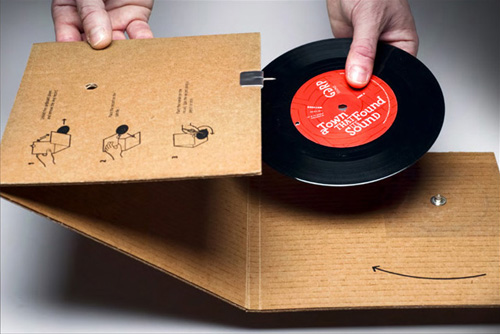
GGRP: Cardboard Record Player Mailer

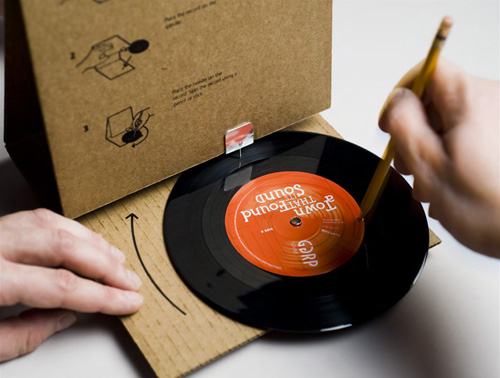
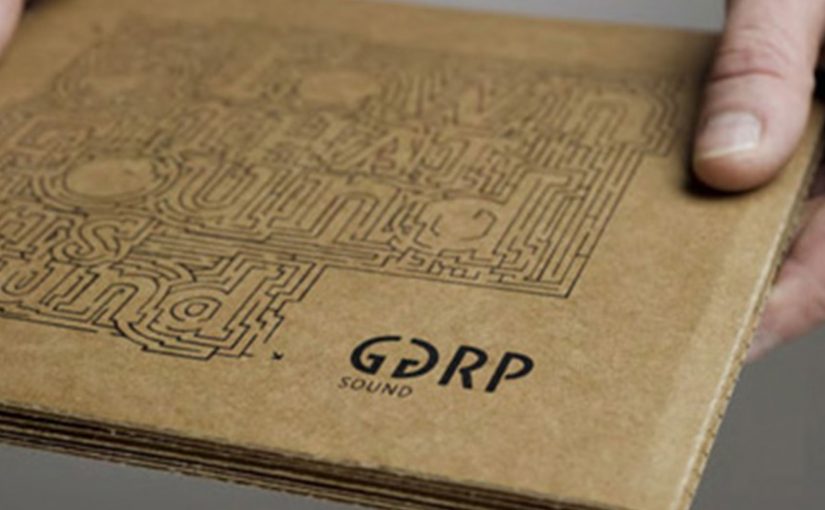
Grey Worldwide in Vancouver created a record player from a piece of corrugated cardboard that folds into an envelope.

GGRP Mailer Open

Once assembled, a record can be spun on the player with a pencil. The vibrations go through the needle and are amplified in the cardboard material.

GGRP Mailer CD

The players were sent out to creative directors across North America as a creative demonstration of GGRP’s sound engineering capabilities.

A demo you can literally feel

This is direct mail that behaves like the product promise. Not a brochure about audio craft, but a physical object that turns vibration into sound in your hands. It creates a moment of discovery before you even think about the brand. Then the brand gets credit for making it work.

How the mechanism does the selling

The sleeve folds into a small phonograph. A pencil becomes the spindle. A simple needle converts the grooves into vibration, and the cardboard body acts as the amplifier. No power, no app, no explanation-heavy setup, just a working proof-of-concept hidden inside a mailer.

Here, proof-of-concept means the mailer itself demonstrates the capability before any sales conversation starts. In B2B creative services, the strongest new-business work is often a tangible demo that turns capability into an experience. Because the recipient has to assemble it and hear it working, the mechanism turns a technical claim into remembered evidence. The real question is whether your outreach proves the craft fast enough to earn a second look.

Why it lands with creative directors

It respects the audience. Creative directors do not need to be told what “sound engineering capabilities” means. They need to feel that the shop thinks differently and executes cleanly. The format also earns time. You do not skim it. You assemble it. That extra time is the real attention premium.

Extractable takeaway: When you sell an invisible craft, build a self-contained artifact that proves it in one minute. The artifact becomes your credibility layer, and your follow-up becomes welcome instead of intrusive.

What this mailer teaches about demo design

  • Make the medium the proof. If it does not demonstrate the promise, it is just packaging.
  • Design for a single “aha”. One clear moment beats multiple clever details.
  • Keep the setup friction low. If it takes instructions to start, the audience drops.
  • Target a specific recipient role. This is built for decision-makers who value craft signals.

A few fast answers before you act

What makes this mailer different from a typical promo piece?

It is not a message about capability. It is a working demonstration that the recipient assembles and experiences immediately.

Why is cardboard the right material choice here?

It is cheap to distribute, easy to fold into a mail format, and it can physically amplify vibration, which makes the “sound craft” claim believable.

What is the main business objective of an object like this?

To create high-quality recall and conversation with a small, high-value target list, rather than broad reach.

What is the biggest execution risk?

If the object does not work reliably, the demo backfires. The entire idea depends on the “it actually plays” moment.

How can other B2B brands apply the same pattern?

Translate your capability into a simple physical demo that proves the benefit without needing explanation, then send it only to the people who can buy.

Hyundai Canada: Worst Parking Job Ever

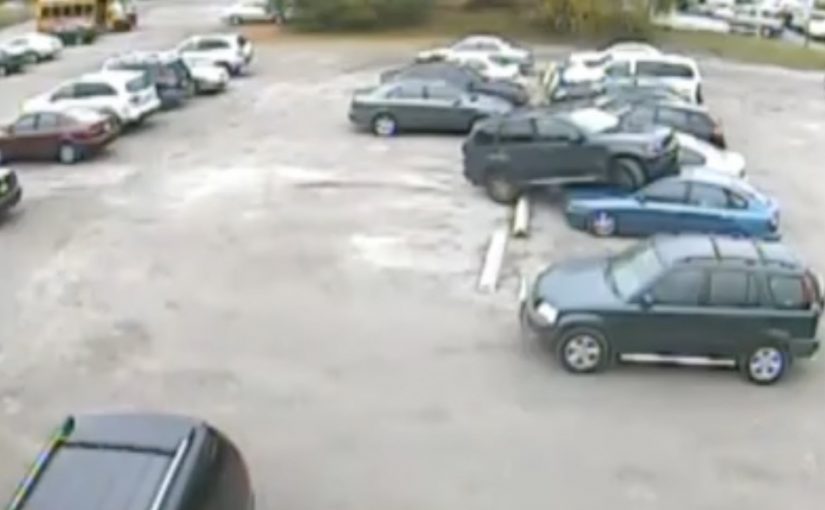
A parked 2004 Hyundai Elantra gets crushed in a parking lot incident captured on security footage. The clip is framed as the “worst parking job ever,” and it quickly becomes the kind of viral story that spreads because the outcome is so brutally clear.

The footage is dated October 22, 2009 in Ontario, Canada, and it puts the owner, Todd Jamison, at the center of an internet pile-on he did not ask for.

Then Hyundai Canada steps into the story. Instead of treating it as someone else’s bad day, they decide to become the helpful brand in the comments section, in real life. On October 30, 2009, they surprise Jamison with a brand new 2010 Hyundai Elantra Touring and capture the handover on film.

How the brand response is engineered

The mechanism is fast, simple, and camera-friendly. A widely shared piece of user-discovered content creates attention. The brand responds with a real-world act that resolves the narrative tension, then publishes the “resolution” as a second video that is just as easy to share as the original. Because the second video closes the loop on the first, it spreads as payoff, not PR.

In automotive PR and brand storytelling, this is the cleanest form of earned media: a human problem, a timely intervention, and a documented payoff that feels generous rather than scripted.

In North American automotive marketing, these moments recur, so the only scalable advantage is showing up with a real fix fast.

The real question is whether you can resolve the tension with a meaningful action before the internet moves on.

Why it lands

Because it completes the story people were already watching. The first video triggers disbelief and sympathy. The second video rewards that emotion with a satisfying outcome. Hyundai does not try to outshout the internet. It aligns with what viewers already want to see happen next, then makes that ending real.

Extractable takeaway: When a viral moment creates an obvious “someone should help” impulse, the best brand move is to deliver a concrete fix fast, then tell the story as a continuation, not a campaign. The sequel is the strategy.

Steal the “unexpected hero” play

An “unexpected hero” play is when a brand solves a real problem for a real person in public, and lets the action carry the story.

  • Respond to the narrative, not the metrics. If the situation has a clear moral shape, your action will travel further than your media spend.
  • Make the intervention unambiguously useful. A replacement car is simple to understand. Complexity dilutes goodwill.
  • Publish the resolution, not the process. Viewers want the moment of surprise and relief, not a corporate explainer.
  • Keep the tone human. The brand should feel like it is helping a person, not exploiting an incident.

A few fast answers before you act

What is the core story arc here?

A widely shared security clip shows a parked car being crushed. Hyundai Canada follows up by replacing the car and filming the surprise, turning shock into closure.

Why is the follow-up video essential?

Because it converts attention into meaning. Without the sequel, the story is only misfortune. With it, the story becomes relief and brand goodwill.

What makes this feel authentic instead of opportunistic?

The action is tangible and directly benefits the person who suffered the loss. The brand is not adding commentary. It is changing the outcome.

How do you decide whether to engage at all?

Engage only if you can improve the outcome for the affected person in a way that is clear on first viewing. If you cannot deliver a meaningful fix, the safest move is to avoid turning someone else’s misfortune into content.

What is the biggest risk when brands copy this approach?

Performative help. If the intervention is small, conditional, or self-serving, the audience will treat it as exploitation of someone else’s bad day.