
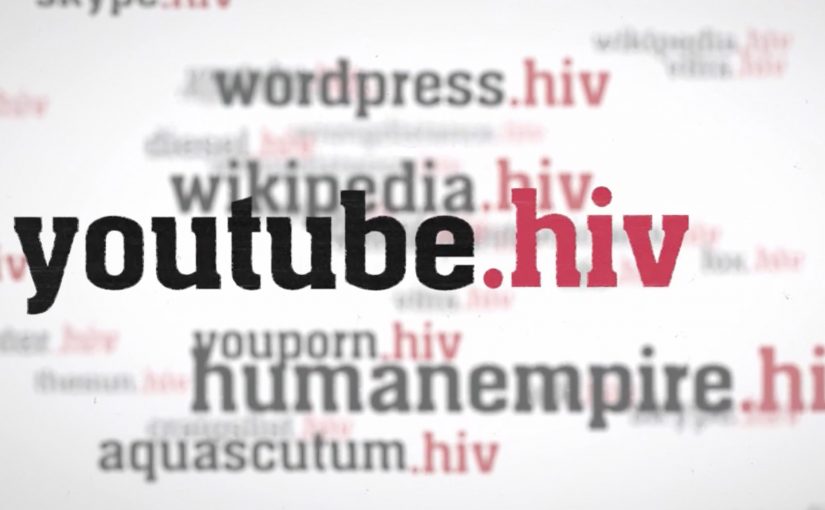
A familiar website address. One small change at the end. And suddenly the act of browsing is framed as a contribution.
.hiv is a global idea positioned to fight HIV and AIDS. Campaign materials claimed that by the end of 2010, the number of people diagnosed with HIV would have reached 150 million.
AIDS continued to be a deadly diagnosis, so nonprofit organization dotHIV and Hamburg-based agency KemperTrautmann launched a Facebook-led campaign with a specific ambition. Establish a new top-level domain, .hiv, alongside endings such as .com or .org.
The proposed mechanism is straightforward. Any website could soon have a .hiv version. The content stays the same, but using the .hiv version is framed as “doing some good”. Every visit would trigger a small donation to dotHIV, or the website owner would pay a monthly rate for using the .hiv ending, with proceeds routed toward the cause.
Why the domain idea is the message
This works because it turns a familiar object, the URL, into a symbol. A domain ending is tiny, but it is also persistent. It appears everywhere the link appears, and it travels without needing a new explanation each time. The “digital red ribbon” effect is built into the mechanics, not added on top. Here, “digital red ribbon” means a visible, repeatable sign of support that appears wherever the link appears. That matters because persistent, low-effort visibility lowers the cognitive cost of participation and helps the cause travel with the behavior.
Extractable takeaway: If you want scale for a social cause, design participation so it sits inside a behavior people already repeat daily, and make the proof of participation visible every time the behavior happens.
In global cause-led digital initiatives, the scalable advantage comes from attaching support to a habit people already repeat without thinking.
What the campaign is really trying to unlock
The real question is whether the cause can become part of a daily digital behavior instead of remaining a separate appeal.
The visible pitch is fundraising. The deeper play is normalization. If .hiv becomes a usable, recognizable address ending, it makes the cause present in everyday digital life, which can reduce stigma through repetition and visibility rather than messaging alone.
The more strategic value here is normalization, not just fundraising.
What cause-led marketers can borrow
- Attach impact to habit. Make the “good” happen when people do something they already do.
- Make participation visible. A marker people can see and share helps the idea spread without extra media.
- Keep the mechanism explainable in one sentence. If it needs a diagram, adoption collapses.
- Design for opt-in trust. Cause mechanics live or die on clarity about where money flows and why.
A few fast answers before you act
What is the .hiv idea in one line?
A proposed top-level domain intended to turn everyday browsing into support for HIV and AIDS work by routing fees or visit-linked donations through dotHIV.
How is it supposed to work for normal websites?
A site could have a .hiv version that mirrors the existing content, while usage or registration is framed as generating funds for dotHIV.
Why use a domain ending instead of a normal donation page?
Because a domain ending is persistent and repeatable. It can travel with links and become a visible marker of participation everywhere it appears.
What makes this idea credible or not credible to audiences?
Transparency about governance, pricing, and where proceeds go. The mechanism needs to be as clear as the promise.
What is the biggest risk with “donation-by-browsing” concepts?
If the value exchange is unclear, or the impact feels too small or too opaque, people disengage or suspect cause-washing.