
Chevrolet: Then & Now

As a way to celebrate turning 100, Chevy creates a spot titled “Then & Now” that shows people staying connected to iconic moments, locations, and Chevrolet vehicles as if those moments are with them right there, right now.

A simple device that does the heavy lifting

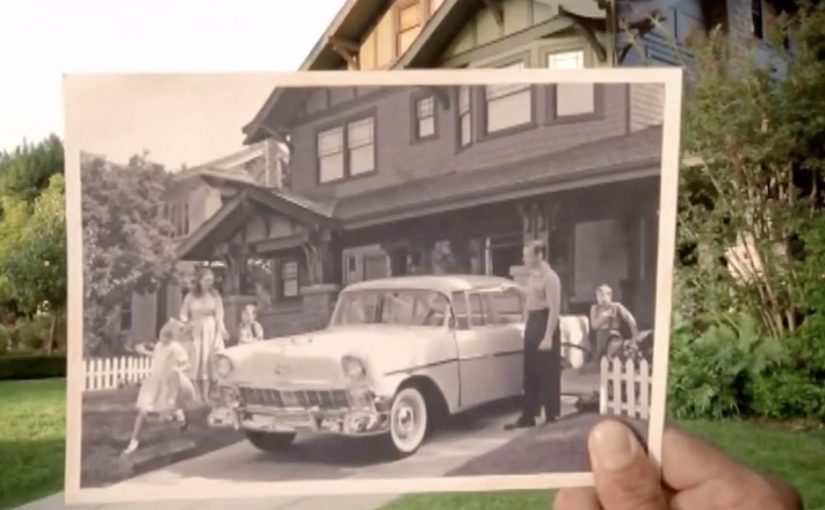
The mechanism is beautifully restrained: vintage photographs of Chevrolets and the people around them are held up to the camera in the exact same locations today, aligning past and present into a single frame.

In automotive heritage storytelling, the fastest way to communicate longevity is to make time visible with a device that needs almost no explanation.

In heritage-heavy categories, anniversary storytelling lands best when it helps the audience locate their own memories in the present, not when it asks them to admire the brand.

Why it lands emotionally

The film does not argue that the brand matters. It shows that memory matters, and lets the vehicles sit naturally inside that truth. The hand-held photos are the emotional bridge. They make nostalgia feel personal, not corporate.

Extractable takeaway: If you can make time visible with one repeatable in-scene device, you can earn nostalgia without turning the work into a corporate victory lap.

The business intent behind the sentiment

A centennial can easily become self-congratulation. This avoids that trap by focusing on the audience’s continuity. The brand is the thread that runs through people’s lives, places, and rituals, rather than the subject demanding applause. The real question is whether your anniversary work makes the audience feel time passing in their own life, not whether it proves you have been around. Anniversary work should prioritize the audience’s continuity over brand self-congratulation.

Transferable moves for anniversary work

  • Choose one visual metaphor and commit. One repeatable device beats a collage of “greatest hits”.
  • Let people be the hero. Heritage feels earned when the customer’s life is the storyline.
  • Use restraint as a quality signal. Minimal copy and slow pacing can make the work feel more truthful.
  • Anchor the past in the present. Showing the same place now keeps nostalgia from drifting into museum mode.

A few fast answers before you act

What is “Then & Now” in one line?

A centennial film that aligns vintage Chevrolet photos with the same real-world locations today to show continuity across generations.

What is the core creative mechanism?

Hand-held historical photographs matched precisely to present-day scenes, creating a single frame that contains both time periods.

Why does this approach work for anniversary advertising?

It makes time visible instantly, and it ties the brand to lived memory rather than to corporate milestones.

What should you avoid in centennial storytelling?

Avoid making the milestone the hero. If the audience cannot see their own continuity in the work, the film risks reading like self-congratulation.

What is the most transferable takeaway?

If you can show the passage of time with one simple, repeatable device, you can tell a heritage story without overexplaining it.

TyC Sports: Argentinos

As the 2010 World Cup kicks off, this TyC Sports film by Young & Rubicam Buenos Aires is built to do one thing fast: stir up Argentine fans everywhere with a burst of identity, memory, and belief.

A World Cup rally film is a piece of sports storytelling designed to compress national pride into a repeatable emotional cue. It is less about information and more about turning viewers into a synchronized audience.

A simple mechanism: recognition, then escalation

The structure is familiar and effective. Start with the small details only insiders recognize. Then scale up into a collective “we”. The film keeps pulling the viewer from personal belonging into shared momentum, so the emotion arrives before the rational brain asks what is being sold.

In global sports media and broadcaster marketing, pre-tournament films like this work best when they feel like culture, not advertising.

Why it lands for Argentine fans worldwide

The spot trades on lived cues. The way people speak about football. The intensity. The inevitability of hope. You do not need to explain Argentina’s relationship with the game. You only need to trigger it, and let the audience do the rest. That is also why the film travels. Fans abroad are exactly the audience most hungry for a cultural tether during a tournament, so the message plays as connection as much as hype.

Extractable takeaway: If you can trigger a specific shared-identity cue, the audience will supply the meaning and momentum without you having to over-explain it.

The business intent behind the emotion

For TyC Sports, the goal is not to educate. It is to concentrate attention and loyalty at the moment the tournament starts, when viewing habits and media choices are being formed. The film frames the channel as the emotional home for the campaign, not just the place that carries matches.

The real question is whether you can earn the role of emotional home at kickoff, not just distribute the content.

Steal the rally structure for your next fan-led campaign

  • Build from insider truth. Specificity creates belonging faster than generic patriotism.
  • Make it chantable. The best sports films reduce to a line or feeling people can repeat.
  • Escalate from personal to collective. Start in the individual, end in the crowd.
  • Keep the brand role clean. If you are a broadcaster, act like a rally point, not a sponsor.

A few fast answers before you act

What is this film doing in one sentence?

It rallies Argentine fans worldwide by turning cultural recognition into shared tournament momentum for TyC Sports.

Why do pre-tournament films outperform match promos?

They create emotional commitment before viewing decisions harden. They make people choose a “home” for the tournament.

What makes sports patriotism feel authentic instead of generic?

Specific cultural cues and language that insiders recognize. The more precise the truth, the less it feels like advertising.

Who is the most valuable audience for this type of spot?

Fans who are not physically in the country. They are most likely to share, and most likely to use the film as a cultural tether.

What is the biggest creative risk with rally films?

Drifting into clichés. If the cues are too broad, it becomes interchangeable with any other team’s hype video.

Viagra: 10th Anniversary Film

Here’s a short film created to mark the tenth anniversary of Viagra. It treats the milestone as permission to be lighter, and to let the brand’s cultural familiarity do some of the work.

Rather than explaining features, the film leans into the celebratory occasion and a knowingly cheeky tone, the kind of “you know what we mean” approach that anniversary advertising often invites.

A milestone used as creative permission

The mechanic is straightforward. Pick a round-number anniversary. Publish a single, easily shareable film that frames longevity as relevance, and uses humor to make the brand feel present in everyday conversation again.

In mass-market healthcare brands, milestone campaigns are one of the few moments where a tightly regulated category can still feel culturally current without over-explaining the product.

Why it lands

It works because anniversaries come with built-in narrative structure. Celebration signals trust and staying power, and the wink of humor lowers resistance. People are more willing to share an “occasion” film than an “ad”, especially when the joke is easy to retell without needing context.

Extractable takeaway: If your category is hard to make interesting, use a milestone as the hook. Then build one clear comedic idea that communicates “we’ve been here a long time” without turning into a brochure.

What the brand is really buying

The real question is how to make a familiar, regulated brand feel culturally present again without turning the work into product explanation.

This is strong anniversary advertising because it uses the occasion to reopen conversation, not to overload the audience with explanation.

This kind of film is optimized for talk value, meaning it gives people a light, socially acceptable reason to mention the brand. It keeps the brand top-of-mind, reinforces legitimacy through age and familiarity, and avoids a heavy sales posture.

What to steal for your own “birthday” work

  • Make the occasion the headline. A milestone is a story people recognize instantly.
  • Write one joke, not ten. A single clean gag travels further than layered cleverness.
  • Keep the brand cue unmistakable. If people remember the joke but not the brand, you rented attention.
  • Respect category boundaries. In regulated spaces, humor still needs to be compliant and careful.

A few fast answers before you act

What is this piece of work in one line?

A short anniversary film that uses a tenth birthday milestone to refresh attention around the Viagra brand through humor and cultural familiarity.

Why do anniversary ads get shared more than product ads?

Because they feel like “news” or a cultural moment, not a sales message. The occasion gives people a socially comfortable reason to pass it along.

What is the main strategic benefit?

Top-of-mind reinforcement through a light, memorable artifact that signals longevity and relevance.

What is the most common failure mode?

Over-indexing on the gag. If the brand cue is weak, the audience remembers the joke and forgets who paid for it.

When is a milestone campaign the wrong idea?

It is the wrong idea when the anniversary is doing all the work and the creative thought is weak. The occasion can open the door, but it still needs one clear, memorable idea to carry the brand.