
Quilmes: Mitigol

Quilmes: Mitigol

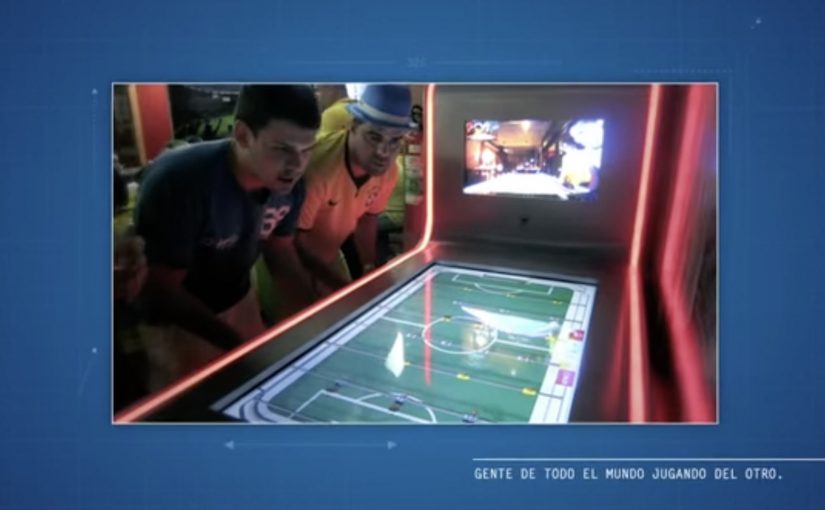
Quilmes and their agency +Castro reinvented the classic game of foosball. In its new version they enabled Argentinians and Brazilians to play each other in real time through a custom made digital foosball table.

Dubbed “Mitigol”, the activation turns foosball into a cross-border live match. One half of the table was placed in Argentina and the other half in Brazil. During the game, players could see their opponent via special in-built video cameras that further enhanced the real time experience of the game. As a prize, Quilmes gave away free beer.

How Mitigol works

The mechanism is a physical game with a digital bridge. A custom table syncs the ball and player movement across distance, while embedded cameras add face-to-face presence so it feels like a real match rather than a remote demo.

In sports and event-led marketing, shared-play installations can turn rivalry into participation because they give fans something to do together, not just something to watch.

Why it lands

This works because it makes a national rivalry tangible without needing a screen-first experience. Foosball already has competitive tension built in, so the cross-border connection raises the stakes instantly. The cameras then do the emotional work by proving the opponent is real, right now, reacting in real time.

Extractable takeaway: When you want “real time” to feel meaningful, do not rely on the word. Add one physical interaction that people already understand, then layer in live presence so the distance becomes the headline.

What Quilmes is really buying

The real question is how to turn passive rivalry into a shared act people want to join.

Beyond novelty, Mitigol is a closeness story. It borrows the energy of an event moment and converts it into a branded experience where the fan is the performer, not the spectator. The prize is just the nudge that keeps the line moving and the competition sharp.

What to steal from Mitigol

  • Start with a familiar game. If the rules are known, participation spikes.
  • Make distance visible. The split-table concept is the idea. Do not hide it.
  • Add live presence. Cameras or live feedback make “remote” feel human.
  • Reward the behavior you want. Small, immediate prizes keep throughput high.

A few fast answers before you act

What is Mitigol?

It is a custom foosball table experience that connects two locations so players in different countries can play the same match in real time.

Why split the table across Argentina and Brazil?

Because the physical split makes the cross-border rivalry concrete. It is instantly legible as “we are playing each other right now”.

What role do the built-in cameras play?

They add live presence and reaction, which makes the experience feel like a real opponent rather than a remote simulation.

What is the simplest way to copy the principle?

Take a familiar physical activity, connect it across distance with tight synchronization, then add a live human layer so the interaction feels personal.

What should you measure for an activation like this?

Participation volume, repeat play, dwell time, and how often spectators convert into players once they see it in action.

Berocca: Mechanical Desk

Berocca: Mechanical Desk

A survey by TNS Gallup in Argentina reported that 5 out of every 10 Argentinians suffer from stress, and that many expressed a need for a 5 to 10 minute break during the working day. Berocca, vitamin tablets manufactured by Bayer, turns that tension into a public challenge.

They set up a “Mechanical Desk” and dare passersby to send a tweet within 24 seconds of sitting on it. It sounds easy. Until you try.

A desk designed to sabotage your “quick break”

The mechanic is a simple constraint. Sit down. Compose. Hit send. Do it in 24 seconds. The desk itself makes the act of tweeting unexpectedly difficult, forcing your attention away from autopilot and into the moment.

In workplace energy and wellbeing marketing, turning “I need a break” into a short, physical interruption can make the message feel earned rather than preached.

Why this lands

This works because it dramatizes a truth people already recognise. When you are stressed, even a small task can feel harder than it should. The Mechanical Desk turns that feeling into a playful, watchable experience, and the tweet timer creates instant stakes without needing a long explanation.

Extractable takeaway: If your product promises focus or renewal, create a micro-challenge that makes everyday friction visible, then let your brand sit as the “reset” people reach for after the disruption.

What the brand is really doing

Berocca is positioning itself as the ally of the mid-day reboot, the short moment when people want to reset their energy and focus during the workday. Not a medical claim. A cultural cue. The activation turns “stress break” into something public and shareable, with Twitter functioning as both proof of participation and a distribution layer.

The real question is how to make an invisible feeling like workday stress visible enough for people to notice, attempt, and share.

The stronger move here is to stage the problem in public, not explain it in copy.

What to steal from this stress-break activation

  • Use a tight constraint. A clear time limit makes the idea instantly legible.
  • Make it observable. If bystanders can see the struggle, the experience becomes content.
  • Keep the action familiar. Tweeting is normal. The environment is what changes.
  • Let the brand be the release. Build the story so the brand naturally maps to “reset.”

A few fast answers before you act

What is the Berocca Mechanical Desk?

It is a public activation where people sit at a specially designed desk and attempt to send a tweet within 24 seconds.

Why a 24-second tweet challenge?

A short timer creates urgency and makes a “quick break” feel like a game, which increases participation and watchability.

What is the campaign trying to communicate?

That stress is common during the workday, and that small breaks matter. The stunt turns that need into a tangible moment people can experience and share.

What role does Twitter play?

Twitter is both the challenge output and the distribution mechanic. The act of tweeting becomes proof, and the post can travel beyond the physical installation.

What’s the main risk with this kind of activation?

If the challenge is too frustrating or unclear, people drop out. The difficulty has to feel playful, not punishing.

Absolut: Unique Access via WhatsApp

Absolut: Unique Access via WhatsApp

In October, Klik (a chocolate snack) was billed here as the first brand to use WhatsApp to increase brand engagement amongst its teen audience.

Now a month later, ABSOLUT Vodka in Argentina uses WhatsApp as well, this time to invite people to an exclusive launch party. To build awareness and engagement in Buenos Aires, Absolut creates “Sven the doorman”. Interested people have to contact Sven via WhatsApp and convince him to grant access. Since he is not easy to convince, people get creative fast.

Sven is the mechanic

The mechanism is conversational gating. Conversational gating means access is unlocked only through a back-and-forth chat, not a form or link. A single contact on WhatsApp becomes a bouncer, and the brand turns the usual “enter to win” pattern into a negotiation. You are not filling a form. You are performing for a personality, in the channel where you already talk to friends.

In mobile-first urban markets, messaging apps like WhatsApp are a natural place for brands to run direct, high-attention interactions without building a separate destination.

Why this format spreads

It packages exclusivity into a simple game loop. The real question is whether you want people to feel like they earned access, or like they completed a funnel step. Ask. Get rejected. Try again. Escalate creativity. That loop is inherently shareable because it produces artifacts people can screenshot, forward, and remix. This format is a better bet when you want depth of participation and talk value, not maximum reach. Reported campaign write-ups describe hundreds of participants and a flood of user-made messages, which is exactly what you want when the goal is buzz rather than reach alone.

Extractable takeaway: If you want engagement that feels earned, design a human-scale gate with a clear personality and a strict rule. Then let people “pay” with creativity, not clicks.

What to steal for your own messaging plays

  • Make scarcity real. The smaller the prize pool, the more believable the doorman becomes.
  • Turn the brand into a character. Sven is not a hotline. He is a role people can play against.
  • Reward effort, not volume. You want fewer, better attempts, not spammy persistence.
  • Design the rejection lines. The “no” is half the entertainment. Script it so it invites a better next try.
  • Build for screenshots. Assume the conversation will leave WhatsApp. Make it legible outside the app.

A few fast answers before you act

What is the core idea behind “Sven the doorman”?

A brand persona acts as a gatekeeper on WhatsApp. People must persuade him to unlock access to an exclusive event, which converts invitations into a creative challenge.

Why use WhatsApp instead of a landing page?

Because it removes friction. The interaction starts inside an everyday messaging habit, and the conversational format makes participation feel personal rather than transactional.

What makes this approach risky?

It can backfire if the “doorman” feels unfair, creepy, or inconsistent. The rules must be clear, and the tone must fit the audience.

What is the simplest version a brand can run today?

Use one WhatsApp contact, one character, and one strict rule to unlock a limited reward. Keep the conversation short, and make the “no” entertaining enough that people want to try again.

How do you keep the “doorman” from becoming spammy or exhausting?

Set a tight interaction window, cap repeated attempts, and use rejection lines that steer people toward better next tries instead of inviting endless back-and-forth.