
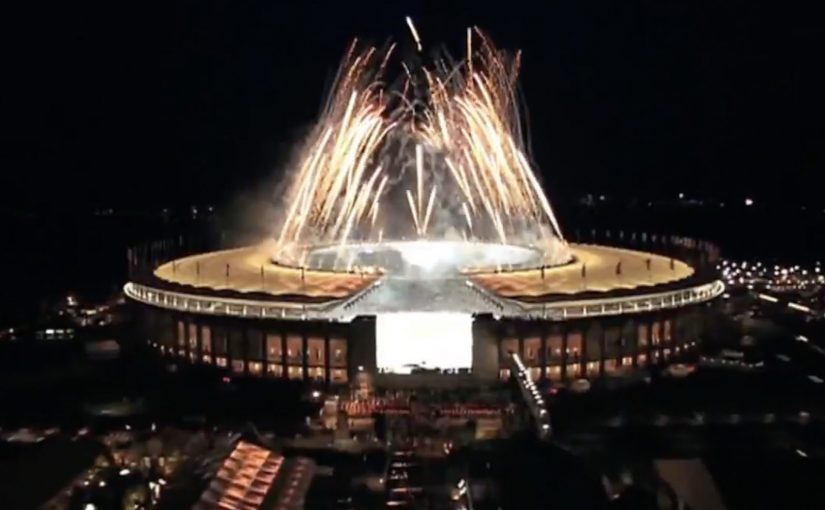
2010 FIFA World Cup: United on ESPN

As the World Cup draws to an end this weekend, it feels like a good time to share this ad that captures how this has been that one month, every four years, when we all agree on one thing.

A simple idea, delivered as a fast montage

The spot stacks up all the things people argue about, then flips the frame to the one shared obsession that temporarily overrides the noise. It is not trying to explain football. It is using football as a shortcut to “we are together for a moment.”

In global sports media, the World Cup is one of the rare moments when mass audiences synchronise attention across borders.

The real question is whether your “we” message can hitch itself to a ritual your audience already shares, without the brand feeling like it is forcing the moment.

Why it lands

It works because the insight is instantly recognisable. You do not need to know the teams or the fixtures to feel the shift from division to collective focus. The edit pace does the persuasion, not a long script.

Extractable takeaway: When you want a “unity” message to travel, anchor it in a shared ritual people already practice, then use rhythm and contrast to make the emotional pivot feel inevitable. By a shared ritual, I mean a repeated moment your audience already participates in without you.

What this kind of creative is good for

These films are less about persuasion and more about permission. They legitimise heightened emotion. They give viewers a line they can borrow to describe what they are already feeling. That is why they get replayed and quoted during the tournament run-in.

A unity film earns trust only when it starts from a real, shared behaviour.

What to borrow from ESPN’s United montage

  • Lead with contrast. Show everyday division first, then pivot hard into the shared ritual.
  • Let edit pace do the work. Rhythm and montage can replace exposition when the insight is universal.
  • Anchor unity in something real. A credible collective behaviour beats abstract “togetherness” claims.
  • End on one clean line. A short, repeatable framing gives viewers language to share the feeling.

A few fast answers before you act

What is this ad doing in one sentence?

It contrasts everyday disagreement with a single shared passion, then frames the World Cup as a rare moment of collective unity.

Why is contrast more effective here than “inspiring” footage alone?

Because contrast creates a clear before-and-after. Viewers feel the pivot from fragmentation to togetherness instead of being told about it.

What makes a “unity” sports spot feel authentic?

It reflects real fan behaviour and real tension, then resolves it through a ritual people genuinely share, like watching, cheering, and arguing about football.

How do you adapt this structure outside sport?

Pick a moment where your audience already aligns, then show the everyday differences around it. The shared ritual must be more credible than the brand claim.

What should you avoid when copying this approach?

A generic “we are all one” message with no lived context. Without a specific ritual and a clear pivot, the film becomes wallpaper.

Pepsi: Oh Africa Football Superstars

Football stars set to Akon’s “Oh Africa”

A Pepsi ad featuring Akon’s “Oh Africa” and football stars like Henry, Messi, Drogba, Arshavin, Lampard and Kaká.

How the spot is built: soundtrack plus star density

The mechanism is pure scale. A single anthem-like track sets the emotional tempo, then a rapid parade of elite players does the rest. That star density, meaning how quickly recognisable names appear on screen, plus the track acting as an audio spine, the one piece of music carrying the whole film, makes it feel bigger than a product message because the film is structured like a football event, not a traditional brand pitch.

In global FMCG sponsorship marketing, music and star power are used as compression tools to deliver tournament-level energy in seconds.

Why it lands: it turns a commercial into a moment

This works because the viewer already understands the code. Big match atmosphere, heroic framing, quick edits, and a track that signals “anthem”. Because the anthem-like track sets a shared emotional frame and the rapid star parade signals “event”, the brand does not have to over-explain anything and the audience fills in the meaning.

Extractable takeaway: When you borrow the codes of a real event, one clear audio spine plus fast recognisability can make a sponsorship film feel like culture first and branding second.

What Pepsi is really buying with “Oh Africa”

This is about cultural association, not product features. The “Oh Africa” release is also positioned as more than entertainment, with proceeds linked to helping underprivileged African youth via Akon’s Konfidence Foundation. That adds purpose framing to what could otherwise be a straight celebrity-sponsorship film.

The real question is whether you are sponsoring the sport, or sponsoring the feeling of being part of the sport.

Steal this structure for sponsorship-led spots

  • Use one strong audio spine. A recognisable track can carry mood faster than copy.
  • Front-load recognisable faces. Star density buys attention when the viewer is scrolling or channel-hopping.
  • Make the brand platform legible. If there is a “bigger than the ad” idea, thread it through the film rather than adding it at the end.
  • Keep the message simple. Sponsorship films win when they feel like culture first, brand second.

A few fast answers before you act

What is this Pepsi ad in one sentence?

A football-superstar Pepsi spot set to Akon’s “Oh Africa”, designed to feel like a World Cup-scale cultural moment rather than a standard commercial.

Which stars are featured?

The legacy post calls out Henry, Messi, Drogba, Arshavin, Lampard and Kaká as featured players.

What is the core mechanism that makes it work?

Star density plus a strong audio spine. Recognisable faces arrive fast, and the track carries mood without needing heavy explanation.

What sponsorship job is the film trying to do?

Transfer event energy to the brand by making the work feel like culture first and branding second, so the sponsorship reads as “belonging”.

What is the most transferable takeaway?

If you are building a sponsorship-led spot, keep the message simple, front-load recognisability, and use one cohesive audio-visual spine to carry the moment.