
Pepsi: The Recycling Rethink

Pepsi: The Recycling Rethink

Sustainability marketing breaks when the system stays the same

Most sustainability marketing fails when the operating reality does not change, and the message asks consumers to do more while leaving the friction, reward, and moment of action unchanged.

That is exactly the problem here. Special Australia says two out of every three plastic and aluminium containers in Australia still do not get recycled, and Pepsi’s promotion in New South Wales (NSW) only worked because it added a materially better incentive to an existing 10c deposit system in a promotion that ran until 22 November 2025.

The Pepsi example is one of the stronger sustainability ideas in recent memory because it changes the behaviour system, not just the brand message. It also won a Gold Spike in Creative Commerce at Spikes Asia 2026.

Pepsi moved the incentive into the machine

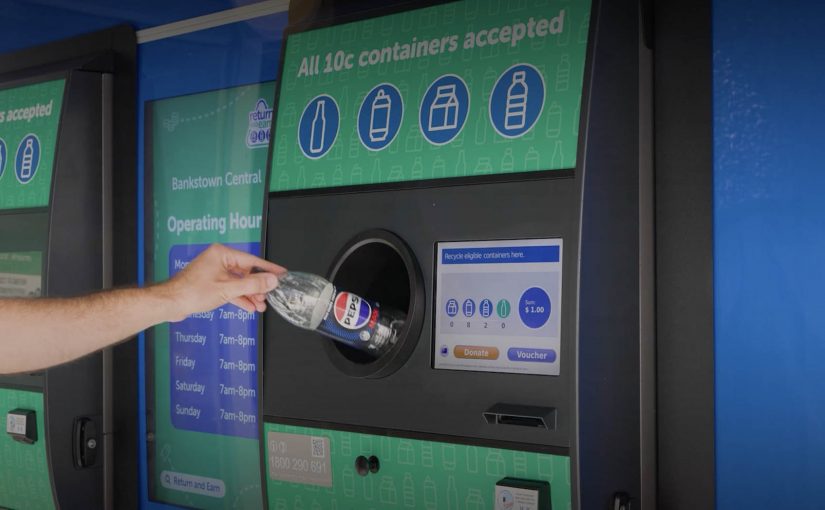
Pepsi worked with TOMRA and the NSW Government-run Return and Earn program to add new code to existing reverse vending machines. A reverse vending machine is an automated kiosk that identifies eligible drink containers and issues the deposit refund. The updated flow let a Pepsi barcode trigger an additional voucher and QR journey on top of the standard 10c return, turning a fixed refund mechanic into a live, brand-specific incentive layer inside an existing public recycling system. Alongside the standard 10c refund, the program also added an A$100,000 bonus prize pool, with rewards ranging from A$100 to A$50,000 for eligible Pepsi containers returned through voucher-printing machines in New South Wales.

In operating terms, this is a physical touchpoint workflow redesign, not a media idea bolted onto recycling.

That distinction matters. The innovation was not the poster, the social edit, or the sustainability language. It was the decision to move the brand intervention into the verified transaction itself, where intent, identity, reward, and action already meet.

The real question is not whether consumers care about recycling. It is whether the system makes the desired action feel worth doing right now.

Because the reward is triggered inside the act itself, the behaviour no longer depends on recall or guilt. It depends on immediate reinforcement.

Why this lands beyond one Pepsi promotion

Award-entry materials published on Lions platform The Work say Pepsi container recycling rose 16% in the first week, that 242,000 people participated after eight weeks, and that the initiative delivered a claimed 37% increase in ROI. The same materials say the code was built for broader rollout, while TOMRA says its reverse vending footprint exceeds 87,000 installations in more than 60 markets.

That is the commercially interesting part. The scarce asset here is not ad inventory. It is installed infrastructure that already sits inside a trusted public behaviour loop.

The lesson for enterprise teams is familiar. You usually get more lift by redesigning the moment architecture than by layering one more awareness burst on top of an unchanged flow.

This is why the idea reads like business-tech translation rather than campaign theatre. Pepsi translated a brand objective into machine logic, barcode recognition, partner coordination, and operational rollout across an existing public system.

It is not infinitely portable. Scale would still depend on program operators, machine access, software control, barcode governance, regulatory approval, fraud prevention, and economics that still work after the novelty wears off.

What enterprise teams should take from Pepsi’s recycling redesign

If you want behaviour change, start by auditing the live touchpoint, not the comms plan. Find the moment where the action is verified, identify what data the system already sees, and then ask whether that data can trigger a better reward, message, or next step without rebuilding the whole stack. What Pepsi and its partners changed was not consumer intent. They changed the structure around the decision.

The takeaway is straightforward: when a habit is stuck, stop spending all your energy on persuasion and redesign the transaction layer where the behaviour actually happens.


A few fast answers before you act

What did Pepsi actually change?

Pepsi did not just run recycling creative around the program. It worked with TOMRA and the Return and Earn system to make Pepsi barcodes trigger an additional voucher and QR-based reward flow inside existing reverse vending machines.

Why is this stronger than a normal sustainability ad?

A normal ad leaves the recycling action unchanged. This idea changed the reward logic at the point of verified behaviour, which gives it more operating value than another awareness message.

Could other brands copy the model?

In principle, yes. Special says the functionality is compatible with TOMRA’s broader machine network, and TOMRA says its reverse vending footprint spans more than 60 markets. Whether another brand could actually deploy it would depend on local program requirements, operator permissions, and commercial logic.

What would stop it scaling?

The main blockers are governance and economics, not creativity. A rollout would need machine access, software control, regulatory approval, barcode integrity, fraud safeguards, and a reward model that still makes sense once expanded.

Did it produce measurable results?

Award-entry materials published on Lions platform The Work say Pepsi container recycling rose 16% in the first week, that 242,000 people participated after eight weeks, and that the initiative delivered a claimed 37% increase in ROI.
Super Bowl 2026 Ads: By Ad Recall

Super Bowl 2026 Ads: By Ad Recall

It’s been two weeks since the Super Bowl, but the most important data from advertising’s biggest night lands now, after the noise has died and the industry has moved on to arguing about something else. Ipsos recall data shows that long-running campaigns outperform bespoke event ads by embarrassing margins.

The only Super Bowl signal that survives Monday

Every year, the game becomes a weeklong festival of hot takes, rankings, and creative commentary. The game itself produces a clear winner, but in the industry we speak too generally about Super Bowl advertising as if it’s all the same. It isn’t.

That’s the problem. We talk about “Super Bowl advertising” as a category, when the night produces winners and losers in advertising too.

How Ipsos turns hype into a memory test

Ipsos tracked spontaneous brand recall among Super Bowl viewers, the simplest and most demanding test in advertising. Viewers were asked which brands they remembered seeing advertised during the game, with no prompts. Ipsos measured it the next morning, and again a week later.

Spontaneous recall is unaided naming. If people cannot name you without a list in front of them, you were entertainment, not advertising.

In global FMCG and retail portfolios, tentpole moments are recurring, so the only scalable advantage is a set of distinctive brand cues that work across every channel.

The real question is whether your Super Bowl spot is building durable brand memory or renting a one-night reaction.

For enterprise teams, that makes recall a governance problem, not just a creative one, because the same brand cues need to survive agency handoffs, retailer adaptations, CRM, social, and seasonal briefs.

The winners did not act like it was a one-night event

Budweiser

Budweiser dominated the night on recall. Its “American Icons” spot, a foal and a newly hatched bald eagle growing up together over the years to Lynyrd Skynyrd’s “Free Bird”, achieved spontaneous recall of nearly twenty million viewers the morning after the game.

A week later, that number had climbed to twenty three million. Perhaps a signature of a campaign that made it into actual memory rather than mere social feeds.

Pepsi

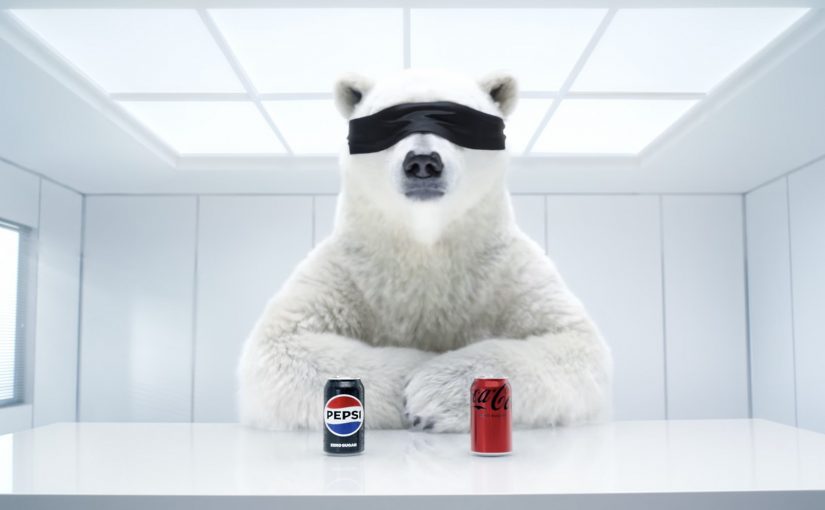
Pepsi came second, 12 million viewers still able to recall the brand the next day. Their polar bear blind taste test, Coca-Cola’s own mascot choosing Pepsi over Coke, landed because it was built on decades of competitive positioning and the oldest tactic from the cola wars: the challenge.

Dunkin

Dunkin finished third at 11 million. Ben Affleck’s star spangled sitcom parody is exactly what good advertising should be: emotionally engaging, distinctively coded, impossible to misattribute.

These three brands make a compelling case that Super Bowl advertising can work. Spend well, follow your strategy, and put your name into millions of minds and leave it there for a week. Factor in a hundred million viewers, the additional coverage, social amplification, and the required $8 million investment looks seriously worth it, particularly in the fragmented, chaotic media landscape we now inhabit.

The expensive part is not the media. It is the forgettability

The uncomfortable half of the Ipsos results is how many brands barely cleared the minimum bar. More than half the brands in the Ipsos data gained less than a percentage point of recall the morning after their ad ran. Each spent what most companies deploy as an entire year’s marketing budget. Each one has very little to show for it.

Ring

Ring managed 26th place with less than one million viewers recalling the brand the next day, roughly a twentieth of Budweiser’s number. Recall picked up later, likely driven by the outcry around the AI narrative in the spot.

Michelob Ultra

Michelob Ultra came 44th out of 45 brands after running a glossy, star studded spot featuring Kurt Russell, Chloe Kim, and T.J. Oshie. It cost a packet to produce, north of $8 million to air, and was instantly forgotten by almost every viewer of the big game. While recall improved a week later, that was most likely “ghost recall” from other spend rather than the Super Bowl moment itself. By “ghost recall,” I mean recall created by other media exposures that gets wrongly attributed to the Super Bowl airing.

It’s perhaps unfair to single out two brands when almost two thirds of those advertising during the Super Bowl failed so miserably to reach even the lowest bar in the persuasion hierarchy.

Why “familiar” beats “fresh” in 30 seconds

So what separates the winners from the losers? It’s mostly a story of consistency. Ring and Michelob Ultra made special Super Bowl ads. Budweiser and Pepsi didn’t. They extended long running brand codes into the Super Bowl opportunity. It’s not a small distinction.

Extractable takeaway: If your Super Bowl idea does not extend an existing set of brand cues, assume you are buying applause, not memory.

This was the 48th time the Budweiser Clydesdales appeared during the game. Clydesdales are large draft horses, and Budweiser has used them for decades as a signature brand cue in its advertising. Forty-eight years of the same visual assets and the same emotional territory. Think of it the other way: decades of ignoring hot agencies and ambitious new CMOs wanting to “put their stamp on things.” Either way, the sight of those horses trotting across a field now makes 20 million people think of one beer and one beer only.

“Distinctive assets” are repeatable cues, characters, music, visual codes, and phrases that people reliably link to a specific brand. When those cues repeat, viewers identify the brand faster and more accurately, which increases the chance the story is stored as brand memory rather than background entertainment.

Business intent. Buy memory, not applause

Most marketers know patience wins. But very few act on it, because patience is not rewarded in quarterly business cycles and it certainly won’t win many industry awards.

Our industry is structurally biased toward newness. Marketers want to make new ads, and agencies, who get paid to create new work and nothing to run the old, aren’t incentivized to argue with them.

The practical fix is to codify brand assets once, route them through every major channel and content workflow, and measure whether they still drive correct attribution outside the event itself.

Some brands use the biggest advertising night of the year to launch something bespoke, something special, something that will live nowhere after the post game debate ends.

Budweiser used it to add one more chapter to something it started building long before today’s marketing teams rotated in. The Clydesdales are not a campaign. They are compound creativity, and compound creativity is what memory looks like.

Steal this from the recall winners

  • Keep the Super Bowl brief brutally narrow. Your first job is correct attribution, then entertainment.
  • Write an “asset continuity brief” before the creative brief. Lock the 3 to 5 cues that must survive across TV, retail media, social, CRM, and e-commerce.
  • If you make a one-off Super Bowl ad, brand it hard. New characters plus subtle branding is the fastest route to being forgotten.
  • Measure decay, not just peak. Next day recall is the entry ticket. Day 7 tells you whether you made memory.
  • Use the same recall and attribution checks you trust in broader brand and performance reporting. Measure the Super Bowl as part of the system, not as a one-night exception.
  • Build for reuse. If the idea cannot live beyond one night, it is a very expensive dead end.

A few fast answers before you act

What is “spontaneous brand recall”?

Spontaneous brand recall is an unaided memory test. People are asked which brands they remember seeing advertised, without being shown options.

Why do long running campaigns usually win on recall?

Because repeated cues let viewers identify the brand quickly and correctly, which makes it more likely the story and brand get stored together in memory.

Does this mean you should never make a special Super Bowl ad?

No. Make the story special. Keep the brand cues consistent.

What is the fastest pre flight test before you approve the spot?

Ask neutral people: “Who is this for?” If they cannot name the brand quickly, the work is at risk.

What should you track besides recall?

Correct brand attribution, brand lift, search lift, and any downstream sales proxy you trust. Recall is the first gate, not the finish line.

Pepsi Max: Unbelievable Bus Shelter

Pepsi Max: Unbelievable Bus Shelter

Pepsi Max for its new ‘Unbelievable’ campaign rigged an ordinary bus shelter in London, to perform tricks on unsuspecting travellers.

Using a custom see-through digital display, people waiting at the bus shelter were made to believe that they were actually seeing things like hovering alien ships, a loose tiger, a giant robot with laser beam eyes and so on.

The reactions to these ‘unbelievable’ scenarios were then captured and put in the below viral video.

Why this works. Even before you talk about “tech”

The technology is impressive, but the mechanic is simple. Here, “mechanic” means the repeatable audience interaction pattern, not the underlying tech. It takes an everyday moment. It inserts a believable layer of impossible. Then it lets people do the rest. React, laugh, point, film, share. Because the impossible is framed inside a familiar “window”, disbelief lands fast and reactions become the content. In high-footfall urban out-of-home environments, a brand moment has to work wordlessly, in seconds, for strangers who did not opt in.

Extractable takeaway: If you can turn passive waiting time into a personally witnessed story, you get emotion, proof and distribution before you spend on media.

That is the real move. It transforms passive waiting time into a story that feels personally witnessed.

The bus shelter as a “media product”

This activation treats the bus shelter like a product interface, not just a placement. It has inputs and outputs. Here, “activation” means a physical installation that creates a live brand experience in public space.

  • Input. People arrive with low expectations and spare attention.
  • System. A “window” that looks like reality, then breaks it in a controlled way.
  • Output. Instant emotion, social proof from nearby strangers, and a camera-ready moment.

In other words, it is not only out-of-home. It is an experience designed to be recorded and re-distributed.

The real question is whether your experience turns bystanders into witnesses, and witnesses into voluntary distribution.

What makes it shareable. And why the video is the second product

The live moment is the first product. The viral video is the second product. The second product extends the reach far beyond the street corner.

Tech is optional. If the premise is not instantly legible, it will not travel.

  • High signal in seconds. You understand what is happening instantly.
  • Escalation. Each new “unbelievable” scene raises the stakes and keeps attention.
  • Human faces. The reactions are the content. The brand stays present but not intrusive.
  • Social permission. If others are reacting, you react too. Then you share.

What to take from this if you build brand experiences

  • Design the moment first. The best “viral videos” start as real-world moments people want to show others.
  • Keep the premise instantly legible. If it needs explanation, it loses momentum.
  • Make capture a feature. If people will film it, stage it so the footage works.
  • Build a repeatable format. One idea, multiple scenarios, consistent payoff.
  • Let the audience star. The most believable proof is human reaction, not brand claims.

A few fast answers before you act

What is Pepsi Max “Unbelievable” in one sentence?

It is a London bus shelter activation that used a see-through digital display to create impossible scenes, then turned real public reactions into a viral video.

Is this augmented reality?

It functions like augmented reality for the audience, because it overlays illusions onto what looks like a real street view, even though the experience is delivered through a physical digital screen.

Why do people share this kind of content?

Because it triggers instant emotion and disbelief, and it is easy to explain visually. People share it to pass on the surprise.

What is the key design principle behind the activation?

Make the better story happen in the real world. Then make it easy for the story to travel as video.

What is the practical takeaway for marketers?

When you create a moment that people genuinely want to record, distribution becomes an outcome of the experience, not a separate media plan.