
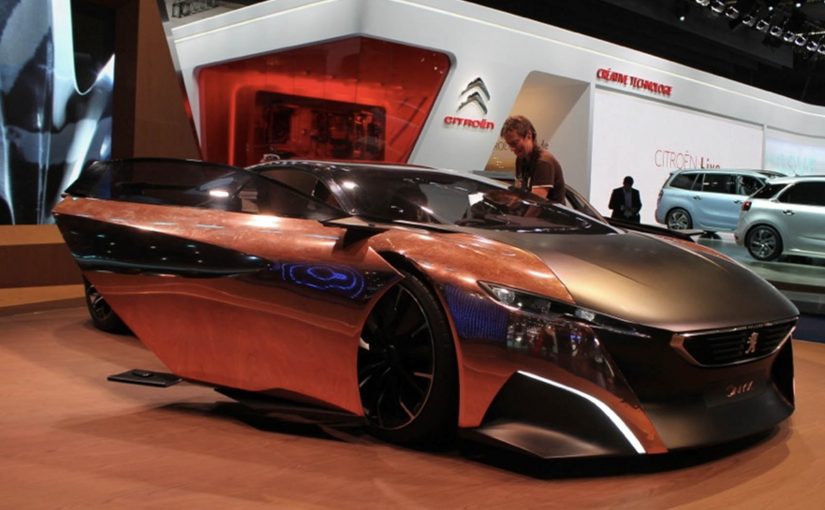
IAA 2013: Walk of Innovations

The 65th Internationale Automobil Ausstellung (IAA) has been running in Frankfurt am Main for the past two weeks. So on Saturday I decided to go for the motor show to catch up on the latest cars and also see first hand the much anticipated Nissan Nismo Watch.

Most of the car makers in this year’s show were also present in IAA 2011. In fact they were even located in the same stands as 2011, with the same high tech touch displays to promote their cars. The difference was that their 2013 car models were now more hybrid and or electric only, for example this new four seater Smart.
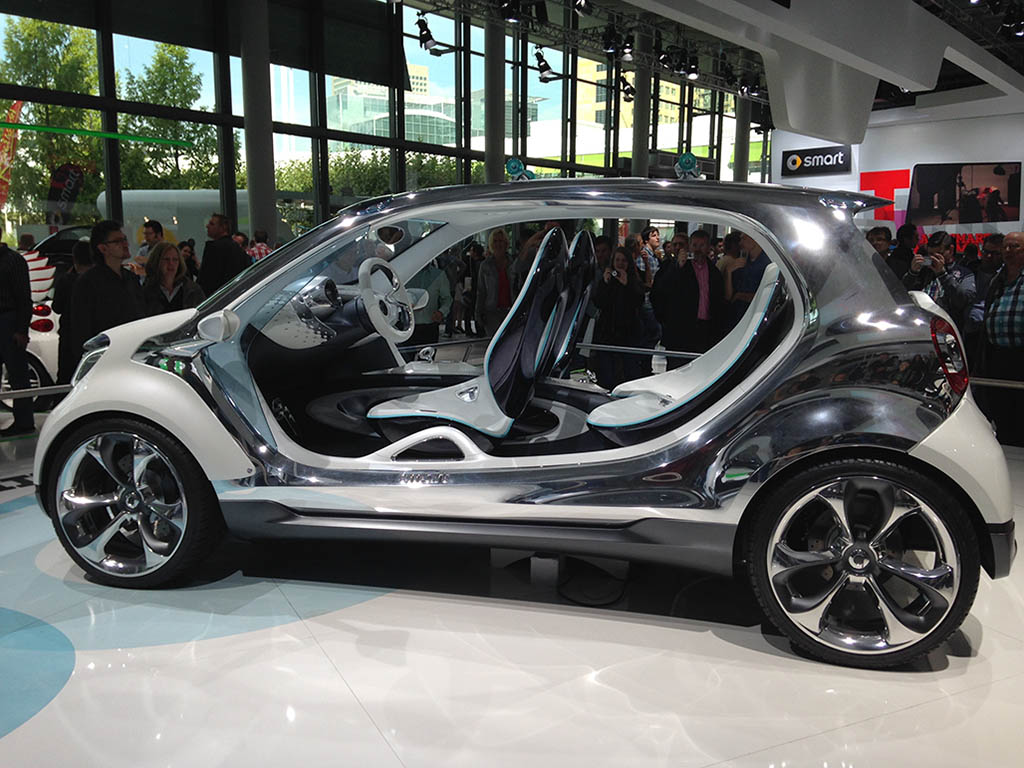
Mercedes four seater Smart

What changed on the floor

While I walked around and looked for changes vis-à-vis what was shown in IAA 2011, I noticed that apart from the now expected large screens and touch displays, car makers were using all kinds of social media to engage with their visitors.

Engagement snapshots by brand

Here is a quick photo report of my engagement experiences with the various car makers.

Audi
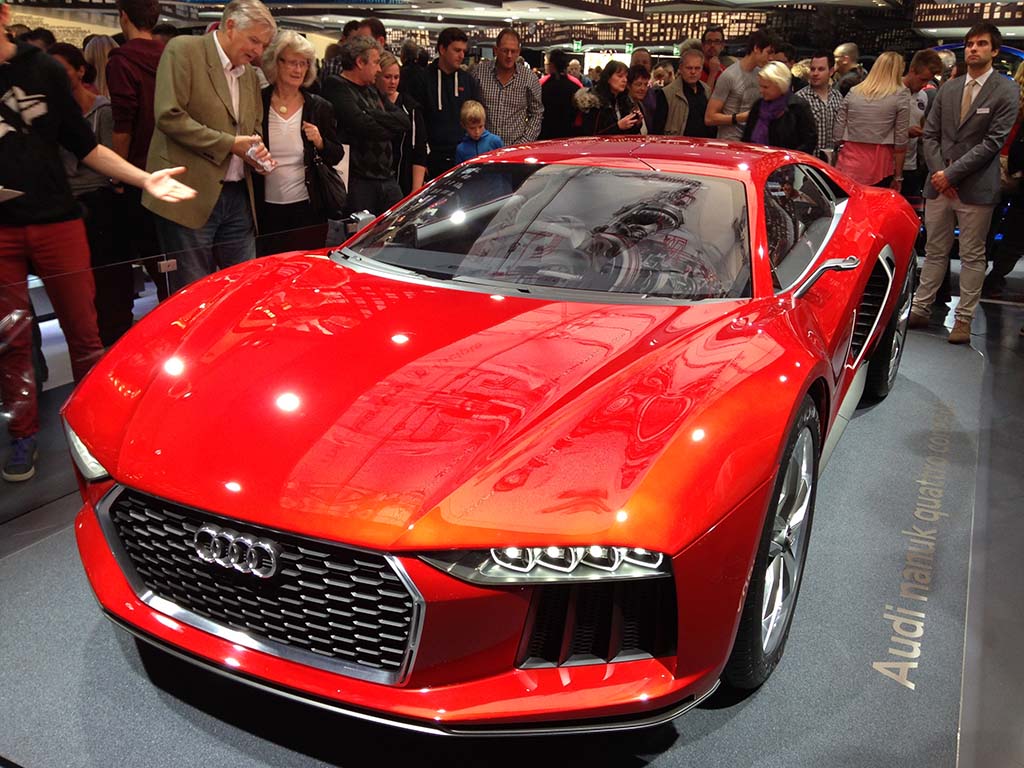
Audi Quattro Concept

To make sure I did not miss Audi this year due to 200+ people standing in line to get into the Audi stand, I decided to visit very early in the morning. The line was short, but there were already hundreds of people inside. On walking in, I noticed that the concept for the stand was taken straight out of the Hollywood movie “Upside Down”.
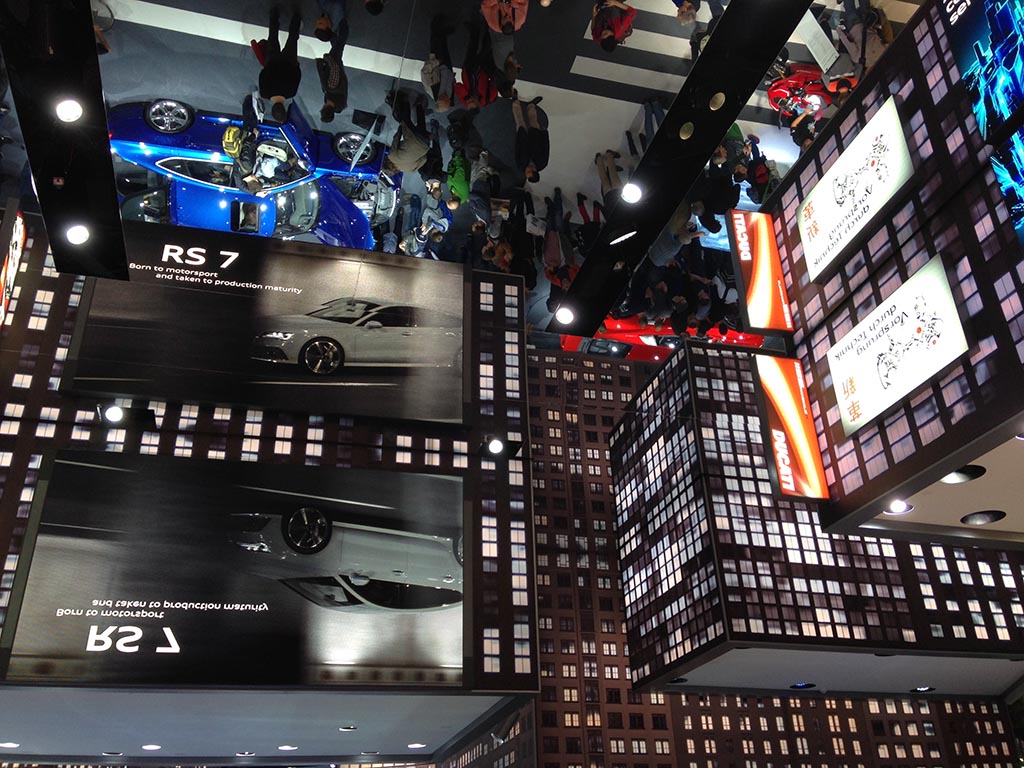
Audi Upside Down

Visitor engagement at the stand was driven through a special photo booth. While people waited in line they got an iPad to play a game and answer three questions about Audi. Winners got custom giveaways like keychains, gummy bears, etc. After that, visitors were ushered into the photo booth which superimposed the photos onto custom Audi backgrounds. Visitors could take home a printed copy and later also download soft copies from www.audiphotoautomat.com.

Mercedes

Next stop was the Mercedes stand which was also impossible to get into in 2011. From the below picture you can see why.
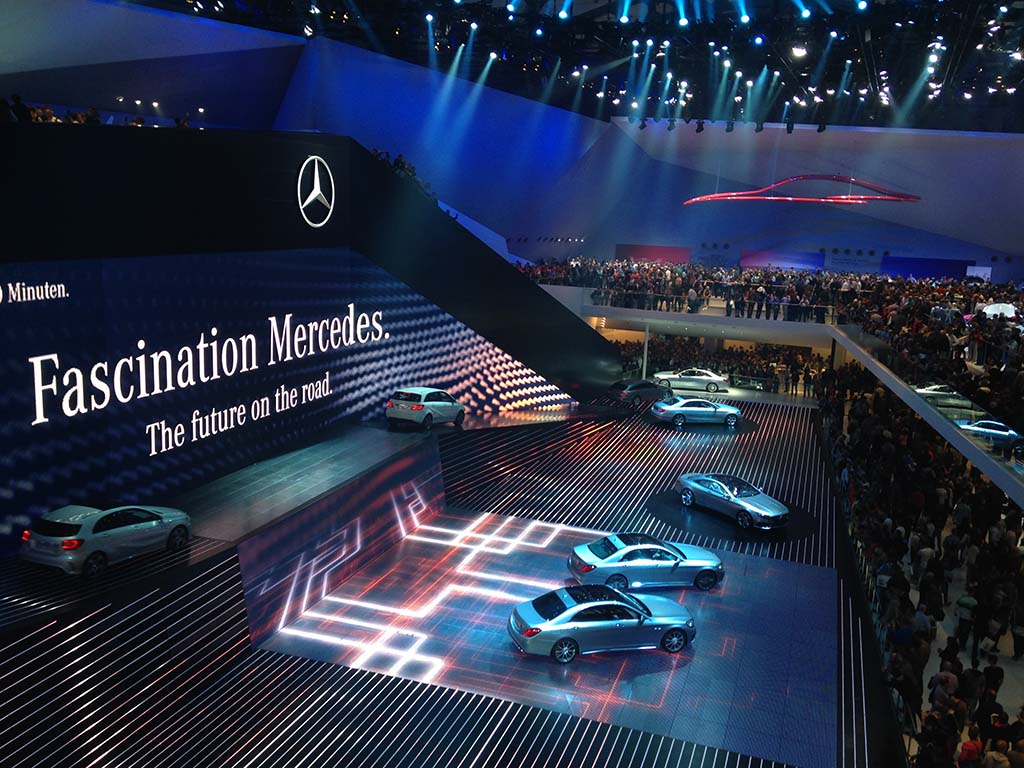
Fascination Mercedes

Mercedes put up a huge multi-sensory show that went on for over 20 minutes, while thousands of people just stopped and watched. Children visiting the stand were kept busy with car simulators.
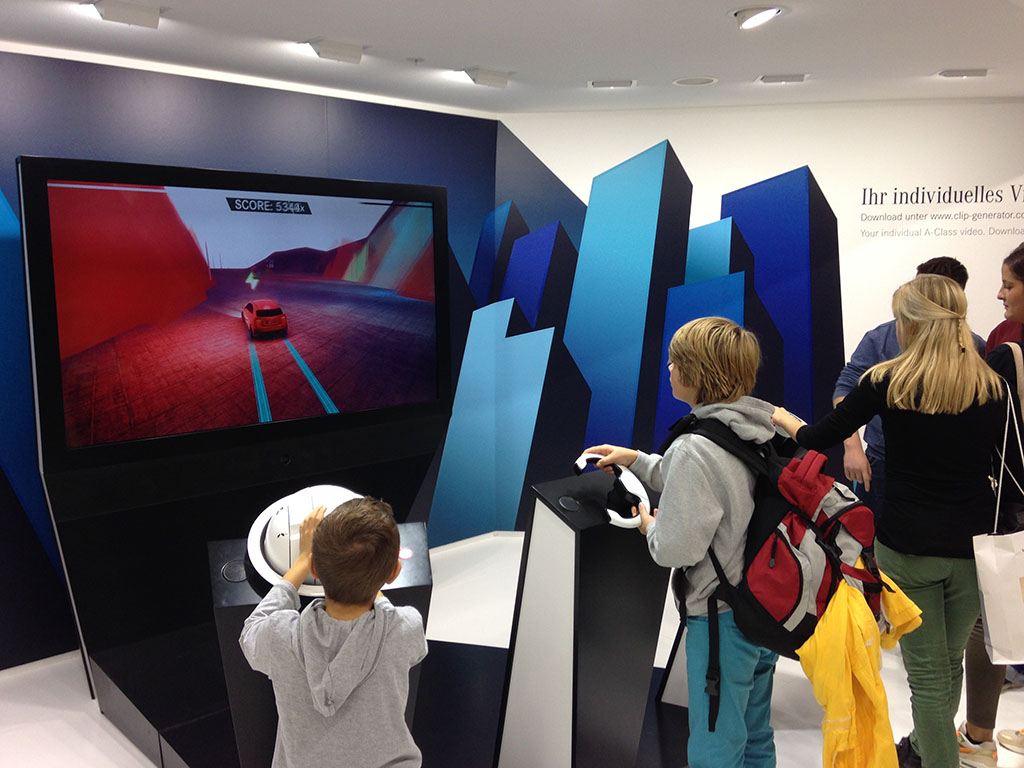
Mercedes Car Simulator

Outside the stand one could test drive the Mercedes off-road jeeps with the help of trained drivers.
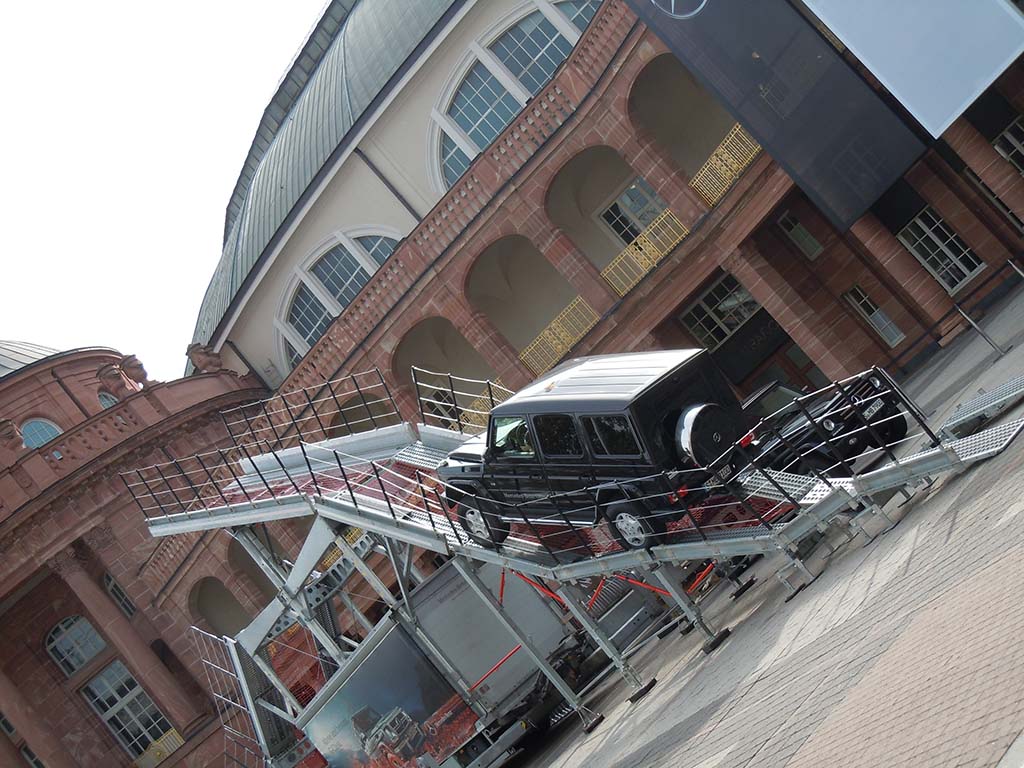
Mercedes Offroad Test Drive

Hyundai

Hyundai was the first car brand I came across that was using the event to generate Facebook fans. For liking the Hyundai Facebook page, fans at IAA could win a Hyundai i30.

Hyundai Like Us Pillar

The rear windscreen of the i30 was converted into a touchscreen which people could use to instantly “Like” the brand’s Facebook page or choose to receive the fan page link via email.
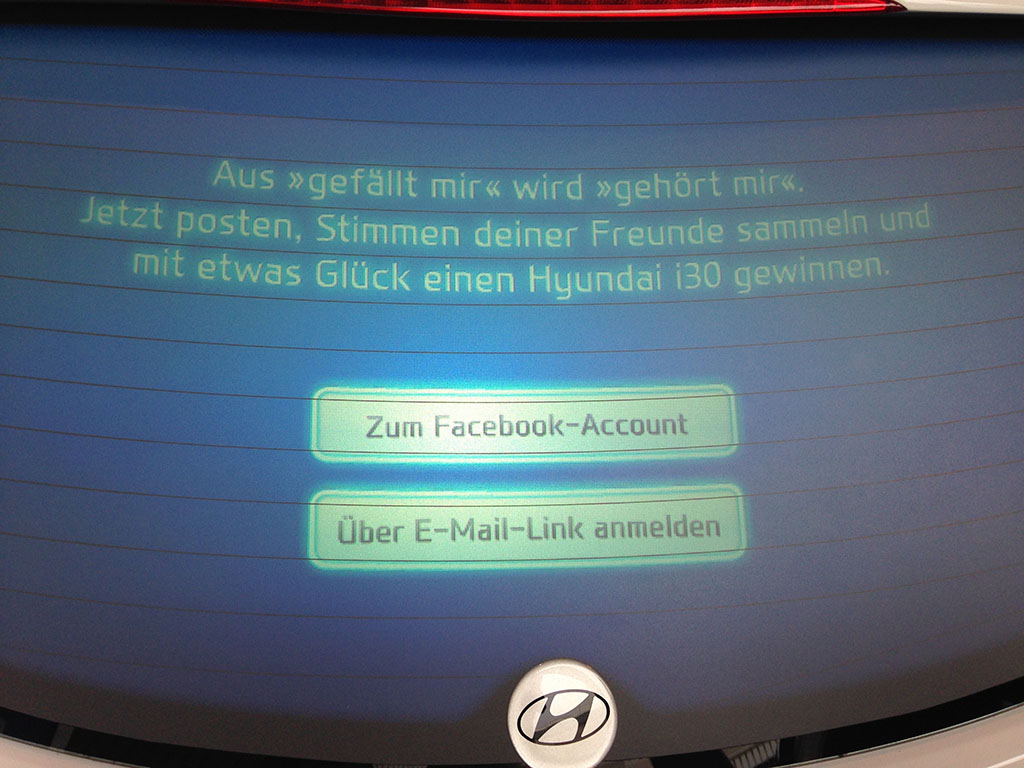
Hyundai i30 rear window

At the stand Hyundai also displayed a touchable music seat for hearing impaired drivers which vibrated as per the music being played. This was still in concept phase and the test seats were being developed out of Korea.
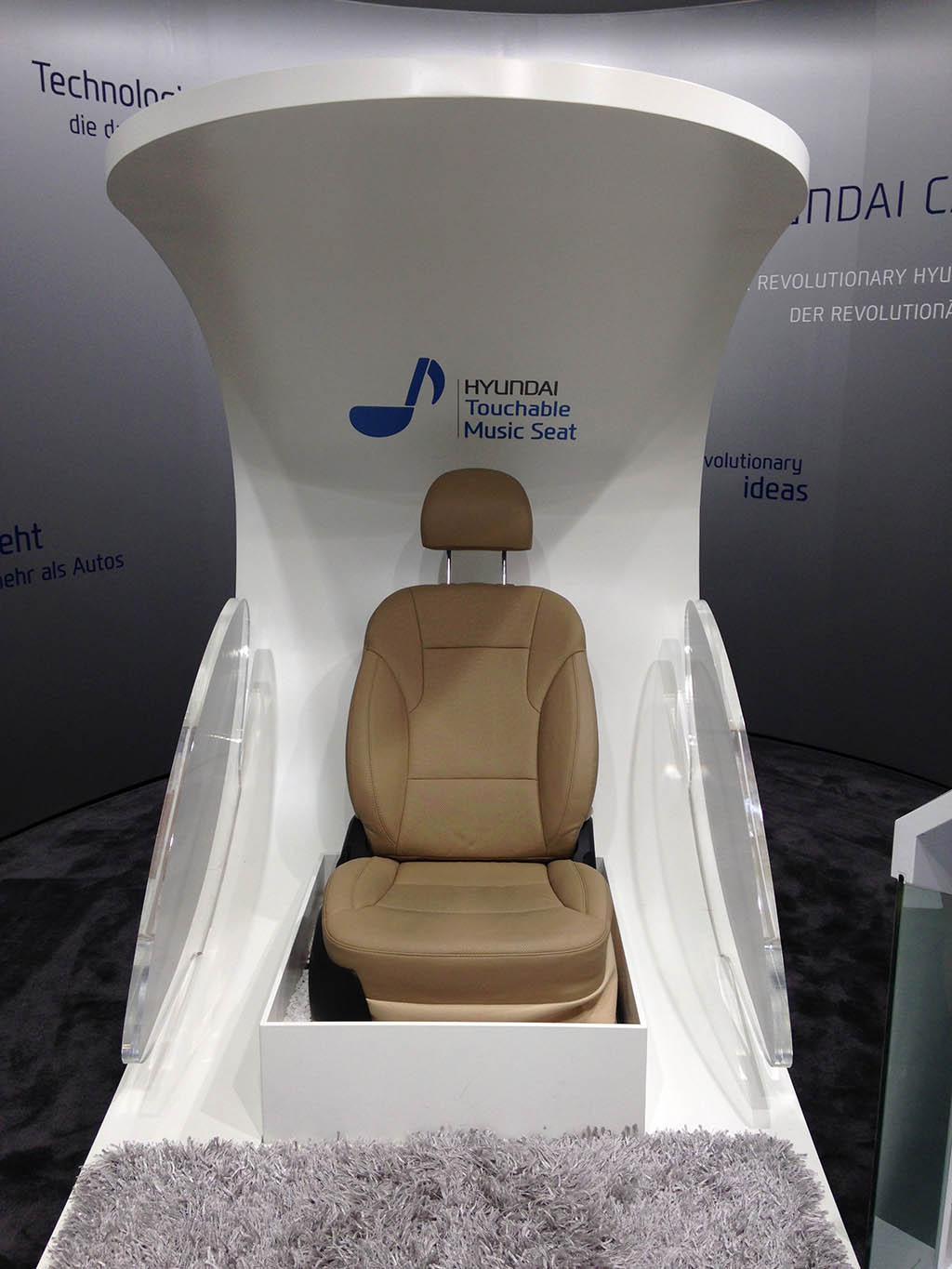
Hyundai Touchable music seat

Volkswagen

The Volkswagen “Think Blue” initiative was presented via an interactive augmented reality layer that was activated through the provided iPads.
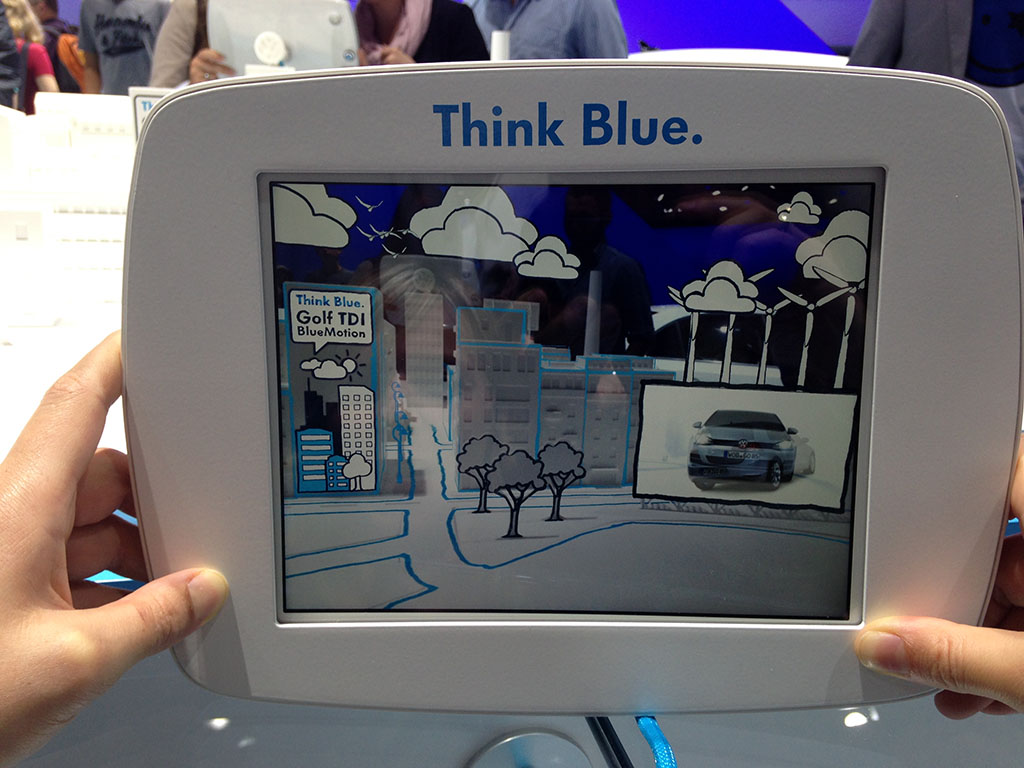
Volkswagen Think Blue

Skoda

Skoda explained their Green Line initiative via a wooden toy car that was supported by the animations in the embedded touch screens.
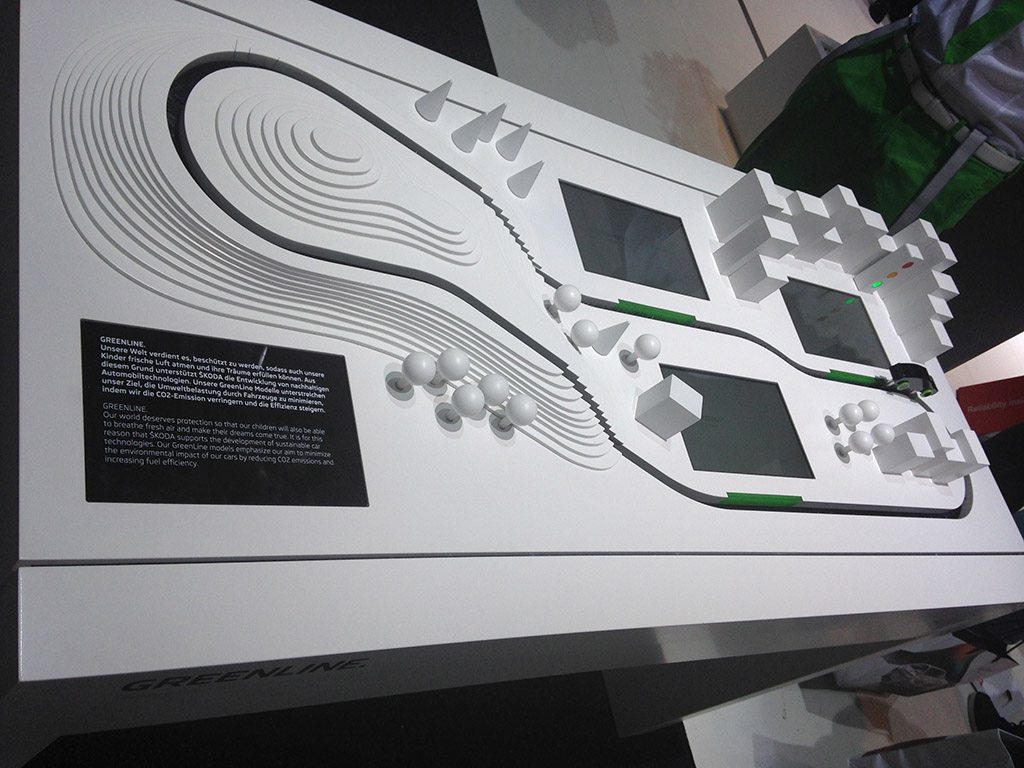
Skoda Green Line

At the neighbouring table kids were engaged with games around the Green Line initiative.
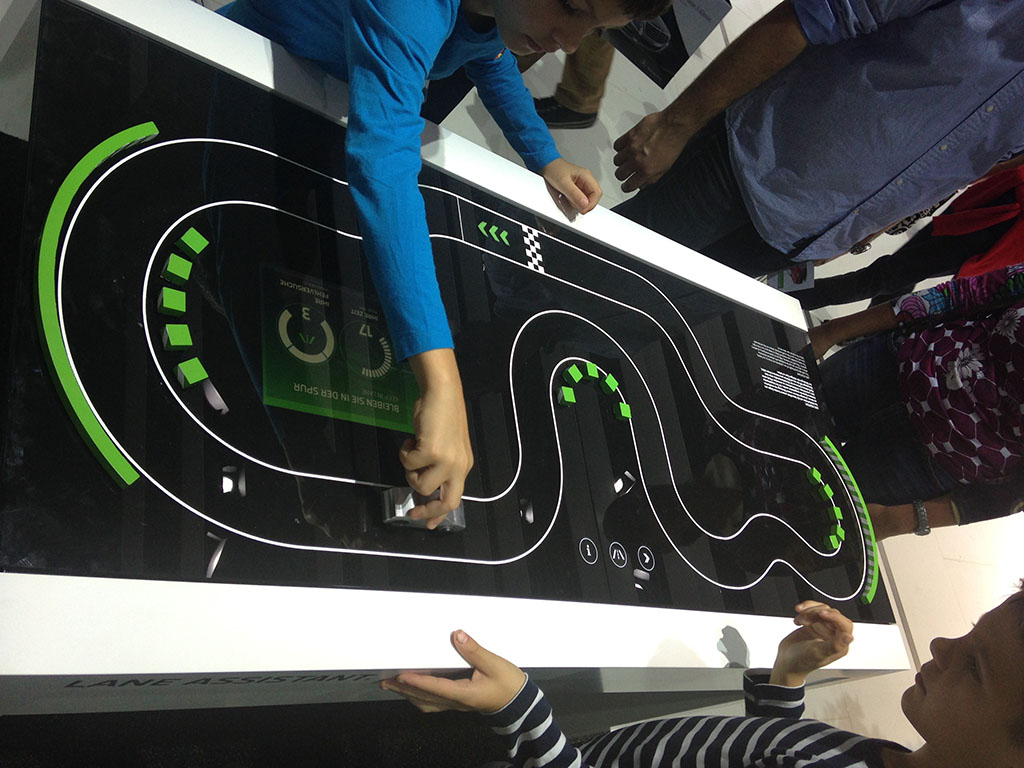
Skoda Green Line Game

Michelin

At the Michelin stand, visitors could take pictures with a virtual Michelin mascot and have the pictures emailed to themselves instantly.
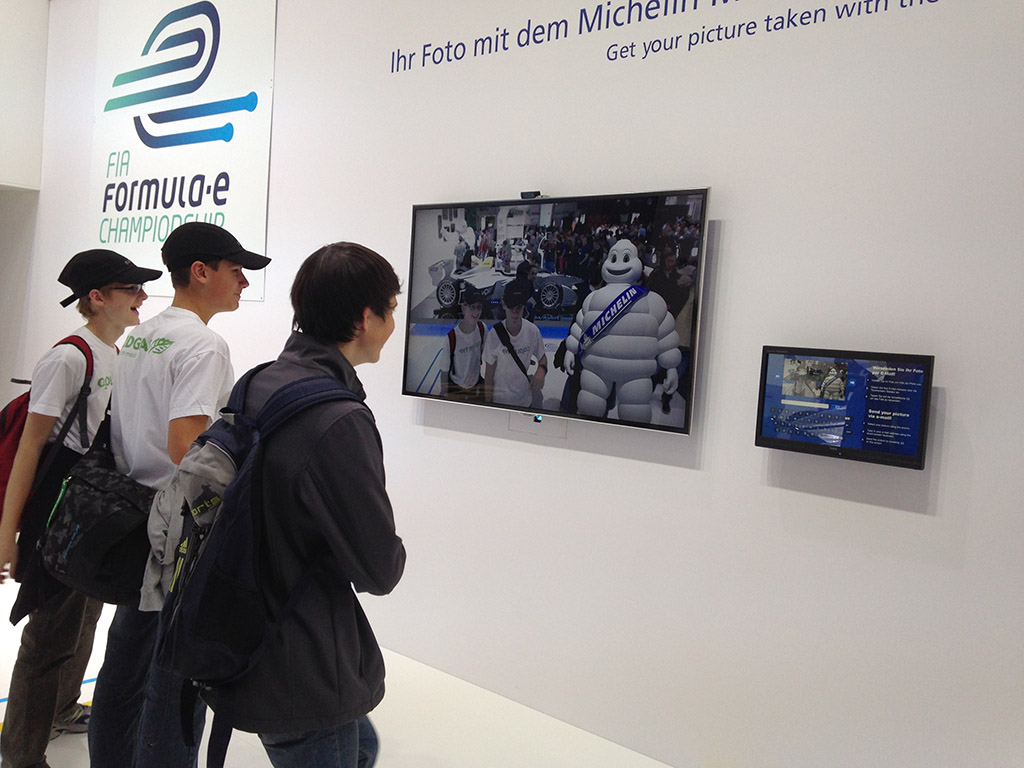
Michelin Mascot

Nissan

After having written about the Nissan Nismo Watch last week, I could not wait to see the real watch in action. But to my disappointment the watch was not there as announced. There was only a plastic dummy on display.
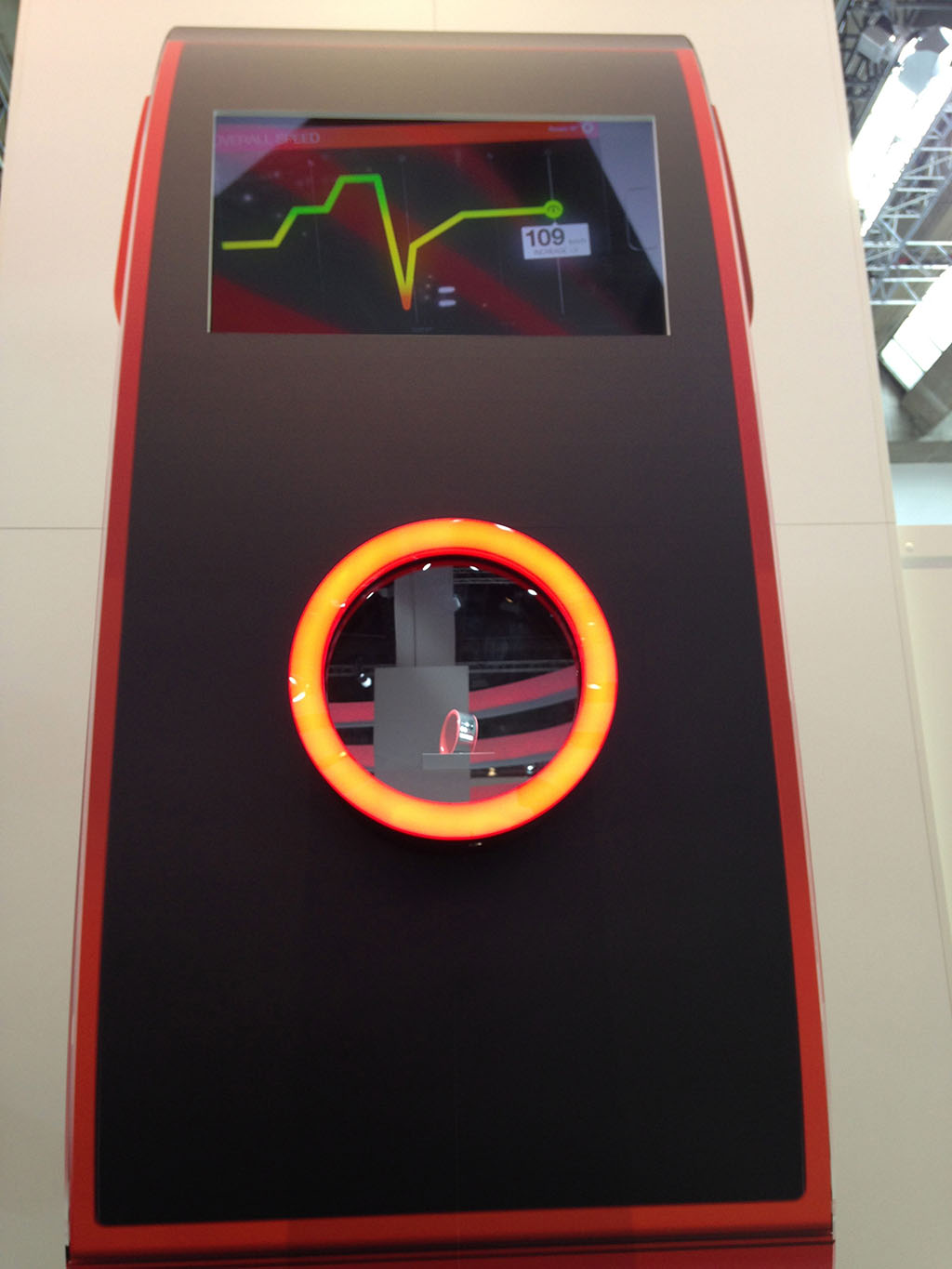
Nissan Nismo Watch

But I did take Nissan’s version of real life “Likes” for a spin (first spotted at the Renault stand in the 2011 Amsterdam Motor Show).
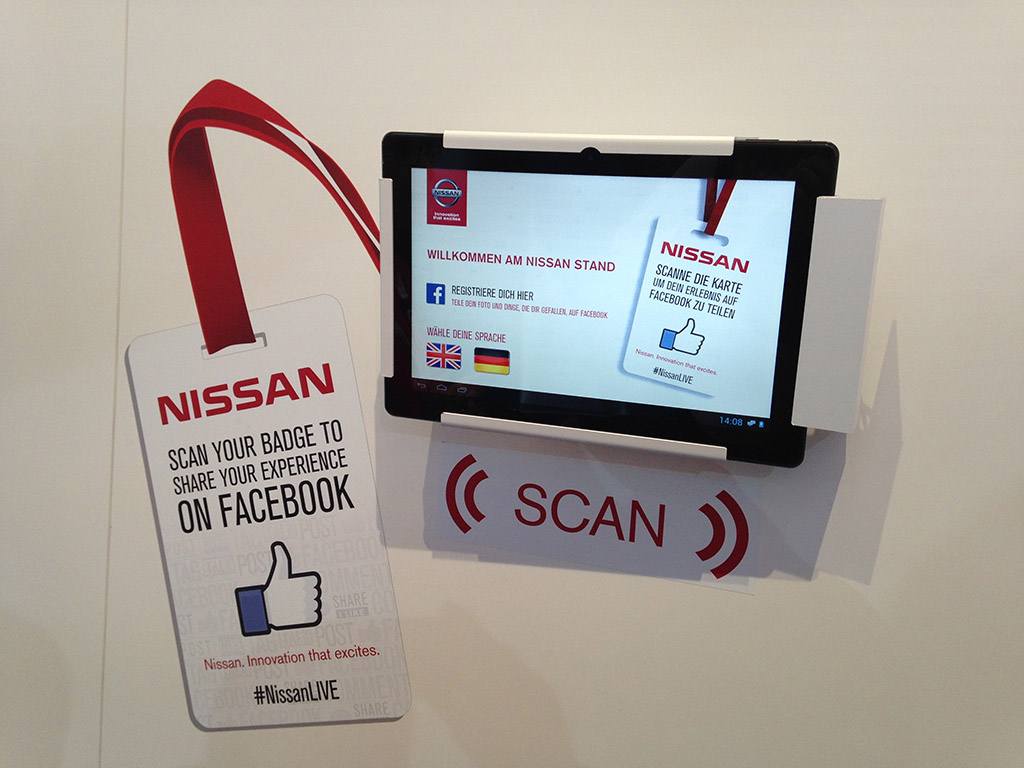
Nissan Real Life Likes

The RFID badges allowed visitors to post custom Nissan branded pictures of themselves onto Facebook.
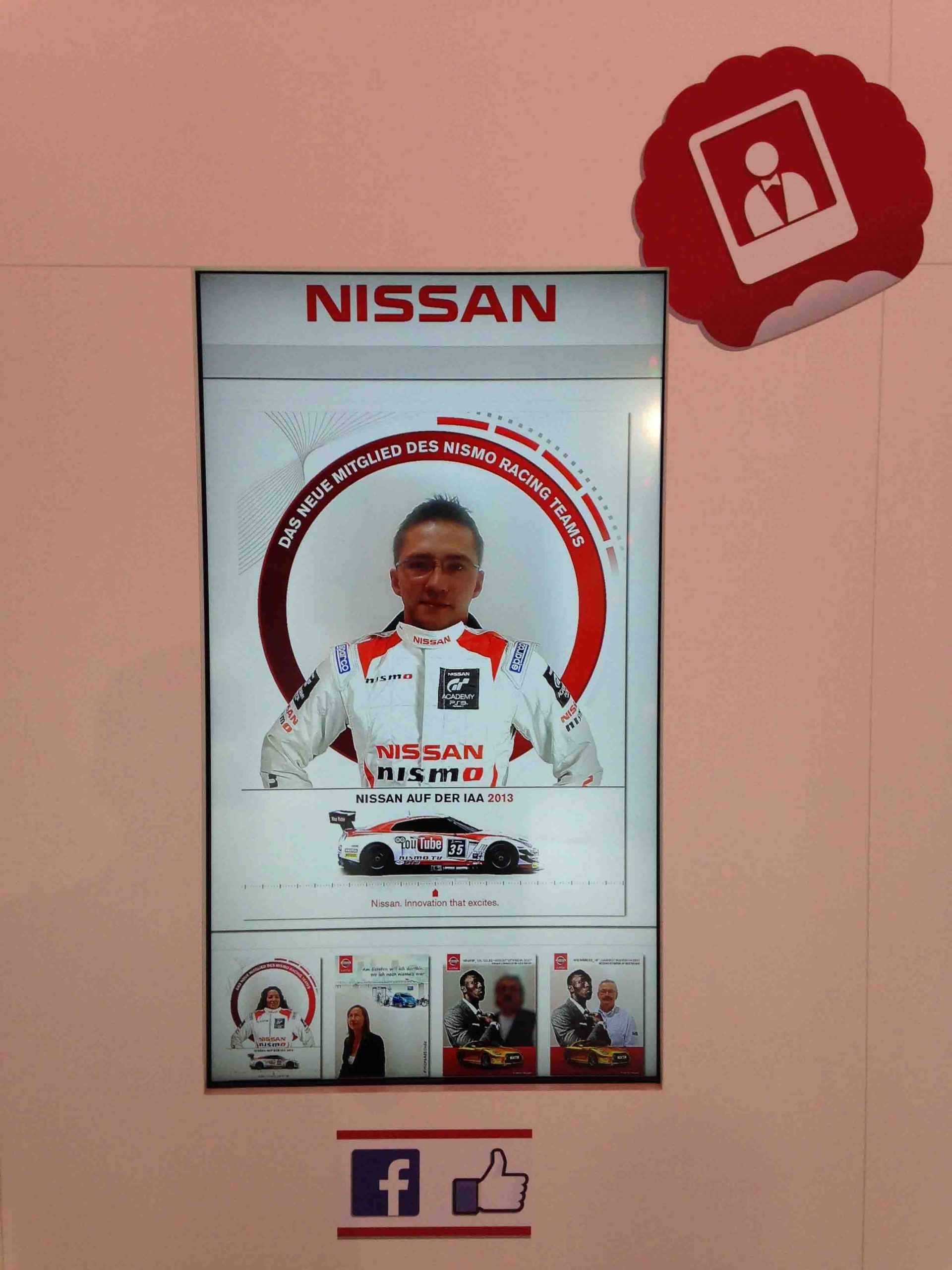
Nissan Facebook Pillar

Visitors were also given the option to share the cars they like on Facebook via special Like buttons built into the car info pillars.
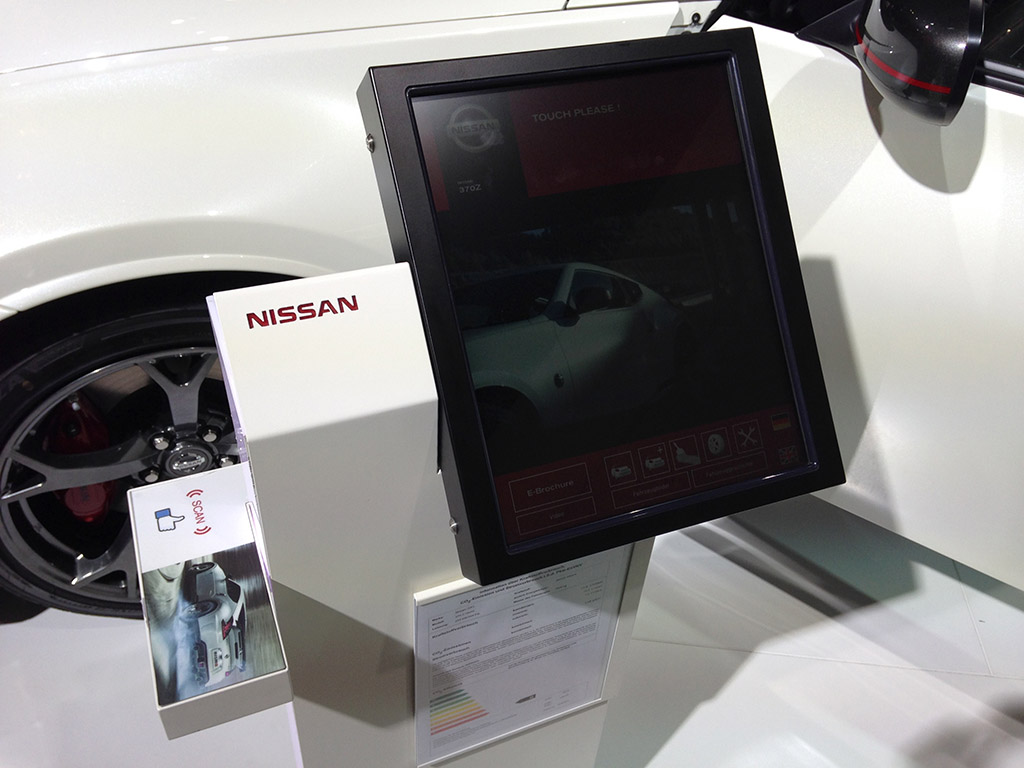
Nissan like a car button

Ford

At the Ford stand this year visitors were given head and shoulder massages.
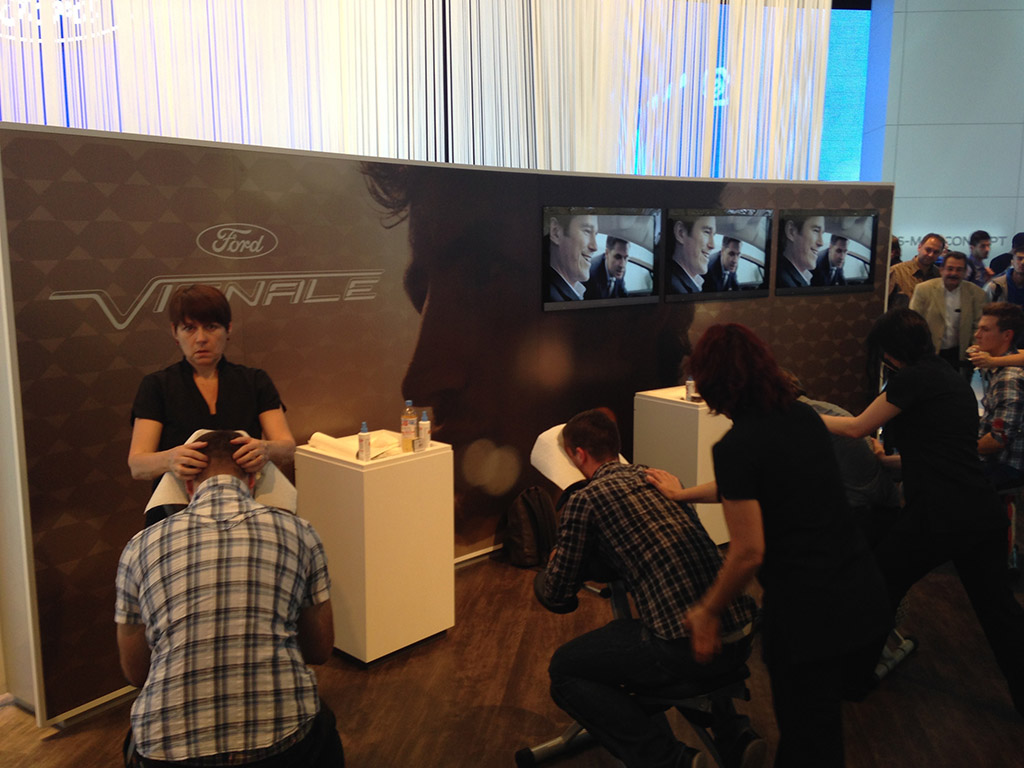
Ford head and shoulder massages

Then to experience the Ford EcoBoost, visitors were put in front of a leaf blower and their reactions captured and uploaded on the Ford Flickr channel.

And for the more social visitors, Ford had a Twitter based contest running.
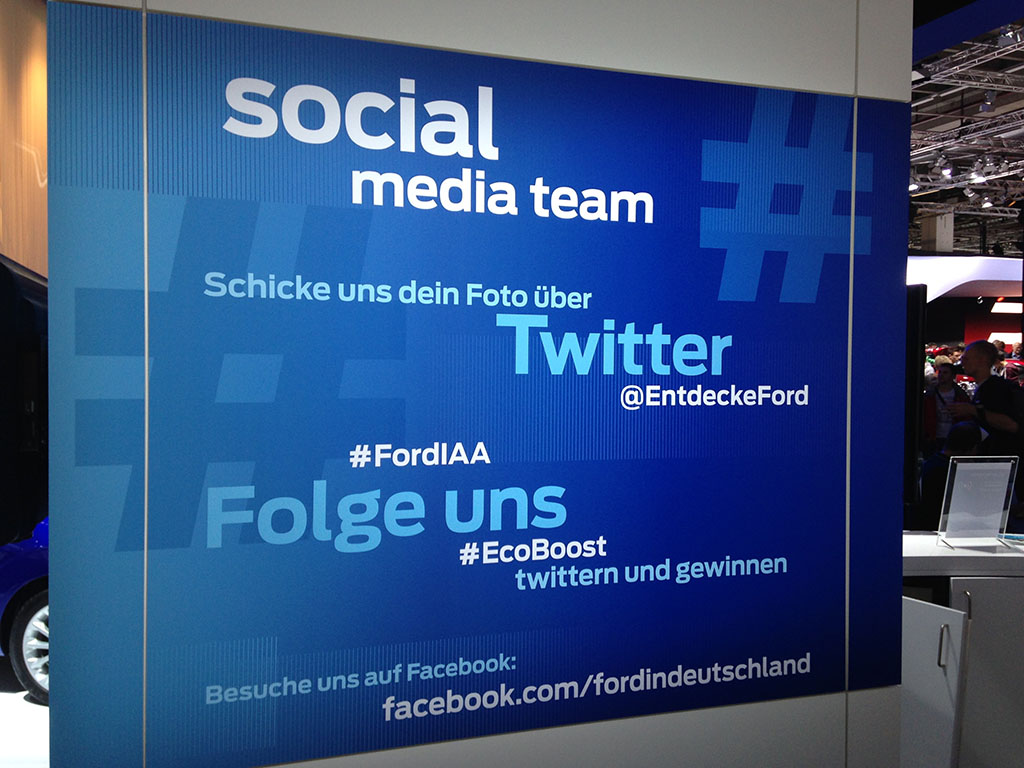
Ford IAA Twitter Contest

Kia

At Kia, visitors could superimpose their heads onto a football player and then have the custom postcard sent to their email IDs.
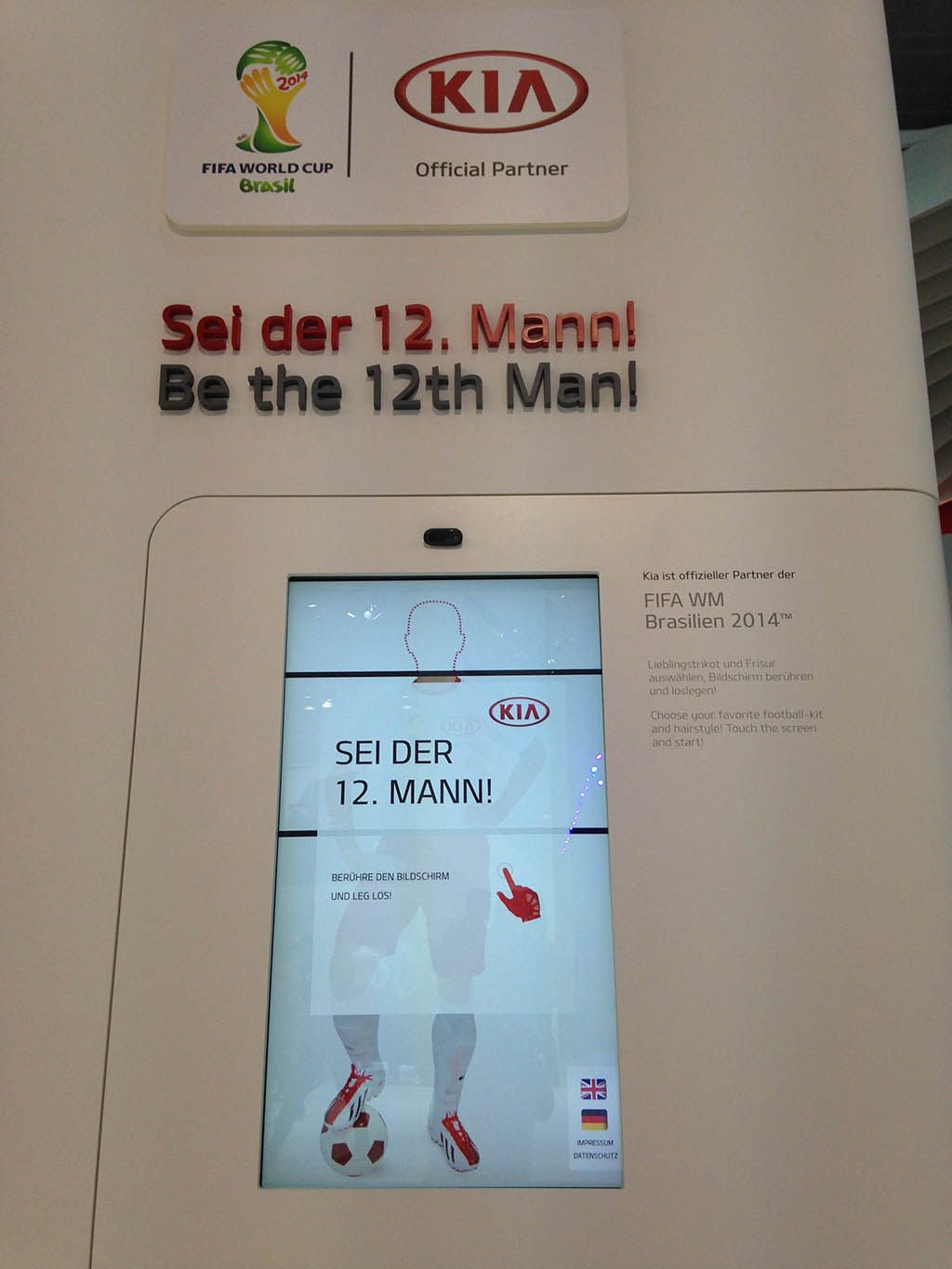
Kia 12th Man

Chevrolet

Visitors at the stand could make small flipbooks of themselves doing funny dances in front of the main character of the Hollywood film “Turbo”.
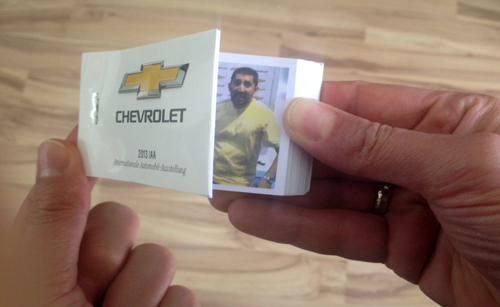
Chevrolet Flipbook

Or they could write special messages to their loved ones on a piece of paper and the team at Chevrolet would instantly convert them into wearable badges.
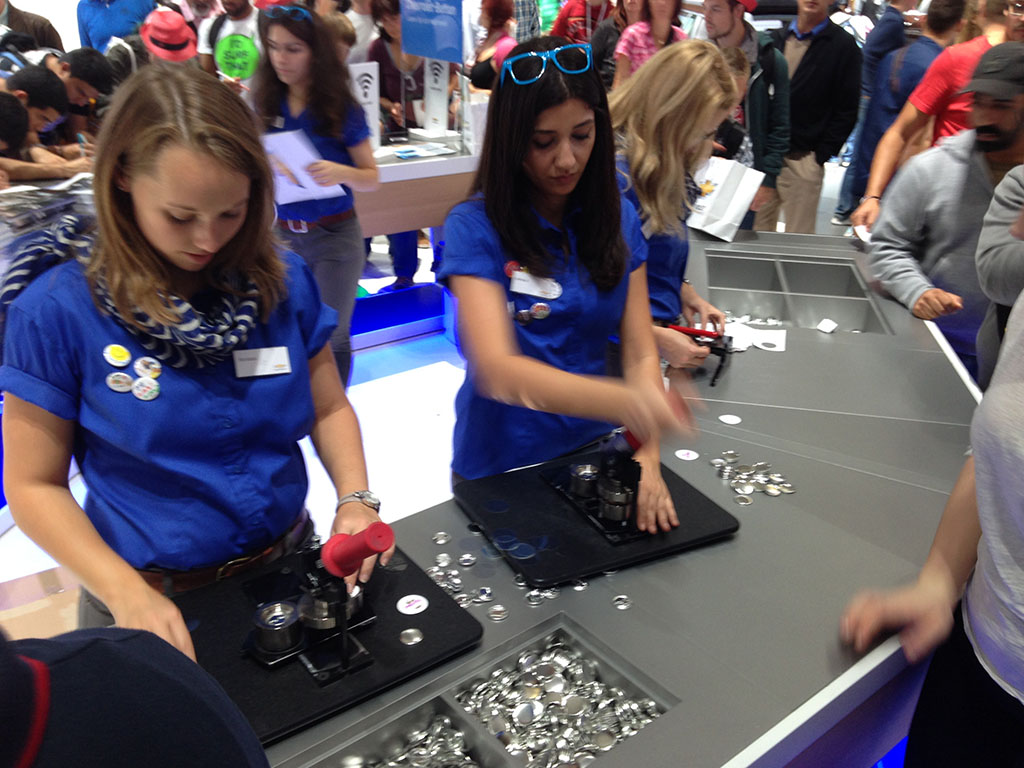
Chevrolet Badges

Chevrolet was also the only car maker at the IAA who was using Foursquare to offer discounts on their show merchandise.

Chevrolet Foursquare Check-in Special

Mini

Mini this year gave visitors the option to body paint their cars and email the photos to themselves.
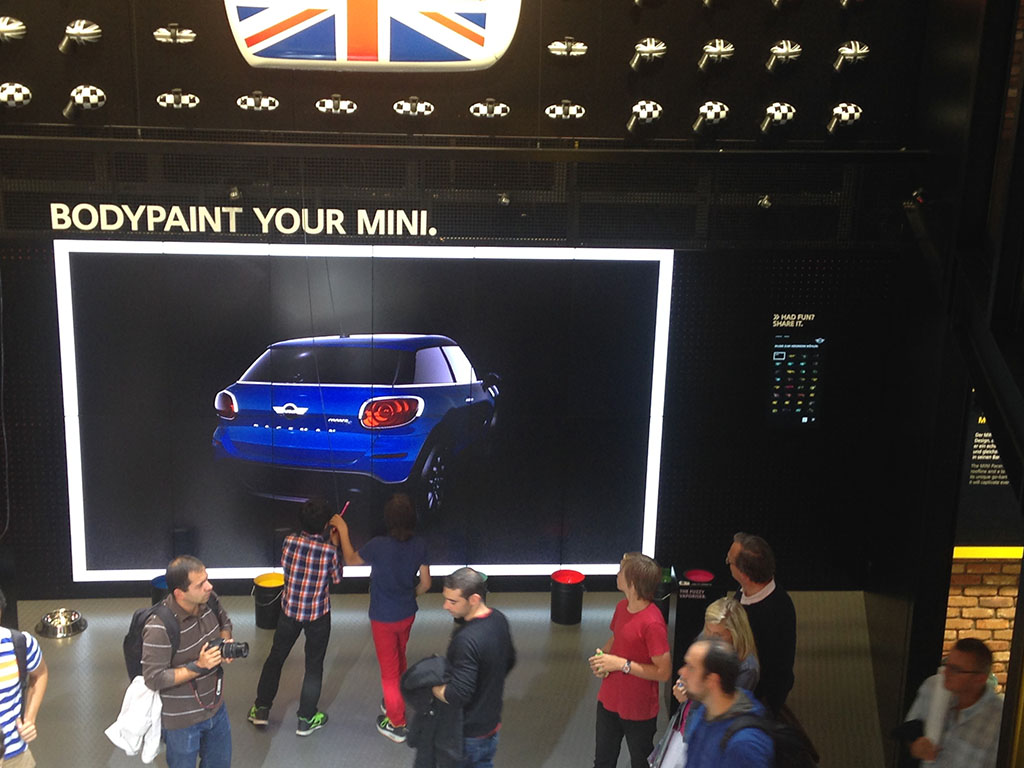
Bodypaint your Mini

Visitors could also slide down a specially created tunnel at record speeds that were also photographed and displayed on a large overhead digital screen.
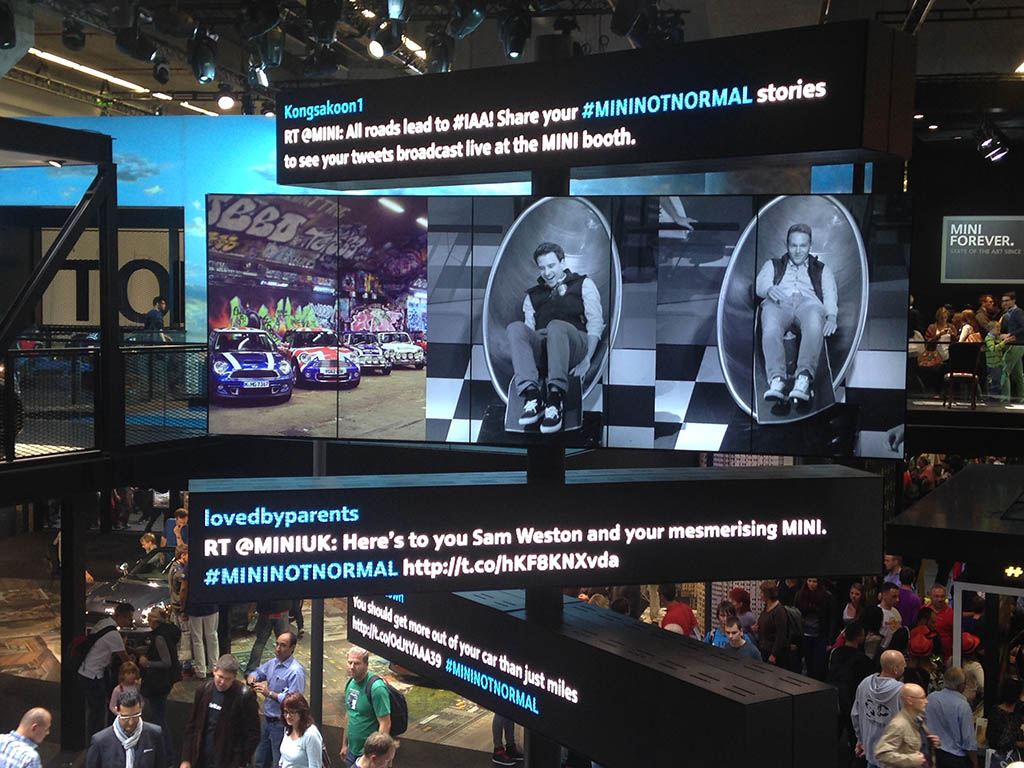
Mini Slide

BMW

BMW, like Mercedes, put up a multi-sensory show at their stand. But compared to Mercedes it was short and not as extravagant. Still pretty impressive.

BMW X5

Kumho Tyres

On the way out I spotted Kumho Tyres giving away various petrol and tyre related coupons. To win the coupons visitors had to catch them while being closed inside a wind cabin.
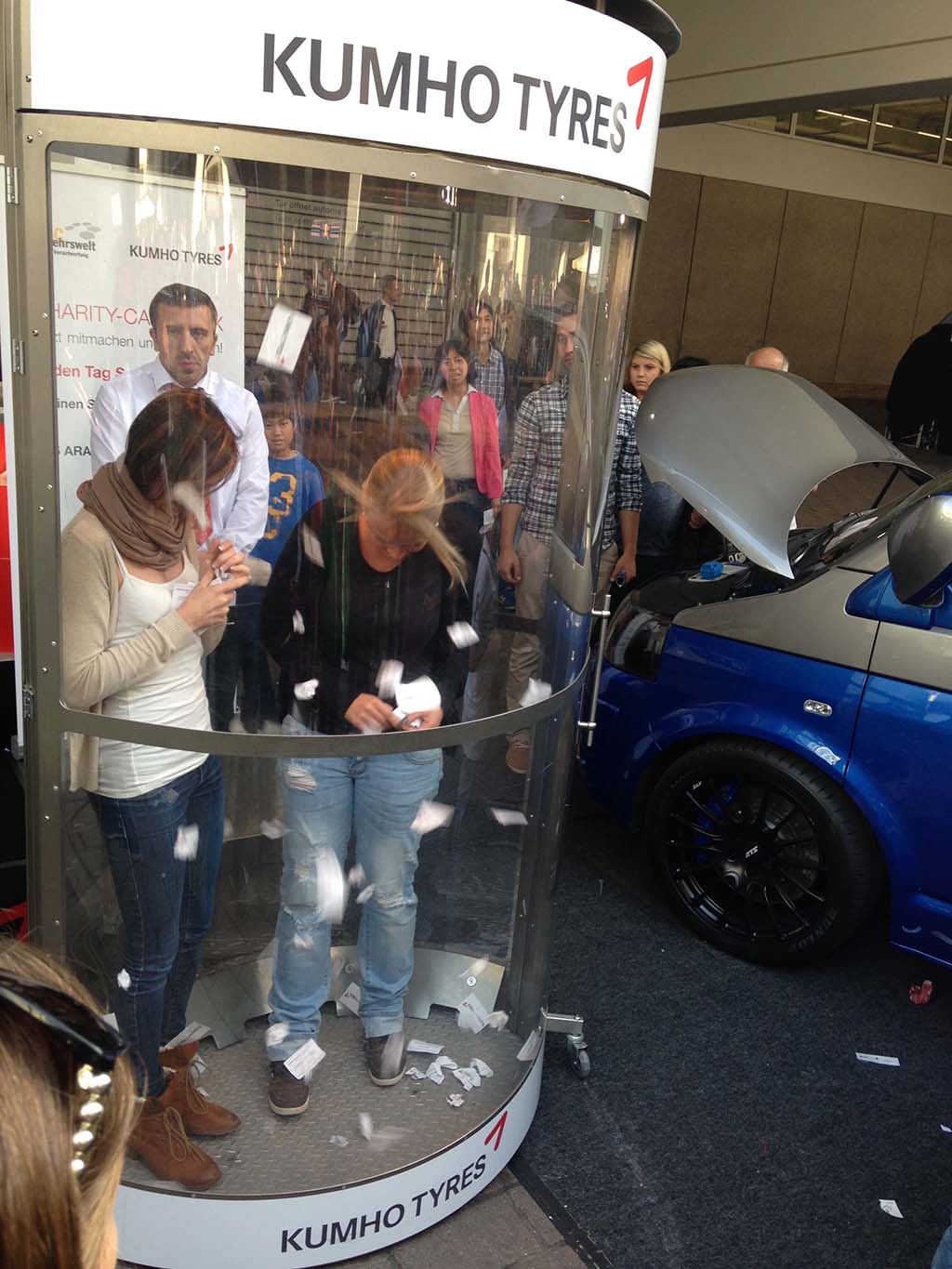
Kumo Tyres Coupons

Why this direction matters

Across the stands, the consistent pattern is not “more screens”. It is more reasons to create something. A photo. A badge. A flipbook. A posted image. A public interaction that becomes proof you were there. The stand stops being a catalogue, and starts behaving like a content studio that rewards participation. The real question is how a stand turns a visitor into a willing participant and publisher. The strongest stands here are the ones that give people something to make, not just something to look at. That works because visitors are more likely to remember, share, and talk about an experience when they leave with something they helped create.

Extractable takeaway: If you are designing for an event, do not start with channels. Start with a social object, meaning a photo, badge, flipbook, or other shareable artifact people can take away, share, or replay. Then build the simplest capture and distribution loop around it.

In large European trade shows, brands increasingly treat the stand as a live media channel where every interaction can become a shareable moment.

And that was a quick overview of what I experienced at the 65th Internationale Automobil Ausstellung. (To read about my experience at the 2011 show, click here.)

Until the next show in 2 years. This is Sunil signing off from IAA 2013.

What to steal from IAA 2013 for your next show

  • Queue utility. If people must wait, give them something to do that feeds the experience (Audi’s iPad game and questions).
  • Instant takeaways. Printed photos, emailed images, and small artifacts create memory and sharing triggers.
  • Low-friction publishing. RFID, built-in Like buttons, and email delivery reduce the “I’ll do it later” drop-off.
  • Make participation visible. Leaderboards, overhead screens, or public displays turn individual actions into crowd energy.
  • Match the mechanic to the brand truth. Eco themes paired with AR explainers, performance themes paired with physical challenges.

A few fast answers before you act

What is this IAA 2013 “walk of innovations” about?

It is a photo report from the IAA show floor in Frankfurt, focused on how different car brands used interactive touchpoints and social mechanics to engage visitors.

What is the main shift versus earlier shows?

Beyond large screens and touch displays, more stands are designed around capture and sharing, photo booths, RFID check-ins, instant email delivery, and social prompts.

Which engagement mechanics show up repeatedly?

Instant content creation (photos, flipbooks), low-friction sharing (RFID, embedded Like buttons), and public spectacle (multi-sensory shows, overhead displays).

What is the practical lesson for event marketers?

Design one clear participatory moment that produces a social object, then remove friction from capture and delivery so visitors can share immediately.

How do you keep these activations from feeling gimmicky?

Anchor the mechanic to a brand truth, and make the output useful or delightful for the visitor, not only promotional for the brand.

Nissan NISMO Watch

To say the smartwatch industry is on the verge of exploding would be an understatement. Consumer electronics companies and chip makers are not the only players entering the wearable tech space. Nissan recently announced it is joining the fray too, with what it bills as the first smartwatch concept to connect the car and driver.

There are already a number of smartwatches on the market, including Pebble, i’m Watch, Sony SmartWatch 2 and Samsung Galaxy Gear. But out of all of them, this is the coolest looking and it actually maps to a real use case for Nissan performance fans.

Nissan is scheduled to show off the device, dubbed the Nissan NISMO Watch, at the Frankfurt Motor Show. From the video it looks pretty awesome, so I cannot wait to see it when I visit the Frankfurt Motor Show next week.

What the NISMO Watch is trying to do

Nissan positions the watch as a bridge between driver and car. The concept is designed to connect via a smartphone app using Bluetooth Low Energy, a low-power wireless connection, and surface data that drivers and track-day fans care about, such as average speed and fuel consumption, plus broader vehicle telematics, meaning sensor and usage data from the car, and performance information.

It also leans into biometrics. The concept includes a heart rate monitor, framing the watch as a way to understand not only the car’s performance, but the driver’s state too.

In automotive performance culture, wearable concepts like this are as much about brand signaling as they are about immediate product rollout.

Why this is a smart brand move

NISMO is Nissan’s performance identity. A watch is a compact, always-visible object that can carry that identity beyond the car itself. If you can make “performance data” feel personal and wearable, you turn a brand into a daily habit, not only a purchase decision.

Extractable takeaway: When your differentiator is performance data, make it personal and habitual by packaging it as something people wear between driving moments.

The concept also stretches beyond driving. Nissan’s own materials describe a “social performance” layer, where the watch can track activity across major social networks. Even if that is more provocative than practical, it makes the point: the watch is meant to be a connected lifestyle object, not only a dashboard mirror.

The real question: usefulness vs distraction

The real question is whether this becomes useful insight or a new source of distraction. Anything that surfaces data while driving needs restraint. The best version of this idea is “track-day and post-drive insight”, not “more screens in motion”. If the watch becomes a reason to look away from the road, the concept backfires.

Steal-worthy moves for performance-product marketers

  • Export the benefit into a new object. If your differentiator is hard to demo, move it into something people can touch and wear.
  • Combine machine data with human data. “Car telemetry plus biometric state” is a stronger story than either alone.
  • Make the design do half the selling. If it looks like performance gear, people will want to try it before they understand the spec sheet.
  • Keep the experience context-safe. Design interactions for before and after driving, not during critical moments.

A few fast answers before you act

What is the Nissan NISMO Watch?

It is a smartwatch concept Nissan unveiled for its NISMO performance brand, positioned as a way to connect driver and car by showing vehicle performance data and driver biometric data.

How does the watch connect to the car?

Nissan’s release describes connecting via a smartphone app using Bluetooth Low Energy, so the watch can receive telemetry and performance information.

What kind of data does it show?

Reported features include average speed and fuel consumption, access to vehicle telematics and performance data, and biometric capture via a heart rate monitor.

Why would an automaker build a smartwatch concept?

Because it signals innovation, extends the brand into daily life, and creates a tangible way to talk about connected-car data and performance identity beyond the vehicle.

What is the biggest risk with wearables tied to driving?

Distraction. Any design that encourages glances during driving can be unsafe, so the value needs to skew toward track use and post-drive insights.

smart: eBall interactive ping pong duel

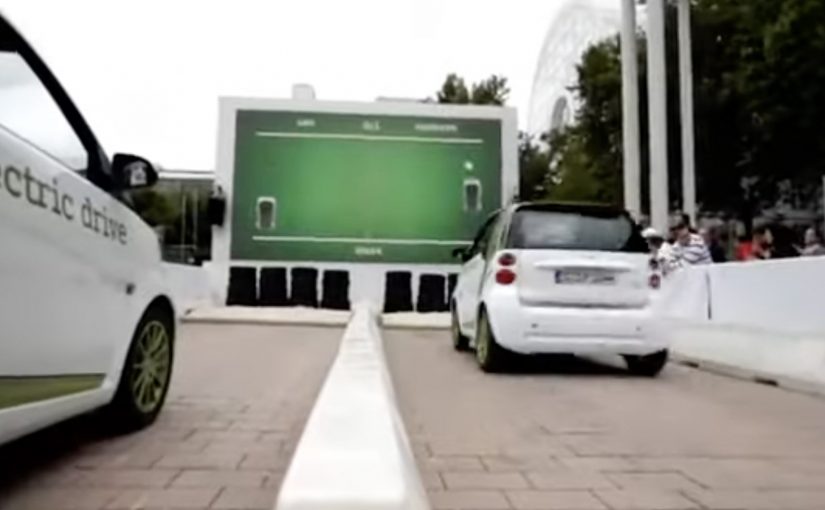
At the Frankfurt Motor Show (IAA) in 2011, Daimler promoted the third generation smart fortwo electric drive with a special interactive game event. Berlin-based Proximity BBDO designed a game called eBall that translates the joy of a highly responsive car into something visitors can play.

Visitors sign up with their driver’s license, get quick instructions on forward and reverse, and then step into a live ping pong duel. Instead of a controller, they use the car itself. Driving forward and back moves the “paddle,” with measurement technology tracking the rally on a large display.

When “responsive” becomes the gameplay

Electric drive messaging often struggles because it is full of abstractions. Efficiency, torque, responsiveness. eBall makes one of those claims physical. The faster and more precisely you control forward and reverse, the better you play. That is a rare alignment. The product behaviour is the mechanic.

Extractable takeaway: If your product promise is about control, speed, or precision, build an experience where performance is visible to a crowd and felt by the participant in under a minute.

In European automotive launches, live interaction works best when it turns a technical attribute into a simple skill people can feel and repeat.

The real question is whether your interaction turns the claim into a repeatable skill, not a slogan.

The tech trick is invisible on purpose

As described in coverage of the installation, the paddles on the LED wall are controlled by two real smart fortwo electric drive cars using laser measurement and transmission technology. The important detail is not the hardware. It is the immediacy. When the wall responds instantly, the player trusts the cause-and-effect and stays in the duel.

Why the driver’s license step matters

The license check does two jobs. It manages safety and liability, and it creates a small “this is real” threshold. You are not playing a simulator. You are operating a vehicle in a branded arena. That seriousness increases attention, and it makes the win feel earned.

What smart is really selling here

eBall does not try to convince you with specs. It frames the car as a fun, responsive object that behaves like a sports device in the hands of the driver. The subtext is clear. If it can play ping pong with precision, it will feel effortless in tight city driving too.

Moves worth copying in event mechanics

  • Translate one attribute into one action. “Responsive” becomes “hit the ball back.” No extra storytelling required.
  • Design for spectators. The LED wall makes the game readable from distance, so the crowd becomes the amplifier.
  • Keep the control model binary. Forward and reverse is legible, teachable, and low-cognitive-load.
  • Make the feedback immediate. Interactivity only feels truthful when response is fast.
  • Engineer the queue. A duel format naturally builds anticipation and repeat attempts.

A few fast answers before you act

What is smart eBall?

It is a live event game where visitors play a ping pong style duel by driving a smart fortwo electric drive forward and backward to control a digital paddle on a large screen.

Why does ping pong fit an electric city car story?

Because it is a precision game. It makes responsiveness and control visible in a way a brochure cannot, and it fits the “small, agile, quick” associations smart wants to own.

What makes this different from a normal driving simulator?

The controller is the vehicle, and the outcome is public. That changes the psychology from private play to performance, which increases energy, memorability, and word of mouth.

What is the biggest operational risk with this kind of activation?

Latency, safety, and throughput. If the system lags, people stop trusting the interaction. If safety or queue management fails, the experience becomes stressful instead of fun.

What should brands measure in a “playable product demo” like this?

Participation rate, average dwell time, repeat plays, audience size over time, and how many people capture and share the experience, plus any downstream test-drive or lead signals.