
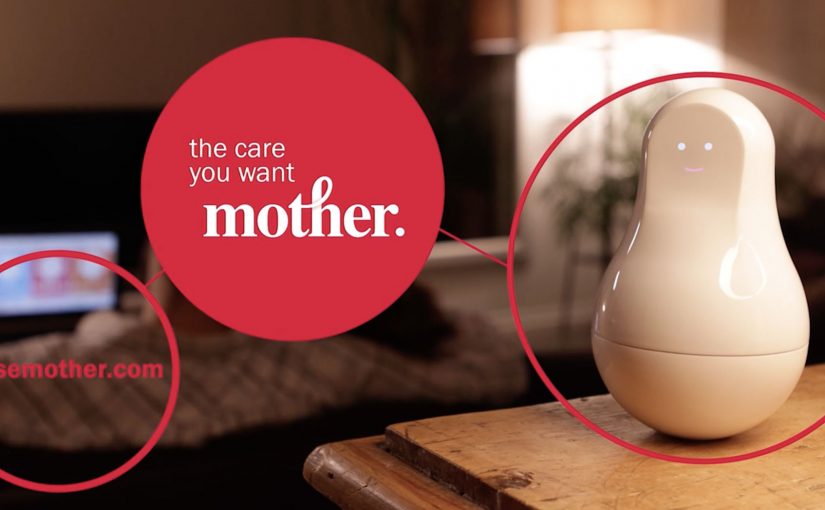
Sen.se: Mother and the Motion Cookies

Sensors are showing up everywhere, from wrist wearables like Jawbone UP and Fitbit to the first wave of “smart home” kits. The promise is always the same. Data that helps you understand your day, then nudges you when something matters.

Mother and the Motion Cookies, from connected-objects startup Sen.se, is positioned as a more flexible take on that idea. Instead of buying a single-purpose gadget for each habit, you get one “Mother” hub and a set of small sensor tags. The Motion Cookies. You decide what you want to track, attach a Cookie to the relevant object, and set alerts for the moments you care about.

Definition tightening: A Motion Cookie is a small sensor you can stick to an object. The “Mother” device is the home base that receives the signals and turns them into simple dashboards and notifications.

If you strip away the friendly character design, this is a configurable rules engine for everyday life. The sensors stay the same. The meaning changes based on what you attach them to and what you tell the app to watch for.

Watch the demo video for more.

A sensor kit that behaves like a toolkit

The smart move here is that the hardware is deliberately generic. One sensor type can be repurposed across dozens of “jobs”, depending on where you place it. Toothbrush, medication box, door, bag, water bottle. The product is less about owning the perfect device, and more about reassigning the same device as your priorities change.

In consumer IoT, products only survive if setup friction stays low and the data translates into a simple action.

Why the “Mother” framing makes the tech feel usable

Smart home products often fail at the handoff between capability and comprehension. Mother softens that gap by packaging sensing as caregiving. The real question is whether a sensor system can feel understandable enough that people actually try it. That emotional framing reduces the intimidation factor and makes experimentation feel normal.

Extractable takeaway: When your product is technically broad, give users a friendly mental model and a small first win, then let reconfiguration become the habit that unlocks the long tail of use cases.

What connected-product teams should copy

  • Design for reassignment, not perfection. People’s routines change. Your hardware should survive those changes.
  • Make “setup” the product. If a user cannot get to value in minutes, they will not get to value at all.
  • Translate sensing into verbs. “Brush”, “open”, “arrive”, “drink”, “take”. Verbs beat metrics.
  • Alert sparingly. The fastest way to kill trust is to spam people with “insights” they did not ask for.

A few fast answers before you act

What is Mother and the Motion Cookies?

It is a smart home kit with one central hub and multiple small sensor tags. You attach a sensor to an object, choose what you want to track, and get updates or alerts based on that behaviour.

What is the core idea compared to a single-purpose wearable?

Reconfigurability. The same sensors can be reassigned to different objects and routines, so the system adapts to what you want to measure this week, not what the device designer assumed forever.

What problem is it trying to solve?

Turning ambient behaviour into something actionable, without requiring you to buy a new gadget for every habit or household scenario.

Why does the “Mother” framing matter?

It makes a technically broad sensor system feel more understandable and less intimidating. That framing helps users see the product as practical support, not just instrumentation.

What makes this kind of product hard to sustain?

Reliance on companion apps and backend services, plus the challenge of keeping alerts useful rather than noisy. If the system becomes high-maintenance, it stops feeling like help.

Raining Polar Bears: Shock Against Short-Haul

A shocking ad with a brutal message: every short haul flight you take emits four hundred kilogrammes of carbon dioxide. The equivalent weight of an adult polar bear.

This is the promotional film from anti-aviation expansion campaigners Plane Stupid.

It is a hard-hitting piece of communication because it skips the abstract science and goes straight for a physical, imaginable consequence. You cannot “feel” four hundred kilograms of CO₂. But you can picture a polar bear’s mass, and you can picture it falling. The metaphor is deliberately uncomfortable.

A metaphor designed to make emissions feel heavy

The mechanism is simple: translate an invisible output into a visible burden. By mapping a single flight to a single, concrete weight, the campaign turns “carbon” into something that feels measurable and personal. The viewer is pushed to connect a routine choice with an outsized consequence. This works because a weight-based image is easier to remember and retell than an abstract emissions number.

In European organisations where sustainability goals collide with travel habits, this kind of metaphor is used to make the trade-off feel immediate.

In behavior-change communication, metaphors work best when they translate an invisible impact into a concrete, repeatable image people can easily retell.

Why this kind of brutality gets attention

Shock tactics work when they force a moment of interruption. They create a jolt that breaks autopilot. In this case, the jolt is not gore or fear for its own sake. It is moral discomfort. The message implies complicity. It suggests that “small” flights are not small at all when you translate them into a consequence you can carry in your head. Used sparingly and paired with a believable alternative, shock can be a legitimate behaviour-change lever; used without one, it is counterproductive.

Extractable takeaway: If you need to shift norms, convert impact into one vivid unit people can repeat from memory, then make the next step feel doable.

But there is a trade-off. If the audience feels judged or helpless, they can disengage. The campaign therefore depends on whether the viewer sees a plausible alternative, like rail, coach, fewer trips, or simply resisting the idea that every short hop is “normal”. Here, an off-ramp means a clear, doable alternative the viewer can choose instead of flying. Without an off-ramp, shock can become noise.

The real intent: change what feels acceptable

The business intent here is public pressure. Plane Stupid campaigns against aviation expansion. To do that, it needs cultural permission to tighten constraints: fewer runway projects, fewer short-haul routes, and a stronger argument that alternatives should win. The film is a lever to make policy positions feel socially justified.

The real question is whether you can make “short haul” feel unacceptable without making the audience tune out.

What to borrow from this shock metaphor

  • Make the invisible visible. Translate abstract impact into a physical metaphor that is easy to repeat.
  • Anchor to a single action. “One short-haul flight” is specific. It removes debate about averages and totals.
  • Choose a symbol that carries meaning. The polar bear arrives pre-loaded with climate context, for better or worse.
  • Plan the off-ramp. If you want behaviour shift, pair the shock with credible alternatives people can act on.
  • Measure backlash, not just reach. Shock optimizes attention. Track whether it also produces avoidance.

A few fast answers before you act

What is “Raining Polar Bears” trying to say?

It argues that short-haul flights have a disproportionately high carbon cost. It makes that cost feel tangible by equating one flight’s emissions to the weight of an adult polar bear.

Why use a polar bear in a climate campaign?

Because it is an instantly recognized symbol of climate impact. It compresses a complex topic into a single image people remember and retell.

Do shock tactics actually change behaviour?

Sometimes. They can disrupt complacency and create attention. They can also trigger defensiveness if people feel accused or see no realistic alternatives.

How do you make a shock campaign more effective?

Pair the emotional jolt with a clear path to action, and ensure the audience believes the alternative is doable. Without that, the message can be dismissed as moralizing.

What is the practical takeaway for marketers and communicators?

If you want to shift norms, translate impact into something concrete, memorable, and repeatable. Then make the next step obvious so attention converts into action.