
Pepsi: The Recycling Rethink

Pepsi: The Recycling Rethink

Sustainability marketing breaks when the system stays the same

Most sustainability marketing fails when the operating reality does not change, and the message asks consumers to do more while leaving the friction, reward, and moment of action unchanged.

That is exactly the problem here. Special Australia says two out of every three plastic and aluminium containers in Australia still do not get recycled, and Pepsi’s promotion in New South Wales (NSW) only worked because it added a materially better incentive to an existing 10c deposit system in a promotion that ran until 22 November 2025.

The Pepsi example is one of the stronger sustainability ideas in recent memory because it changes the behaviour system, not just the brand message. It also won a Gold Spike in Creative Commerce at Spikes Asia 2026.

Pepsi moved the incentive into the machine

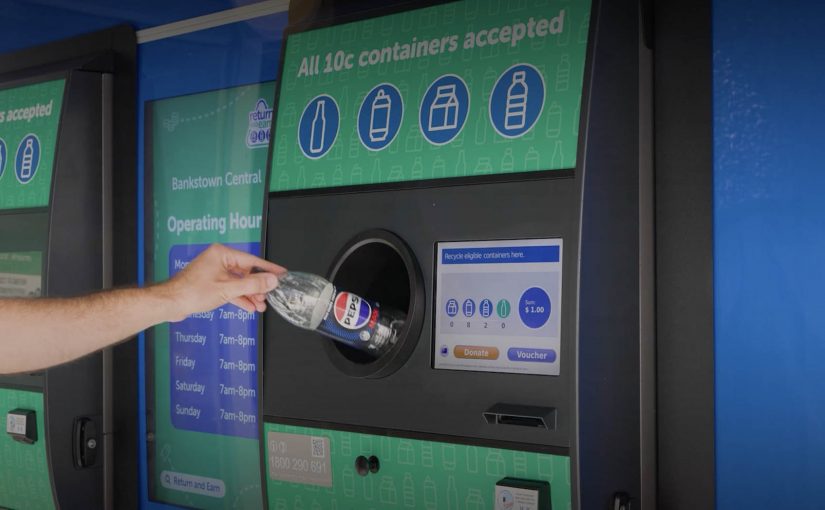
Pepsi worked with TOMRA and the NSW Government-run Return and Earn program to add new code to existing reverse vending machines. A reverse vending machine is an automated kiosk that identifies eligible drink containers and issues the deposit refund. The updated flow let a Pepsi barcode trigger an additional voucher and QR journey on top of the standard 10c return, turning a fixed refund mechanic into a live, brand-specific incentive layer inside an existing public recycling system. Alongside the standard 10c refund, the program also added an A$100,000 bonus prize pool, with rewards ranging from A$100 to A$50,000 for eligible Pepsi containers returned through voucher-printing machines in New South Wales.

In operating terms, this is a physical touchpoint workflow redesign, not a media idea bolted onto recycling.

That distinction matters. The innovation was not the poster, the social edit, or the sustainability language. It was the decision to move the brand intervention into the verified transaction itself, where intent, identity, reward, and action already meet.

The real question is not whether consumers care about recycling. It is whether the system makes the desired action feel worth doing right now.

Because the reward is triggered inside the act itself, the behaviour no longer depends on recall or guilt. It depends on immediate reinforcement.

Why this lands beyond one Pepsi promotion

Award-entry materials published on Lions platform The Work say Pepsi container recycling rose 16% in the first week, that 242,000 people participated after eight weeks, and that the initiative delivered a claimed 37% increase in ROI. The same materials say the code was built for broader rollout, while TOMRA says its reverse vending footprint exceeds 87,000 installations in more than 60 markets.

That is the commercially interesting part. The scarce asset here is not ad inventory. It is installed infrastructure that already sits inside a trusted public behaviour loop.

The lesson for enterprise teams is familiar. You usually get more lift by redesigning the moment architecture than by layering one more awareness burst on top of an unchanged flow.

This is why the idea reads like business-tech translation rather than campaign theatre. Pepsi translated a brand objective into machine logic, barcode recognition, partner coordination, and operational rollout across an existing public system.

It is not infinitely portable. Scale would still depend on program operators, machine access, software control, barcode governance, regulatory approval, fraud prevention, and economics that still work after the novelty wears off.

What enterprise teams should take from Pepsi’s recycling redesign

If you want behaviour change, start by auditing the live touchpoint, not the comms plan. Find the moment where the action is verified, identify what data the system already sees, and then ask whether that data can trigger a better reward, message, or next step without rebuilding the whole stack. What Pepsi and its partners changed was not consumer intent. They changed the structure around the decision.

The takeaway is straightforward: when a habit is stuck, stop spending all your energy on persuasion and redesign the transaction layer where the behaviour actually happens.


A few fast answers before you act

What did Pepsi actually change?

Pepsi did not just run recycling creative around the program. It worked with TOMRA and the Return and Earn system to make Pepsi barcodes trigger an additional voucher and QR-based reward flow inside existing reverse vending machines.

Why is this stronger than a normal sustainability ad?

A normal ad leaves the recycling action unchanged. This idea changed the reward logic at the point of verified behaviour, which gives it more operating value than another awareness message.

Could other brands copy the model?

In principle, yes. Special says the functionality is compatible with TOMRA’s broader machine network, and TOMRA says its reverse vending footprint spans more than 60 markets. Whether another brand could actually deploy it would depend on local program requirements, operator permissions, and commercial logic.

What would stop it scaling?

The main blockers are governance and economics, not creativity. A rollout would need machine access, software control, regulatory approval, barcode integrity, fraud safeguards, and a reward model that still makes sense once expanded.

Did it produce measurable results?

Award-entry materials published on Lions platform The Work say Pepsi container recycling rose 16% in the first week, that 242,000 people participated after eight weeks, and that the initiative delivered a claimed 37% increase in ROI.
Mercedes-Benz F-CELL: The Invisible Drive

Mercedes-Benz F-CELL: The Invisible Drive

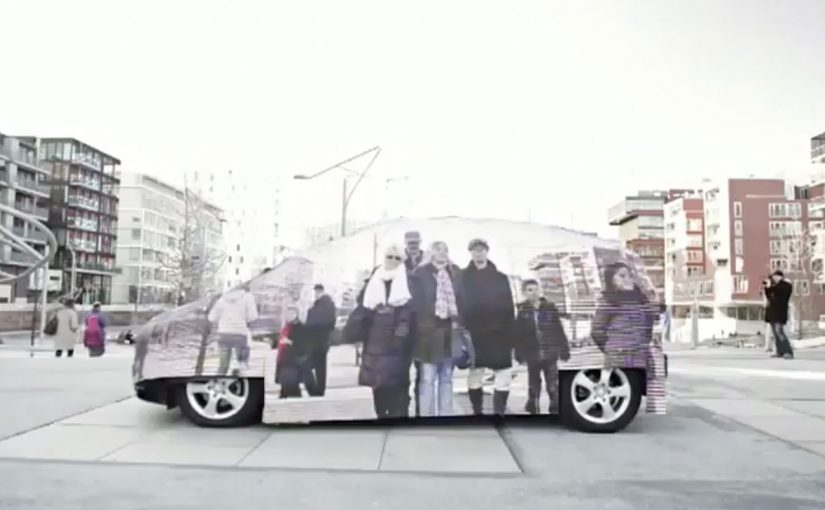
To demonstrate the claimed low impact of its new fuel cell vehicle, Mercedes-Benz has created an “invisible” car that blends into its surroundings.

The trick is a simple, showable hack. One side of the car is covered with LEDs. A camera captures what is on the opposite side, then the LED side displays that live feed so the vehicle appears to disappear from a specific viewpoint.

Stunts like this turn abstract emissions claims into a single, watchable proof-of-idea.

The mechanism that makes the metaphor work

This is not magic and it does not need to be. It is optical camouflage framed as a brand statement. Optical camouflage here means using a camera view and a display surface to mimic the background from a chosen angle. If the vehicle’s impact is close to “nothing,” the car should look like “nothing.” The LED-and-camera setup makes that metaphor instantly legible, even to someone who has never heard the term “fuel cell.” Because the illusion happens live on the car, the metaphor reads as evidence instead of post-production.

In enterprise automotive and mobility marketing, visual proof beats technical proof when the audience is not willing to parse specs.

The real question is whether your claim can be understood and repeated from a single viewpoint without the brochure. This is a strong sustainability communication move when the trick is honest and the metaphor stays tighter than the explanation.

Why it lands

It creates a physical moment people can point at. Sustainability messaging often lives in numbers, claims, and fine print. Here, the message is experiential. You see the effect with your own eyes, and you can describe it in one sentence.

Extractable takeaway: When your product promise is invisible, build a demonstration that makes the promise visible in under five seconds, using a single repeatable rule people can explain to someone else.

Steal the invisibility demo pattern

  • Pick one metaphor and commit to it. The entire execution serves one idea. That focus is why it travels.
  • Use real-world physics, not post-production. Even when the audience knows it is a trick, they trust it more when it is happening live.
  • Design for the shareable angle. Viewpoint-dependent illusions work because they are built for cameras and spectators, not just participants.
  • Make the explanation part of the experience. The best stunts include a built-in “how it works” story that spreads with the clip.

A few fast answers before you act

How does the “invisible car” effect work?

LED panels on one side of the car display a live video feed captured from the opposite side, creating a camouflage illusion from a particular viewpoint.

What is the brand point of using invisibility here?

It turns an environmental claim into a visual metaphor. If the impact is minimal, the car is presented as visually minimal within the scene.

Why do these technology stunts get attention when product specs do not?

They compress the story into a single moment people can see, record, and retell. That makes the promise easier to believe and easier to share.

What is the main risk when copying this approach?

Overcomplicating the trick. If the audience needs a long explanation to understand the effect, the stunt stops being a stunt and becomes a demo.

How do you keep a metaphor stunt from feeling like greenwashing theater?

Keep the claim narrow, make the trick transparent, and ensure the metaphor points to a product attribute you can substantiate elsewhere, even if most people never read the detail.

Toyota: A Glass of Water

Toyota: A Glass of Water

A Glass of Water is a challenge created by Saatchi & Saatchi Stockholm for Toyota in Sweden. Its mission is to help drivers cut down their fuel consumption by 10% and reduce CO2 emissions, aligned with Toyota’s stated zero-emission vision.

When drivers register on the program website, they accept the challenge to place a glass of water on their dashboard or cup holder, then drive in a smooth manner that avoids spillage.

According to Toyota, the less you spill, the gentler you drive. Therefore the less fuel you consume.

A rule you can test on your next drive

The brilliance is the simplicity. No special car, no expert coaching, no complicated scorecard. Just a physical feedback loop that makes every harsh brake and every aggressive turn visible in the most basic way possible.

How the mechanism teaches eco-driving

Spilling is the metric. If you keep the water steady, you are accelerating, braking, and cornering more smoothly. That smoother style tends to reduce wasteful energy spikes, which is the same principle behind most eco-driving advice, translated into something you can feel immediately.

In European automotive marketing, behavior-change challenges work best when the rule is simple enough to try on the next drive.

Why it lands

It turns an abstract goal. “reduce fuel consumption”. into a personal game with instant feedback. The glass makes you self-correct without being told what to do, and it makes eco-driving feel like mastery rather than sacrifice. It also travels well as a story because anyone can explain it in one sentence.

Extractable takeaway: If you want people to change a daily behavior, give them a physical, low-effort indicator that converts “doing better” into a visible result they can improve on.

What Toyota is really buying

This is not just awareness. It is repeatable participation. Each drive becomes a new attempt, and each attempt reinforces the brand’s association with smarter, calmer driving rather than with lecturing about emissions.

The real question is how to make smoother driving feel self-evident and repeatable, not how to explain eco-driving more forcefully.

What to steal from the water-glass challenge

  • Use a single, legible metric. Spills are binary and instantly understood.
  • Make the feedback loop physical. Physical cues outperform abstract dashboards for habit shifts.
  • Lower the start barrier to almost zero. If people can start today, they will.
  • Turn restraint into skill. People adopt habits faster when it feels like competence.

A few fast answers before you act

What is A Glass of Water?

A driving challenge where you place a glass of water on the dashboard or cup holder and try to drive smoothly enough not to spill, as a proxy for reducing fuel consumption.

Why does “not spilling” relate to fuel savings?

Because avoiding spills requires gentler acceleration, braking, and cornering. That smoother driving style tends to reduce inefficient energy spikes.

What makes this different from typical eco-driving advice?

It replaces instructions with immediate feedback. The glass shows you how you are driving without needing an expert or a complex display.

What is the biggest risk with this kind of challenge?

If people treat it as a stunt rather than a habit tool, the effect fades quickly. The challenge needs repetition to translate into lasting driving style change.

How should a brand measure success for a behavior challenge like this?

Participation volume, repeat participation, and any measured or self-reported fuel consumption improvement among participants, not only views or clicks.