
Ford: Max Motor Dreams Cot

It is the middle of the night. A baby will not settle. So a parent reaches for the only reliable hack. Strap in, start the engine, and drive until the motion and hum finally do their work.

Ford Spain’s Max Motor Dreams takes that behaviour and recreates it at home. The cot uses a smartphone app to record the characteristics of a specific journey, then reproduces them back in the crib. Gentle rocking to mimic the car’s movement. A soft engine rumble for background noise. A flowing glow to imitate street lighting passing by outside a window.

In family-focused European automotive brand marketing, the most believable innovation stories take a known behaviour and remove the pain from it without changing the outcome.

Max Motor Dreams is presented as a one-off pilot for now, built as a proof-of-concept rather than a mass product. Ford says that after receiving enquiries, it is considering what full-scale production could look like.

A car-ride simulating cot is a crib concept that captures the motion, sound, and ambient light patterns of driving, then replays them so parents can trigger the same soothing effect without leaving the house.

Why this lands with exhausted parents

The value is not novelty. It is relief. The idea does not ask parents to learn a new sleep philosophy. It simply automates a routine they already know works, then gives them their night back.

Extractable takeaway: If your “innovation” replaces a workaround people already trust, belief comes from preserving the outcome and removing the friction.

What makes the mechanism feel credible

The concept is grounded in a specific recording and replay loop, not a generic “white noise” gadget. Recording an actual route, then replaying that exact motion and sound profile, makes the experience feel personal and less like a toy.

What Ford is really signalling

This is not a sales brochure for a model line. It is a brand move that positions Ford as a company that applies mobility thinking to everyday life problems, and does it with a prototype you can understand in one sentence. That is a smart brand move even if the cot never ships.

The real question is whether you can make a complex capability feel like a bedtime story in one demo.

How to translate mobility tech into a human story

  • Start with a behaviour everyone recognises. Night drives for baby sleep are a universal parent anecdote.
  • Make the loop demonstrable. Record. Replay. Repeat. Simple beats build belief.
  • Show the “one-off” honestly. A pilot can still be powerful if it proves intent and capability.
  • Let the product idea carry the message. When the concept is clear, you do not need heavy copy.

A few fast answers before you act

What is Ford’s Max Motor Dreams?

It is an app-controlled cot concept from Ford Spain that recreates the soothing effects of a night-time car ride by replaying recorded motion, sound, and ambient lighting.

How does the cot know what to reproduce?

Parents use a smartphone app to record a specific journey, then the cot uses that data to reproduce the movement, engine-like sound, and streetlight-style glow.

Is Max Motor Dreams a real product you can buy?

Ford presents it as a one-off pilot concept. It is described as not being in full production, though Ford says it is considering options after enquiries.

Why does this work as a brand story for an automaker?

It reframes automotive expertise as problem-solving beyond the car. The idea borrows the credibility of mobility engineering and applies it to a relatable home problem.

What is the main risk with concepts like this?

If the mechanism looks like a gimmick or cannot be explained quickly, people dismiss it as PR. The concept has to feel technically plausible and emotionally necessary.
Jimmy Kimmel: Halloween Candy Prank 2013

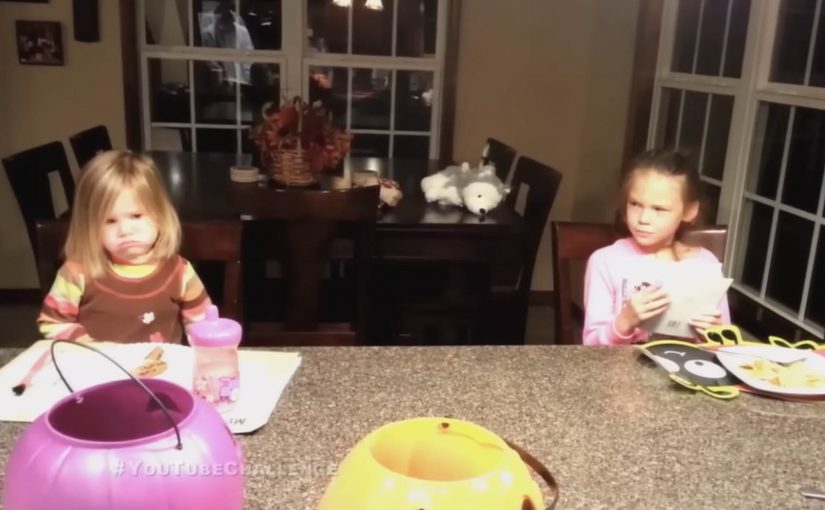
For the third consecutive year, talk show host Jimmy Kimmel challenges the parents of America to prank their kids and pretend that they ate all of their Halloween candy.

As always, parents oblige by the hundreds, and the results of this year’s Halloween Candy YouTube Challenge are compiled into a best-of reel.

A prank designed for mass participation

The mechanism is almost nothing. One line delivered at the worst possible moment, with a camera rolling. The show prompts the setup, parents run it at home, and YouTube becomes the route for collecting clips at scale.

That works because the prompt is so simple that families can recreate it instantly, while the show keeps editorial control by curating the best reactions into one polished reel.

In US pop-culture marketing, repeatable audience-participation formats win because they are easy to copy and still feel personal every time.

The real question is how a one-line prank becomes a yearly entertainment asset people keep recreating for free.

Why this lands

This is a smart participation format, not just a late-night gag. The emotions are instant and unedited. You get a mix of outrage, heartbreak, negotiation, and unexpected maturity, and that variety keeps the compilation watchable. It also feels like a yearly ritual, which helps the segment spread even among people who do not watch the show regularly.

Extractable takeaway: If you want repeatable virality, give people a one-sentence script, a clear capture instruction, and a predictable calendar moment, then let the audience supply infinite variation.

The previous challenge videos can be seen here: 2011 and 2012.

What repeatable participation marketers should steal

  • Make the prompt copyable. One sentence beats a complex brief.
  • Design for home production. If the content requires no special tools, submissions multiply.
  • Compile the chaos. A best-of edit turns scattered clips into a single shareable asset.
  • Repeat annually. Familiar format plus new reactions gives people a reason to come back each year.

A few fast answers before you act

What is the “I ate your Halloween candy” challenge?

Parents tell their kids they ate all the Halloween candy, film the reaction, and submit the clip for a compilation segment.

Why does this format keep working year after year?

The setup stays identical, but the reactions are endlessly different, which creates fresh entertainment without changing the mechanic.

What makes the compilation more shareable than single clips?

A best-of edit increases pace and variety, so viewers stay longer and are more likely to pass it on as a single link.

What is the core growth driver?

Low friction participation. One simple script, one simple recording, and a familiar upload behavior.

What should brands learn from this without copying the cruelty?

Use a repeatable prompt that invites audience variation, and build a clear “submit, then compile” distribution loop around it.

Tooth Fairy: Pneumatic Transport

A child loses a tooth, drops it into a capsule, and sends it away through a pneumatic tube. A moment later, a second capsule arrives back with the Tooth Fairy’s payment.

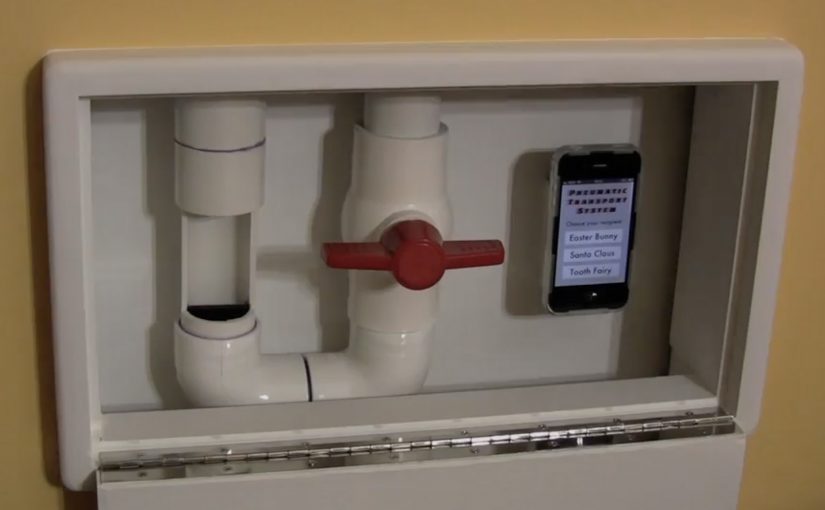
Jeff Highsmith, a father of two, decided to re-write the Tooth Fairy routine with a pneumatic transport system built into his house. He set it up with 1.5" PVC pipes, a central vacuum in the attic, and two endpoint stations, one in each child’s room. When a tooth came out, it went into a small plastic bottle that travelled through the system, while a parent loaded money into another bottle at the other station and sent it back.

A ritual redesigned as a “send and return” loop

The mechanism is a closed-loop exchange. Tooth goes in. Capsule moves. Payment comes back. This matters because visible movement turns an invisible promise into something kids can witness, which makes the ritual feel more credible. The stations make the experience legible and ceremonial, while the vacuum-driven transport makes it feel like the Tooth Fairy is “on the other end” even though the system stays entirely within the home.

In maker households, the quickest way to modernize a family ritual is to turn it into a tangible, repeatable system that feels magical to kids and practical for parents.

Why it lands as modern folklore

This works because it preserves the core emotion of the Tooth Fairy. Anticipation, mystery, reward. Here, “modern folklore” means a familiar family story made credible through a repeatable household ritual. The real question is not how to digitize the Tooth Fairy, but how to make the ritual feel more believable without making it feel less magical. This is a smarter update than adding more screens or complexity, because the physical loop strengthens the illusion while simplifying the parent job. The build also lets the story scale across siblings, since each child has their own station and repeatable moment.

Extractable takeaway: If you want to update a tradition without losing its charm, keep the same emotional arc, then redesign only the delivery mechanism so the magic feels more believable, not more complicated.

More details about the pneumatic system and the Python code for the mobile web interface can be found here.

What to steal for playful “systems thinking” at home

  • Make the interface physical. A station or ritual object matters more than hidden automation.
  • Design for repeatability. If it can run the same way every time, kids trust it and look forward to it.
  • Separate mystery from maintenance. Keep the “magic side” visible and the parent side easy to operate.
  • Document the build. A clear write-up turns a one-off family project into something others can replicate.

A few fast answers before you act

What is the core idea of the pneumatic Tooth Fairy system?

A home pneumatic tube loop that lets kids send teeth in a capsule and receive the Tooth Fairy’s payment back through a return capsule.

What materials and layout does the build use?

1.5" PVC pipes, a central vacuum in the attic, and endpoint stations in each child’s room, with small bottles used as capsules.

Why is this better than the traditional “money under the pillow” routine?

It keeps the same reward moment but makes the exchange visible and immediate, while reducing the need for parents to sneak around at night.

What makes the experience feel magical rather than mechanical?

The station ritual and the movement of the capsule. The child can see the “sending” happen, which reinforces the story.

Who should build something like this?

Anyone comfortable with a basic DIY project involving PVC piping and a vacuum-driven transport loop, and who wants to create a repeatable family ritual.