
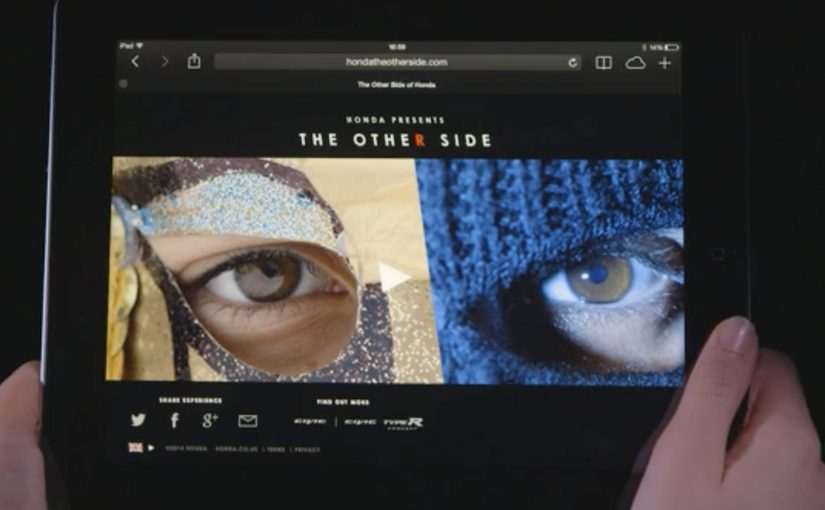
Honda – The Other Side

Honda – The Other Side

Car brands are always trying to show that their cars have different sides to their personalities, sporty vs reliable, safe vs cool, etc. What makes Honda’s latest effort unique is its YouTube video. By simply holding down the “R” key on the keyboard, the viewer can instantly switch between two different videos.

To execute this innovation, Wieden & Kennedy London had to create two storylines, one of an easygoing Dad doing the school run and the second as an undercover cop posing as a getaway driver. Both of which were then expertly mirrored with contrasting style and tone. The interactive experience was then put together by Stinkdigital at Honda’s YouTube Channel.

Why the mechanic matters more than the novelty

The “hold R to switch” idea is a simple interaction mechanic, meaning the viewer action changes how the story is revealed, but it changes how you watch. You are not just viewing a story. You are actively comparing two versions of the same moment, in real time.

Extractable takeaway: When a brand claim depends on contrast, the strongest format is often one that lets the audience trigger the comparison for themselves.

The real question is whether the interaction makes the brand point clearer, not whether the tech looks clever.

  • One scene, two meanings. The mirrored structure makes contrast instantly legible.
  • Viewer control. You control the cut, which increases attention and repeat viewing.
  • Storytelling as product proof. Different “sides” of a car become a narrative device, not a claim.

Execution discipline: mirrored scenes, opposite tone

This only worked because the two storylines were designed to align. Timing, framing, and beats had to match so the switch felt seamless, not like two unrelated edits.

The payoff is that contrast becomes the hero. Calm family routine vs high-pressure escape. The same underlying vehicle context. Two different emotional reads.

In digital brand storytelling, interactive mechanics only earn their place when they make the positioning easier to grasp, not harder.

The business intent is clear: turn Honda’s “different sides” message into a felt comparison, so the format demonstrates the proposition instead of leaving copy to explain it.

What to take from this if you build interactive brand content

  1. Make the interaction explain itself. If the mechanic needs instructions, you lose momentum.
  2. Design for replay. The best interactive films reward going back and re-watching with intent.
  3. Let structure carry the message. When the format proves the point, you do not need heavy-handed copy.
  4. Keep the tech invisible. Viewers remember the feeling of control and contrast, not the implementation details.

A few fast answers before you act

What is Honda “The Other Side”?

It is an interactive film experience where viewers can switch between two parallel storylines by holding down the “R” key.

What are the two storylines?

One follows an easygoing Dad doing the school run. The other follows an undercover cop posing as a getaway driver, with both narratives mirrored scene-by-scene.

Why is the “hold R to switch” mechanic effective?

It gives the viewer control and makes the contrast immediate. That active comparison increases attention, engagement, and replays.

Who created the work?

Wieden & Kennedy London created the two mirrored storylines, and Stinkdigital put the interactive experience together on Honda’s YouTube Channel.

What is the transferable lesson for digital teams?

If you can express your message through an interaction that is instantly understandable, the format itself becomes the persuasion.
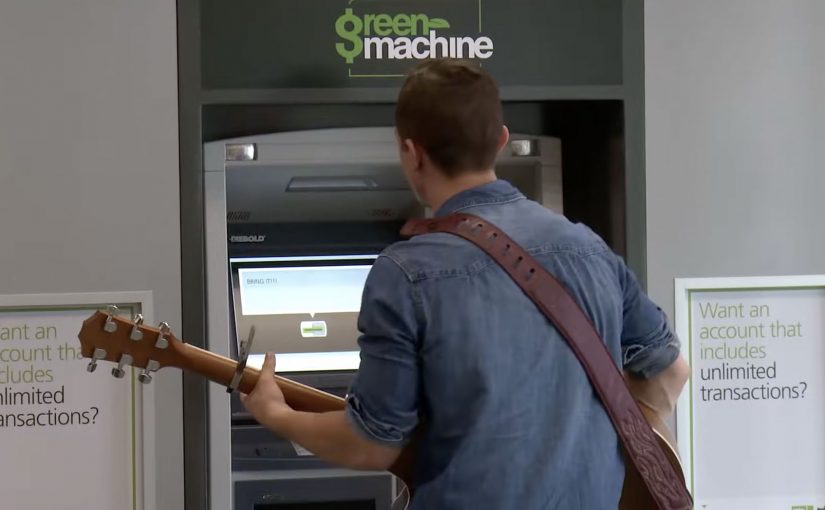
TD Canada Trust: Automated Thanking Machine

TD Canada Trust: Automated Thanking Machine

Start with the smile. Then design backwards

Start with the smile of your audience, then work back from there. That is the key to many of the marketing campaigns people actually share. Coca-Cola has done a great job with their various happiness campaigns, followed by WestJet’s Christmas campaign where they surprised passengers with gifts.

When an ATM stops being a machine

TD Canada Trust, for its “TD Thanks You” campaign, converts select ATM machines in Toronto, Montreal, Calgary and Vancouver into special Automated Thanking Machines. Twenty hand-picked customers are invited to test them.

The twist is that the ATM behaves like a person. It knows their name, talks back, and responds in ways a standard ATM never would. Then it escalates into the payoff: unexpected, genuinely personal gifts that feel tailored to the customer, not to the bank.

In retail banking and other trust-based categories, surprise-and-delight, meaning an unexpected human response inside a standard service moment, works best when it turns a routine transaction into personal recognition that feels operationally real.

The video is the distribution layer

The reactions are the asset. This is less about the ATM technology than about capturing the moment people realize a faceless institution is paying attention. The real question is how a trust-heavy brand makes gratitude feel personal without making it feel fake. As reported, the video has racked up millions of views in days because the story is instantly legible: a familiar interface becomes human, and the customer response does the persuasion.

Why it lands

Banks are trained to look serious, consistent, and slightly distant. This flips that expectation without abandoning credibility, because the setting stays “bank-real” and the interaction starts from a normal ATM flow. The experience also scales conceptually. Any service brand with a repetitive touchpoint can imagine doing a version of this.

Extractable takeaway: If your category is low-emotion or low-trust, pick a familiar moment, introduce one human signal that feels impossible in that context, then let the customer reaction carry the message.

What to steal from an ATM that says “thanks”

  • Use a familiar interface as the stage. The more ordinary the starting point, the bigger the perceived magic when it shifts.
  • Personalization beats scale. One moment that feels truly “for me” outperforms ten generic giveaways.
  • Escalate in steps. Name recognition. Conversation. Then reward. The ramp makes the payoff believable.
  • Design the filming around authenticity. A hidden-camera feel is part of the proof, even when the experience is planned.

A few fast answers before you act

What is TD’s “Automated Thanking Machine”?

It is a TD ATM adapted to greet and interact with select customers, then deliver surprise gifts as part of the “TD Thanks You” campaign.

Why does the ATM format work so well?

An ATM is the definition of impersonal service. Making it behave personally creates instant contrast and instant story value.

What’s the real mechanism behind the idea?

Not the screen. The mechanism is staged personalization at a routine touchpoint, captured on video, where real customer reactions become the proof.

What makes this shareable beyond banking customers?

The narrative is universal: a machine becomes human, then gratitude becomes tangible. You do not need product context to feel it.

How can another brand apply this without copying it?

Pick one repetitive customer moment, add one unexpected human signal, then reward the customer in a way that is clearly based on who they are, not who you want them to be.

Pepsi Max: Test Drive

Pepsi Max: Test Drive

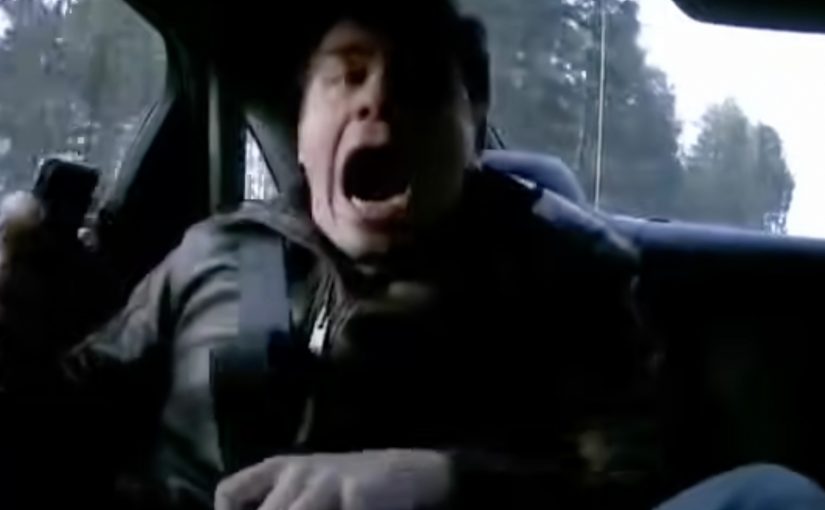
Last year in March, Pepsi Max along with professional stock car racing driver Jeff Gordon performed a prank on an unsuspecting car salesman by taking him on a test drive of his life. Here, a “prank” is a designed real-world setup filmed to capture reactions, not a fully scripted spot.

The video since then got over 41 Million views on YouTube. Despite its viral success, automotive journalist Travis Okulski was not impressed and was pretty vocal in pointing out inconsistencies in the viral ad and calling it a fake.

So Jeff Gordon teamed up again with Pepsi Max to pull a similar prank on unsuspecting Travis Okulski, just to prove the authenticity of the original test drive video…

But even after all of that Travis Okulski is still not convinced and the video since its release last week has already gotten over 13 Million views on YouTube.

The real question is what you do when a viral stunt becomes a public authenticity debate.

Why this became a two-part story

The first video worked because the premise is simple, the escalation feels real, and the payoff is pure reaction. But the moment it went viral, it also invited scrutiny. Because the setup looks “too good to be true”, it triggers a verification instinct, which is why people rewatch, share, and interrogate the details. That is what makes the follow-up so interesting. The brand turned criticism into content by making the skeptic part of the narrative.

Extractable takeaway: When your entertainment idea can be framed as “real or staged”, plan a proof-driven sequel path up front, so the debate extends the platform instead of draining trust.

  • Viral hook. A familiar setting, then a sudden reveal of unexpected capability.
  • Credibility challenge. A public critique that reframed the conversation as “real or staged”.
  • Response as sequel. A second execution aimed at the critic to re-earn belief.

In mass-reach consumer campaigns, “real or staged” scrutiny is part of distribution, so the sequel has to protect credibility without changing the core promise.

What to learn from the backlash

If doubt becomes the headline, leaning in with credible proof beats going quiet. When stunts travel, authenticity becomes part of the product. If the audience starts debating “is it real”, the brand can either go silent or lean in. Pepsi Max leaned in and used the debate as fuel, which extended the lifecycle and kept attention anchored to the same brand platform.

  • Design for verification. Build in moments that can withstand frame-by-frame scrutiny.
  • Turn skeptics into structure. If a credible critic challenges you, make the response the next chapter, not a defensive footnote.
  • Keep the platform constant. Address doubts without drifting into a different promise or tone.

A few fast answers before you act

What is Pepsi Max “Test Drive” with Jeff Gordon?

It is a prank-style stunt video where Jeff Gordon takes an unsuspecting car salesman on an extreme test drive, created as part of Pepsi Max’s viral entertainment approach.

Why was there controversy around the first video?

An automotive journalist publicly pointed out inconsistencies and argued it was staged, which sparked debate about authenticity.

Why did Pepsi Max do a second video?

To address the credibility debate directly by repeating a similar stunt and making the outspoken critic part of the execution.

What is the transferable pattern for viral campaigns?

Expect scrutiny, especially when the content looks “too good”. If doubt becomes the story, design a credible sequel that engages the criticism rather than ignoring it.